
Psychology
Best psychology books summarized in 15 minutes
Understanding how the mind works helps explain why we repeat habits we dislike, undermine ourselves in big decisions and react in ways we barely recognize later. This selection brings together books that took psychology to a wide audience, like Mindset, Emotional Intelligence, Flow and Quiet, alongside classics by Freud, Jung, Fromm, Rogers and Frankl.
Some titles go deeper into how the brain and emotions work: Behave by Robert Sapolsky, How Emotions Are Made by Lisa Feldman Barrett, The Brain That Changes Itself and Incognito. Others look at happiness, such as Authentic Happiness, The Happiness Hypothesis and Stumbling on Happiness, or at how we judge and obey, such as Blink and Obedience to Authority.
In 15 minutes you get the central idea of each book and can tell whether it is worth going deeper. Many speak to each other: read Mindset and Flow back to back, or Freud next to Jung, and see how each author frames the same puzzle. These summaries explain ideas. They do not diagnose or replace professional care.
Psychology summaries
 15 min
Mindset: The New Psychology of Success
Carol S. Dweck
Believing that talent is fixed makes you avoid risk, and avoiding risk is exactly what keeps you from growing.
 15 min
Emotional Intelligence
Daniel Goleman
A diploma full of top grades doesn't guarantee that someone knows how to handle their own anger in a real argument.
 15 min
Man's Search for Meaning
Viktor E. Frankl
People who know why they're doing something hard can endure far more than people who just follow a method that means nothing to them.
 16 min
The Art of Loving
Erich Fromm
For Fromm, care without responsibility is just a passing interest, and respect without knowledge turns into guesswork about who the other person is, not real love.
 15 min
The Interpretation of Dreams
Sigmund Freud
A dream doesn't hide anything out of malice. It just speaks in a language made of images, one the dreamer hasn't yet learned to translate.
 17 min
The Righteous Mind
Jonathan Haidt
For Haidt, disagreeing about politics or religion is often not a disagreement about facts. It's about giving different weight to values like care, fairness, loyalty, or liberty.
 17 min
Blink: The Power of Thinking Without Thinking
Malcolm Gladwell
A trained expert's intuition is pattern recognition at high speed, not magic or luck.
 16 min
Listen to Your Body, Your Best Friend on Earth
Lise Bourbeau
Organizing your life first around having, then doing, and only last being is a common recipe for living exhausted even when you've achieved everything.
 17 min
Authentic Happiness
Martin Seligman
Seligman suggests seeing happiness as three pieces: an inherited starting point, the circumstances of your life, and the part that depends on your daily choices, which is where the book places its bet.
 16 min
Flow: The Psychology of Optimal Experience
Mihaly Csikszentmihalyi
The sweet spot of flow always sits one step above what you already do well: too easy bores you, too hard freezes you.
 16 min
Dangerous Minds: The Psychopath Next Door
Ana Beatriz Barbosa Silva
Charm that is too strong too early in a relationship is not a compliment. It is something to watch closely over the following weeks.
 17 min
The Highly Sensitive Person
Elaine N. Aron
Aron estimates that 15% to 20% of people have this trait and points to similar patterns in other species, though the numbers still come mostly from questionnaires.
 17 min
The Lucifer Effect: Understanding How Good People Turn Evil
Philip Zimbardo
In the classic studies on the bystander effect, the more people there are around an emergency, the more each one tends to wait for someone else to step in.
 17 min
Civilization and Its Discontents
Sigmund Freud
In Freud's reading, the culture that promises to protect us from nature and from each other charges a price in repressed impulse, and that impulse becomes the background discomfort of adult life.
 15 min
Escape from Freedom
Erich Fromm
Freedom without direction becomes a burden: getting free of an authority is the easy part, and deciding what to do with that freedom is the work almost no one learns on their own.
 15 min
The Paradox of Choice: Why More Is Less
Barry Schwartz
Having more options feels like freedom, but past a certain point it just becomes more work for your brain to decide.
 16 min
Presence: Bringing Your Boldest Self to Your Biggest Challenges
Amy Cuddy
Feeling that you have some influence over your own moment changes the way your mind sees the options available.
 14 min
Quiet: The Power of Introverts in a World That Can't Stop Talking
Susan Cain
People who tire quickly from stimulation don't have a personality flaw. They have a more sensitive nervous system, one that processes more information with less noise.
 15 min
The Upside of Stress
Kelly McGonigal
The book suggests looking at a hard period you've already lived through as part of your own growth story, not just as a wound that stayed.
 16 min
On Becoming a Person: A Therapist's View of Psychotherapy
Carl R. Rogers
Separating a person's worth from the worth of one of their actions opens up room for change that pressure alone never opens.
 17 min
The Brain That Changes Itself
Norman Doidge
In the method of Jeffrey Schwartz described in the book, calling the compulsion by its name, as a brain alarm and not a real desire, is the first step against OCD, always alongside professional treatment.
 16 min
The Power of Your Subconscious Mind
Joseph Murphy
According to Murphy, two people can want the same thing, but the one who sees themselves as deserving the result carries an invisible advantage that the one who sees themselves as runner-up doesn't have.
 17 min
Man and His Symbols
Carl Jung
In the Jungian view, what bothers you most about another person may be pointing to a piece of yourself you haven't accepted yet, and it's worth asking that question before you get angry.
 16 min
The Body Speaks: The Silent Language of Nonverbal Communication
Pierre Weil and Roland Tompakow
According to the authors, inside every person live an instinct that only wants to survive, an emotion that wants to claim space and a mind that tries to plan everything, and the body shows right away when these parts don't match each other.
 17 min
The Molecule of More
Daniel Z. Lieberman and Michael E. Long
According to the book, people who live on new ideas and people who keep the routine running complete each other, and a team made up of only one of the two types stalls or fails to deliver.
 16 min
Positive Intelligence
Shirzad Chamine
Naming the thought that gets in your way creates a small distance between you and it, and that distance is where a choice fits.
 14 min
Women Who Run with the Wolves
Clarissa Pinkola Estés
In the author's reading, charm that doesn't match the actions of the person showing it is a warning sign, and it's worth watching what someone does more than what they promise.
 14 min
The Gifts of Imperfection
Brené Brown
Feeling that you did something wrong is different from feeling that you are wrong, and that difference decides whether a mistake teaches you or paralyzes you.
 17 min
The Courage to Be Happy
Ichiro Kishimi and Fumitake Koga
Behind a mess in the classroom there may be a search for a place in the group, and understanding that helps you avoid the automatic reaction.
 15 min
The Happiness Hypothesis
Jonathan Haidt
The person who points out the speck in someone else's eye usually has a plank in their own, and the conversation gets better when you admit your part first.
 15 min
The (Honest) Truth About Dishonesty
Dan Ariely
Instead of hunting for the big villain, it pays to look at the small slip repeated by lots of people: added up, it can cost more than the famous scam.
 15 min
The Things You Can Only See When You Slow Down
Haemin Sunim
Intense emotion tends to pass like a wave: naming it and taking a breath helps you avoid acting at your worst moment.
 15 min
Atlas of the Heart
Brené Brown
An expectation you never said out loud becomes a silent demand, and a silent demand becomes resentment.
 16 min
Behave: The Biology of Humans at Our Best and Worst
Robert M. Sapolsky
The prefrontal cortex keeps maturing until around the early to mid twenties, which is why teenage decisions call for patience and clear rules.
 16 min
David and Goliath
Malcolm Gladwell
According to Gladwell, more resources help up to a point; after that, more can bring new problems.
 15 min
The Definitive Book of Body Language
Allan Pease and Barbara Pease
A firm handshake, held vertically and with direct eye contact, helps you start a conversation on the right foot.
 17 min
Frames of Mind
Howard Gardner
What counts as talent changes with the place: reading the sea and the wind matters a great deal in a fishing village.
 15 min
Talking to Strangers
Malcolm Gladwell
Believing people is the default that makes life in society work, and that is exactly why it leaves us vulnerable to those who lie well.
 14 min
Happiness: A Guide to Developing Life's Most Important Skill
Matthieu Ricard
Training the mind is like training the body: a little every day pays off more than a lot once in a while.
 16 min
Incognito: The Secret Lives of the Brain
David Eagleman
Explaining why you did something after the fact is easy; knowing whether the reason is the true one is much harder.
 14 min
Motivation and Personality
Abraham Maslow
When the basics are missing, like food and shelter, the mind tends to deal with that first before thinking about purpose.
 17 min
Descartes' Error
Antonio Damasio
A famous brain-injury case, like that of Phineas Gage, teaches a lot, but its details have been embellished over time.
 16 min
The Relations Between the Ego and the Unconscious
C. G. Jung
Recognizing the side of yourself that you deny takes away some of the power it holds over you.
 14 min
The Invisible Gorilla
Christopher Chabris and Daniel Simons
The feeling of remembering something sharply measures emotion, not accuracy: a vivid memory can be wrong.
 17 min
The Hero with a Thousand Faces
Joseph Campbell
The hero isn't born ready, he is made along the way, and the trials are part of the gain.
 15 min
Man's Search for Himself
Rollo May
For May, being well fitted into the world around you does not guarantee being at peace with yourself.
 14 min
The Man Who Mistook His Wife for a Hat
Oliver Sacks
Extraordinary talent has a human cost too: treating someone only by what they can do is losing sight of the person.
 14 min
The Happiness Advantage
Shawn Achor
The way you interpret a situation can change how much energy it leaves you to act.
 16 min
The Dark Side of the Light Chasers
Debbie Ford
According to the book, part of what we admire in others is a quality of our own that we have not yet claimed.
 15 min
The Power of Myth
Joseph Campbell and Bill Moyers
Following what makes you feel alive doesn't mean dropping everything: it means testing, in small steps, what makes you want to get out of bed.
 14 min
Stumbling on Happiness
Daniel Gilbert
We imagine tomorrow using today's mood, which is why we decide badly when we're hungry, tired, or anxious.
 15 min
The Psychopathology of Everyday Life
Sigmund Freud
According to Freud, very vivid and seemingly trivial childhood memories may be covering up something that matters more.
 15 min
Superforecasting: The Art and Science of Prediction
Philip E. Tetlock and Dan Gardner
In the book, people with one big theory showed up more on TV, but people who mixed several perspectives were right more often.
 15 min
An Anthropologist on Mars
Oliver Sacks
A change in the brain often reorganizes a person rather than erasing them: they rebuild themselves with what remains and what they've gained.
 15 min
Walden Two
B. F. Skinner
Well-applied reinforcement usually teaches more than threats do, because it shows people what to do, not just what to avoid.
 14 min
The How of Happiness
Sonja Lyubomirsky
According to the author, there is no single practice that works for everyone: what works is the one that fits your own personality.
 14 min
Understanding Human Nature
Alfred Adler
Every child starts life feeling small, and that feeling can become an engine for growth or a roadblock, depending on what the child receives.
 14 min
The Dance of Anger
Harriet Lerner
According to the book, bottled-up anger does not disappear; it just moves somewhere else and shows up as exhaustion or an outburst.
 15 min
The Neurotic Personality of Our Time
Karen Horney
Trying to please everyone usually hides a fear of being abandoned, and affection becomes a currency for survival.
 14 min
Learned Optimism
Martin E. P. Seligman
Giving up can be learned after facing many dead-end failures, and what is learned can be unlearned.
 14 min
How the Mind Works
Steven Pinker
A fear of snakes comes pre-installed while a fear of debt is learned, which is why the second one is so often underestimated.
 15 min
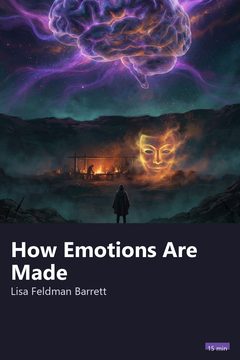
How Emotions Are Made
Lisa Feldman Barrett
According to the author, the same tightness in your chest becomes suspense at the movie theater and anguish in a hospital hallway, because the brain chooses the explanation.
 15 min
In Search of Memory
Eric R. Kandel
According to the book, learning means strengthening connections, which is why an unused trail fades from the brain's map.
 13 min
I Thought It Was Just Me
Brené Brown
According to the author, silence feeds shame, and a ten-minute conversation with the right person already weakens it.
 13 min
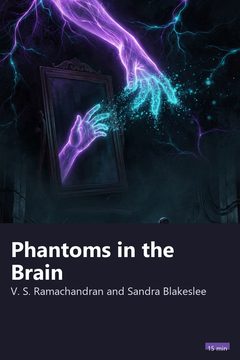
Phantoms in the Brain
V. S. Ramachandran and Sandra Blakeslee
Someone who looks at their mother's face and feels nothing might still have a mind trying to explain that emptiness with an absurd idea.
 14 min
Flourish
Martin E. P. Seligman
Measuring your life by your daily mood is like judging a career by the morning weather: how you feel today does not sum up how you live.
 14 min
Childhood and Society
Erik H. Erikson
For Erikson, the trust a baby builds comes more from the consistency of care than from the amount of pampering.
 14 min
Envy and Gratitude
Melanie Klein
According to the author, envy is different from jealousy: jealousy competes with a rival for love, while envy attacks the very source of what is good.
 14 min
The Happiness Trap: How to Stop Struggling and Start Living
Russ Harris
According to the book, fighting anxiety usually wastes energy and, in many cases, prolongs the discomfort.
 14 min
The Social Animal
Elliot Aronson
A small reward for defending something you don't believe can change your beliefs more than a large reward, because you don't have an external excuse.
 15 min
The Emotional Brain
Joseph LeDoux
In the book's model, the brain has a shortcut that errs on the side of caution, because mistaking a branch for a snake costs you only a scare.
 14 min
The Intelligence Code
Augusto Cury
If you do not choose where to focus your attention, old memories that surface on their own end up deciding how your day goes.
 14 min
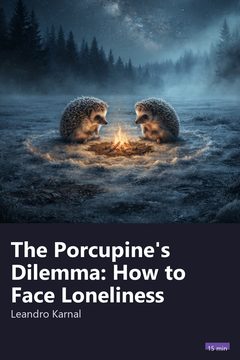
The Porcupine's Dilemma: How to Face Loneliness
Leandro Karnal
The right amount of closeness isn't predetermined: every relationship requires adjusting the distance, like animals warming one another without getting pricked.
 13 min
The Ego and the Id
Sigmund Freud
When you come up with a good justification after doing what you wanted, your ego may simply be signing off on a decision made somewhere else.
 15 min
The Ego and the Mechanisms of Defence
Anna Freud
According to the author, defending yourself isn't an illness: everyone uses defenses, and problems arise when just one of them starts running your life.
 14 min
The Future of an Illusion
Sigmund Freud
Comfort and truth are different things: an idea can offer tremendous relief and still lack evidence, and a true idea can hurt.
 14 min
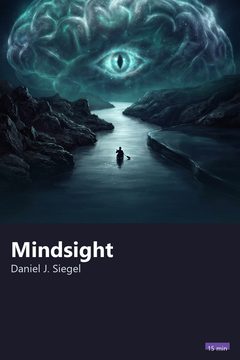
Mindsight
Daniel J. Siegel
Noticing what's happening inside before reacting is a skill you can develop, and it changes the quality of your everyday decisions.
 16 min
The Archetypes and the Collective Unconscious
C. G. Jung
What irritates you most about other people may be a clue to something you don't want to see in yourself.
 14 min
The Seminar of Jacques Lacan, Book XI: The Four Fundamental Concepts of Psychoanalysis
Jacques Lacan
Repeating the same type of partner or conflict is usually an attempt to return to a point that was never properly resolved.
 15 min
The Blank Slate: The Modern Denial of Human Nature
Steven Pinker
Much of the resistance to the idea of human nature stems from fear of what it might justify, rather than an objective analysis of the facts.
 14 min
Psychological Types
C. G. Jung
Shyness is fear of being judged, while introversion is a way of spending and recovering energy. The two are not the same thing.
 16 min
Totem and Taboo
Sigmund Freud
A strict prohibition often conceals a powerful temptation, and understanding the rule helps reveal the desire it surrounds.
 16 min
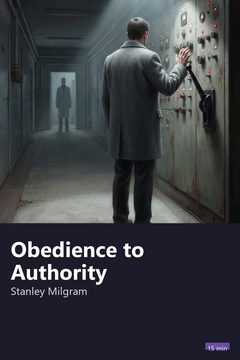
Obedience to Authority
Stanley Milgram
No one is asked to commit the extreme act all at once: the path consists of small steps, each just a little worse than the last.
 18 min
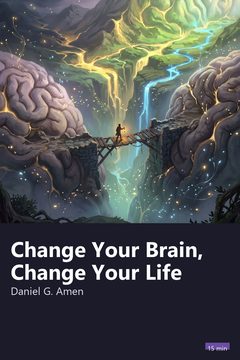
Change Your Brain, Change Your Life
Daniel G. Amen
Persistent low spirits often distort the lens through which you see your life, making your surroundings seem hostile even when the facts suggest otherwise.
 17 min
Status Anxiety
Alain de Botton
The desperate pursuit of material goods often masks a deep-seated need to be welcomed and respected by the people around us.
 18 min
Emotional Intelligence 2.0
Travis Bradberry and Jean Greaves
Unlike fixed personality traits, your ability to manage your own emotions can be sharpened through deliberate daily practice.
 14 min
The Art of Reading Minds
Henrik Fexeus
Rapport comes from genuine interest in the person speaking, and it is what makes them lower their guard.
 17 min
What Every BODY Is Saying
Joe Navarro & Marvin Karlins
A single movement tells you little. What matters is whether it repeats and fits with other signals.
 16 min
No More Mr. Nice Guy
Robert A. Glover
Covert contracts create unspoken expectations that inevitably end in hurt, frustration, and resentment.
 15 min
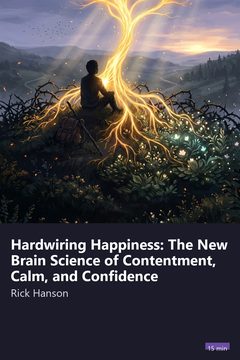
Hardwiring Happiness: The New Brain Science of Contentment, Calm, and Confidence
Rick Hanson
The human brain was shaped by evolution to act like Velcro for bad experiences and Teflon for good ones.
 17 min
Multifocal Intelligence
Augusto Cury
The author’s theory suggests that memories charged with strong emotion have more influence on our reactions than memories of objective importance.
 15 min
The Brain and Emotional Intelligence
Daniel Goleman
Your emotional alarm goes off in fractions of a second, and reasoning kicks in afterward. That's why taking a breath before responding changes the outcome.
 15 min
Games People Play
Eric Berne
Before responding in an argument, it is worth asking which state you are speaking from: the Parent who gives orders, the Child who gets hurt, or the Adult who analyzes.
 15 min
Punished by Rewards
Alfie Kohn
A reward changes the question the person doing the task asks: out goes 'is this worth it?' and in comes 'what do I get?'.
 15 min
Subliminal: How Your Unconscious Mind Rules Your Behavior
Leonard Mlodinow
The conscious mind often acts like a press secretary, concocting logical justifications for decisions already made by the unconscious.
 16 min
The Intelligence Trap
David Robson
According to the book, being good with numbers doesn't stop you from reading a table in a way that favors your own group.
 13 min
Chatter
Ethan Kross
Your inner voice helps when it leads to action and gets in the way when it only spins in circles, and asking that question matters more than trying to silence it.
 15 min
The Child in You
Stefanie Stahl
According to the author, strategies that protected us in childhood, such as pleasing others or staying in control, can come at a high cost in adult life.
 14 min
Mistakes Were Made (But Not by Me)
Carol Tavris & Elliot Aronson
According to the book, the more someone has invested in a belief, the harder it gets to abandon it, even in the face of contrary evidence.
 15 min
Boundaries
Henry Cloud and John Townsend
A healthy boundary works like a fence with a gate: it protects what's yours and lets you choose what comes in and goes out.
 17 min
Awakening the Heroes Within
Carol S. Pearson
For Pearson, no one is just one archetype: each person carries all twelve and grows by learning to draw on more than one.
 14 min
The Mental Game of Poker
Jared Tendler
The book argues that uncovering the belief hidden behind an emotion does more good than trying to control yourself through sheer willpower.
 15 min
Resilient
Rick Hanson and Forrest Hanson
According to the Hansons, the brain evolved to detect threats, which is why bad experiences stick more easily than good ones.
 14 min
Resilience: The Science of Mastering Life's Greatest Challenges
Steven M. Southwick, Jonathan M. DePierro and Dennis S. Charney
For the authors, resilience is a set of factors that can be trained gradually, not an inborn gift.
Psychology authors
Sigmund Freud · Brené Brown · C. G. Jung · Malcolm Gladwell · Augusto Cury · Daniel Goleman · Elliot Aronson · Erich Fromm · Jonathan Haidt · Joseph Campbell · Martin E. P. Seligman · Oliver Sacks · Rick Hanson · Steven Pinker · Abraham Maslow · Alain de Botton · Alfie Kohn · Alfred Adler · Allan Pease · Amy Cuddy · Ana Beatriz Barbosa Silva · Anna Freud · Antonio Damasio · B. F. Skinner · Barbara Pease · Barry Schwartz · Bill Moyers · Carl Jung · Carl R. Rogers · Carol S. Dweck · Carol S. Pearson · Carol Tavris · Christopher Chabris · Clarissa Pinkola Estés · Dan Ariely · Dan Gardner · Daniel G. Amen · Daniel Gilbert · Daniel J. Siegel · Daniel Simons · Daniel Z. Lieberman · David Eagleman · David Robson · Debbie Ford · Dennis S. Charney · Elaine N. Aron · Eric Berne · Eric R. Kandel · Erik H. Erikson · Ethan Kross · Forrest Hanson · Fumitake Koga · Haemin Sunim · Harriet Lerner · Henrik Fexeus · Henry Cloud · Howard Gardner · Ichiro Kishimi · Jacques Lacan · Jared Tendler · Jean Greaves · Joe Navarro · John Townsend · Joseph LeDoux · Joseph Murphy · Karen Horney · Kelly McGonigal · Leandro Karnal · Leonard Mlodinow · Lisa Feldman Barrett · Lise Bourbeau · Martin Seligman · Marvin Karlins · Matthieu Ricard · Melanie Klein · Michael E. Long · Mihaly Csikszentmihalyi · Norman Doidge · Philip E. Tetlock · Philip Zimbardo · Pierre Weil · Robert A. Glover · Robert M. Sapolsky · Roland Tompakow · Rollo May · Russ Harris · Sandra Blakeslee · Shawn Achor · Shirzad Chamine · Sonja Lyubomirsky · Stanley Milgram · Stefanie Stahl · Steven M. Southwick, Jonathan M. DePierro · Susan Cain · Travis Bradberry · V. S. Ramachandran · Viktor E. Frankl
Journeys with Psychology books
Sequences of books that complete each other, to follow in the app.
🔁 Habits That Stick
Swap willpower for a system: small habits that last.
💪 Self-Esteem and Courage
Accept yourself, take risks, and stop living to please others.
🧠 How the Mind Works
Understand why we decide, feel, and repeat what we repeat.
🧘 Meaning and Serenity
Find purpose and get through hard days with more calm.
🏅 High Performance
Training, consistency, and what separates the best from the rest.
😴 Truly Rest
Sleep better, breathe, and lower your stress (not a substitute for a doctor).
🗣️ Speak and Persuade
Talk to anyone, negotiate, and influence with ethics.
🧩 Think Better
See the biases in your own head and decide with fewer mistakes.
🕊️ Grief and Loss
Get through losing someone and face mortality with less fear.
📝 Study Smarter
Learn faster, stay focused, and remember what you studied.
🔎 Self-Knowledge
Discover how you work, how you feel, and what really matters to you.
✊ Voices Against Injustice
People and ideas that stood up to racism, tyranny, and blind obedience.
📱 Philosophy for Today
Burnout, social media, merit, and justice: thinkers who explain our time.
⚡ Brain and Emotion in Practice
Understand how the brain feels and train emotions that help instead of hinder.
💘 Love, Desire, and Trust
Why we love, why the spark fades, and how to deal with betrayal and illusion.
🛋️ Freud and Psychoanalysis
Dreams, the unconscious, and discontent: the ideas of Freud and those who came after him.
🌓 Jung, Myths, and Symbols
Collective unconscious, archetypes, and the shadow: the depth psychology of Jung and of myth.
🧬 Personality Theories
Maslow, Rogers, Adler, and Horney: how classic psychology explains who we are.
😊 The Science of Happiness
What research has found about being happy, from Seligman to Haidt and Csikszentmihalyi.
👀 Why We Act This Way
Morality, lies, crowds, and violence: what social psychology explains about us.
🧪 Journey Through the Brain
Curious cases and neuroscience discoveries about memory, emotion, and the mind.
🚩 Relationships That Hurt
Spot toxic people, emotional blackmail, and difficult parents, and learn to set boundaries.
✨ Positive Mind and Success
The classics of positive thinking and success self-help, from Peale to Robbins.
🌱 Childhood and Attachment
How attachment, play, and childhood shape the adult: Bowlby, Winnicott, and Erikson.
Frequently asked questions
+Which psychology book is a good place to start?
Mindset and Emotional Intelligence are friendly entry points, full of examples. Quiet is a good pick if you want to understand temperament. Man's Search for Meaning is short and striking, about finding purpose even in extreme circumstances.
+Do these summaries replace therapy?
No. They present the authors' ideas so you can learn and reflect. If you are going through emotional distress, talk to a licensed therapist or doctor. In the US, call or text 988 (Suicide & Crisis Lifeline); outside the US, contact your local emergency or crisis service.
+How does 15 Minutes work?
On this site you can see who each book is for, its key ideas and a preview of the summary. In the app you get the full summary as text, a quiz at the end of each book, guided Journeys and new books every week. The app is free to download and you can read one full book free every day. Premium: $19.99/year in the US (price shown in your App Store). Audio narration for the English summaries is coming soon.
Other categories
Psychology in your pocket
Full text summaries, a quiz at the end of each book and guided Journeys. New books every week.
Download the appFree to download • one full book free every day • Premium: $19.99/year in the US