The arm that is no longer there
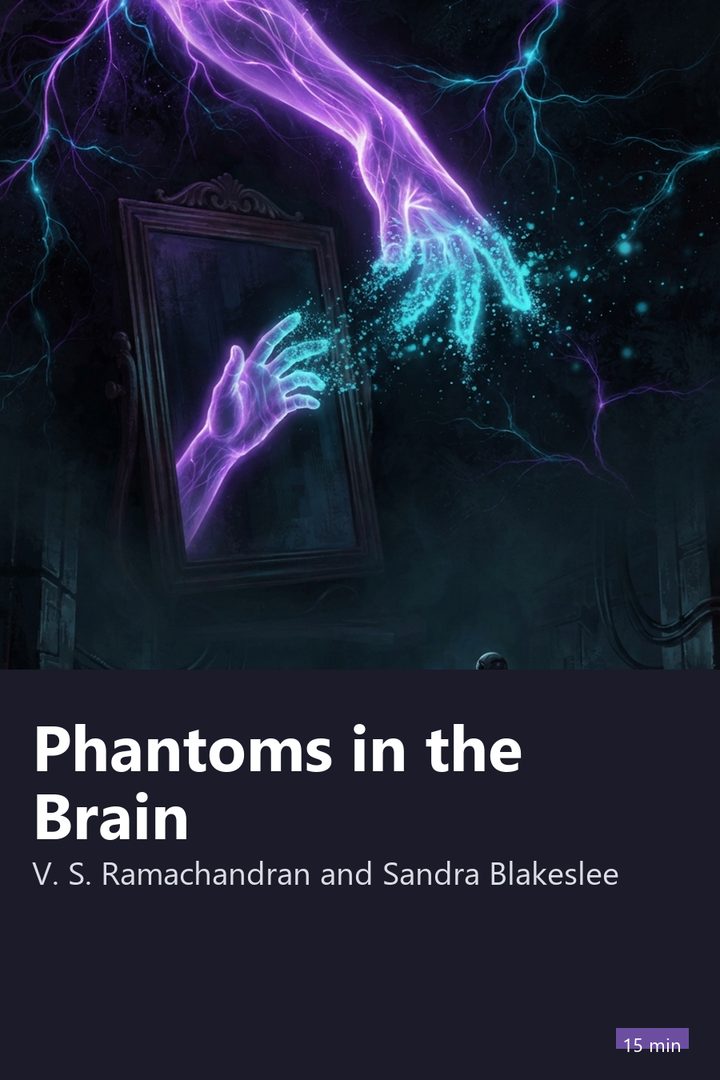
Imagine waking up after surgery, missing one of your hands, and feeling your fingers itch. It is neither madness nor wishful thinking: it is what is called a phantom limb, a phenomenon that affects the vast majority of people who lose an arm or a leg. Neuroscientist V. S. Ramachandran opens the book with this mystery because it shows that the body we feel lives in the brain, not in our bones.
For a long time, the official explanation held that severed nerves were simply sending out faulty signals. Ramachandran was skeptical. Instead of treating the patient as a lost cause, he decided to run simple experiments using cotton swabs, mirrors, and cardboard, and simply ask the patient what he was feeling.
That is the style of the book: real-life cases of people with unusual brain lesions, used as windows to understand how the normal brain works. It is like taking apart a broken radio and figuring out, from the strange sounds it makes, which part is responsible for what.