15 Minutes
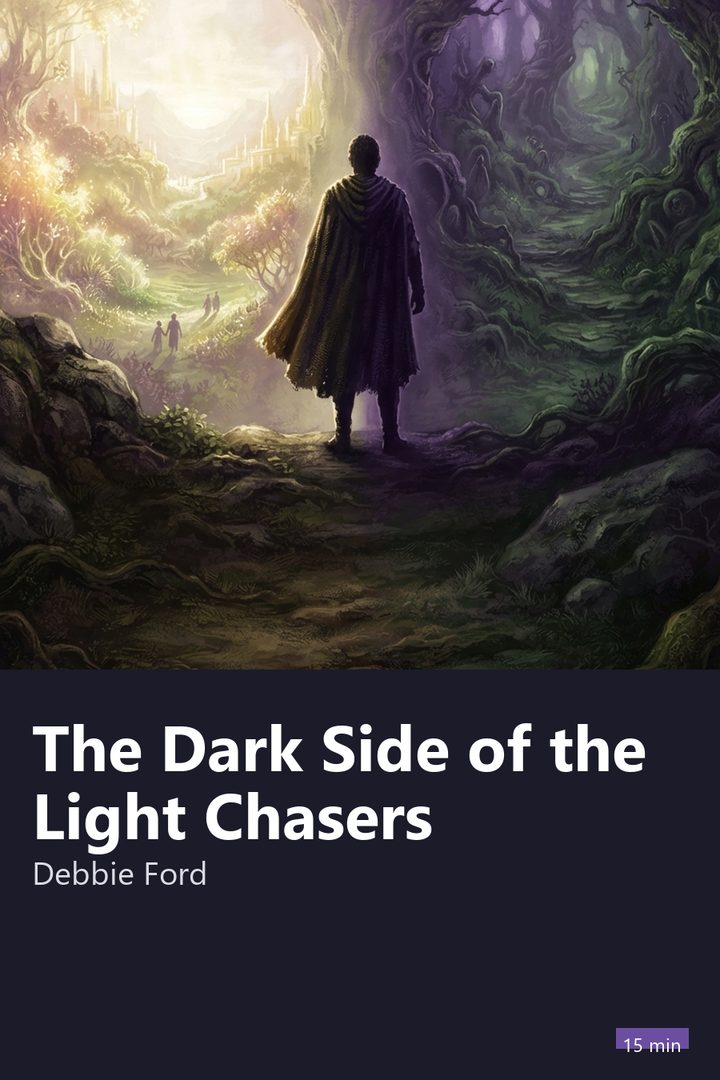
Cover of The Dark Side of the Light Chasers

Psychology · 16 min

The Dark Side of the Light Chasers

Debbie Ford · 1998

Who it's for

For anyone who takes spirituality, positive thinking, or personal development seriously and still feels that certain reactions slip out of control. It is also for readers who want to reflect on their own irritations, admirations, and masks.

Read it in the app

⚡ Free to download • 🎁 One full book free every day

🎧 Audio coming soon in the app

Narration for the English summaries is on its way. Meanwhile you can read the full summary in the app.

3 ideas to take with you

1

According to the book, part of what we admire in others is a quality of our own that we have not yet claimed.

2

Understanding the function of a difficult trait, like anger, is different from justifying the harm it causes.

3

The bigger a leader's image of perfection, the greater the risk that the hidden side will break out, according to the author.

“
According to Ford, what we repress doesn't go away: it gains strength and comes back at the worst moment.
An idea from The Dark Side of the Light Chasers, in the words of 15 Minutes

Preview

Start reading now

Who the light chasers are

The title gives away the theme: Debbie Ford calls people who make spiritual growth a life project light chasers. They meditate, read books, go on retreats, cultivate gratitude, and try to be positive, generous, and loving all the time. From the outside, they look like a model of serenity.

The book's thesis is that this pursuit carries a hidden price. If a person decides that the only acceptable thing to be is light, the traits that don't fit the image, like anger, envy, selfishness, greed, desire, and fear, don't go away. They go into an inner basement that Ford, following Carl Jung, calls the shadow.

The book grows out of that observation and an uncomfortable question: why do so many people devoted to doing good still struggle with outbursts, addictions, guilt, and relationships that turn sour? The answer, according to the author, lies in what was pushed down. The text mixes popular psychology, personal stories, and practical exercises.

How the shadow is made in childhood

Ford explains that nobody is born with a shadow. It forms in childhood, when a child discovers that certain parts of themselves bring scolding or rejection: yelling, being selfish, showing sadness, wanting to be noticed. To keep the love of the people who care for them, they learn to hide those parts.

Phrases like 'boys don't cry,' 'that's not nice, young lady,' and 'stop being so full of yourself' gradually sketch out what is and isn't allowed. The psychological tradition the author draws on compares the shadow to an invisible bag we drag through life, full of whatever was judged unacceptable.

The curious part is that the bag also holds good things. A child who hears 'you think you're so great' may hide their shine, and one who hears 'be quiet' may hide their voice. That is why, according to the book, the shadow is not just the ugly side: it is everything that was left without a place in the image we built of ourselves.

The price of repression

The book's strongest idea is that repressing doesn't eliminate, it only pushes things into the dark. What stays hidden doesn't disappear: it gains energy, comes back through the back door, and shows up at unexpected moments, such as disproportionate outbursts, compulsions, illness, slips of the tongue, and self-sabotage.

Think of the person who takes pride in never losing their patience and suddenly unloads everything in the bank line. Or the mother who says she is calm and yells at her child over something trivial. For Ford, the exaggerated gesture comes from the buildup of everything that couldn't be said or felt in the moment.

There is partial support in the research. Studies on suppressing thoughts and emotions show that trying not to think about something tends to increase the thought, and that hiding emotions all the time takes a toll. What the book does is turn this into a general theory of spiritual life, and that is where the debate gets more open.

11 more sections and the quiz

Continue in the app

Read the whole summary, finish with the The Dark Side of the Light Chasers quiz and follow the guided Journeys. No ads in the app.

About Debbie Ford

Debbie Ford was an American author, speaker, and coach, known for her work on self-knowledge and the idea of the shadow. She founded the Ford Institute for Integrative Coaching, a school for training coaches. Among other books, she wrote Spiritual Divorce, in 2001, and The Secret of the Shadow, in 2002, but The Dark Side of the Light Chasers, from 1998, was her first big success. She died in 2013.

Explore

Category:
Psychology
Part of the Journeys:
Jung, Myths, and Symbols