15 Minutes
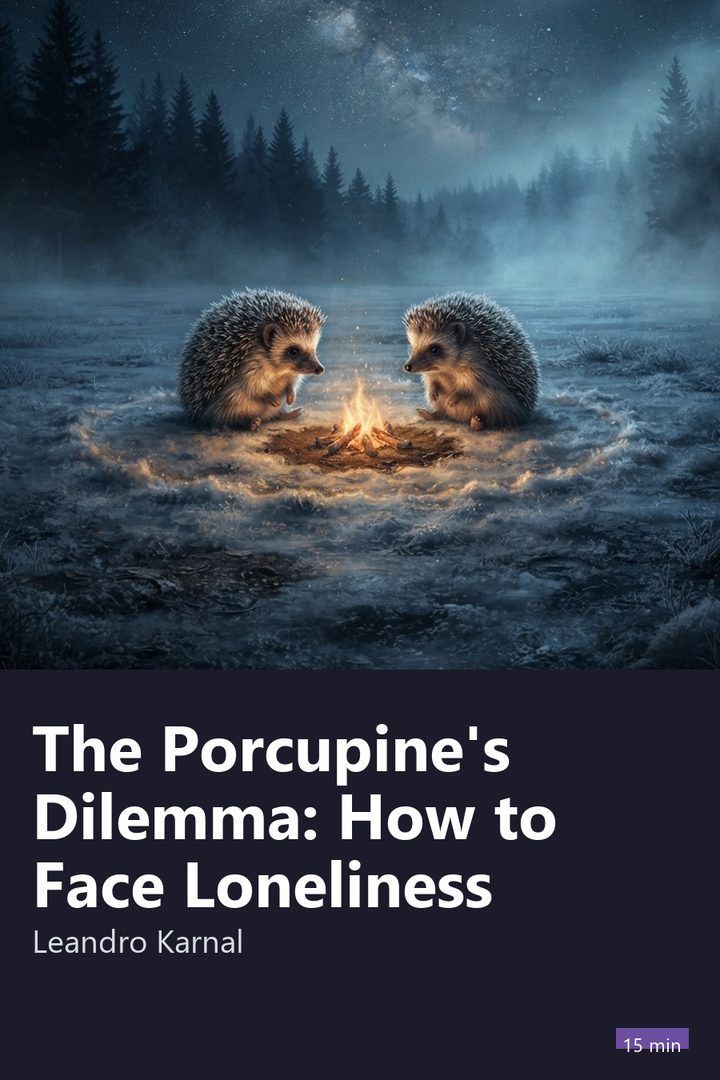
Cover of The Porcupine's Dilemma: How to Face Loneliness

Psychology · 14 min

The Porcupine's Dilemma: How to Face Loneliness

Leandro Karnal · 2018

Who it's for

Original title (Portuguese): O Dilema do Porco-Espinho: Como Encarar a Solidão. For anyone who feels lonely even when surrounded by people, fears being alone or getting hurt in relationships, or enjoys reflection grounded in philosophy and history. It's also for anyone wondering how much closeness belongs in a friendship, a family, or a marriage.

Read it in the app

⚡ Free to download • 🎁 One full book free every day

🎧 Audio coming soon in the app

Narration for the English summaries is on its way. Meanwhile you can read the full summary in the app.

3 ideas to take with you

1

The right amount of closeness isn't predetermined: every relationship requires adjusting the distance, like animals warming one another without getting pricked.

2

Loneliness and solitude are different things: one hurts because someone is missing; the other nourishes because you've chosen your own company.

3

For the author, fear of being alone leads many people to tolerate harmful relationships. The honest question is what they're buying with that companionship.

“
Being nearby isn't the same as being together, and warmth only works when you find the right distance.
An idea from The Porcupine's Dilemma: How to Face Loneliness, in the words of 15 Minutes

Preview

Start reading now

The Fable of the Animals Out in the Cold

The image behind the book's title comes from the German philosopher Arthur Schopenhauer. On a bitter winter day, a group of porcupines huddles together to share warmth and avoid freezing to death. When they get too close, their quills hurt one another. When they move apart, the cold returns. It's a simple starting point, but it mirrors many everyday situations, from a packed bus to the family group chat.

After several attempts, they discover a middle distance where the warmth is comfortable and the pricks are tolerable. In the philosopher's version, that distance is what human society calls good manners and social rules.

The book uses this fable as its guiding thread. The question running throughout is how to stay close enough not to freeze from loneliness and far enough away neither to hurt others nor get hurt.


Loneliness and Solitude

The author draws a very helpful distinction. Loneliness, in its painful sense, is the feeling that something is missing: you want company, but it doesn't come. Solitude means being alone by choice, using the quiet to think, read, rest, and get to know yourself.

In practice, the same Sunday afternoon can be either one. For one person, it's the emptiness of waiting for a call that never came. For another, it's the pleasure of organizing bookshelves, listening to a record, and not talking to anyone.

The difference lies less in what you do than in your relationship with your own time. People who learn to enjoy their own company suffer less when others aren't around.

We Can't Live Without Others or Disappear into Them

The fable reveals a paradox: we need people to live well, but people get on our nerves. Every relationship has quills, whether they come from temperament, personal history, or the expectations each person brings.

The book argues that no bond is free of friction, and wanting a relationship without any conflict means asking for something that doesn't exist. People who cut everyone off at the first prick end up isolated. Those who cling without limits end up hurt. That's why the book places less value on finding the perfect partner or friend and more on learning to deal with real people and their real flaws.

This changes how we understand many problems. If conflict is normal, the question isn't how to eliminate it but how to work through it respectfully, staying neither so close that you suffocate nor so far away that things turn cold.

13 more sections and the quiz

Continue in the app

Read the whole summary, finish with the The Porcupine's Dilemma: How to Face Loneliness quiz and follow the guided Journeys. No ads in the app.

About Leandro Karnal

Leandro Karnal is a Brazilian historian born in São Paulo. He earned his doctorate in social history from the University of São Paulo and taught for many years at the University of Campinas. He became known as a speaker and the author of books blending philosophy, history, and human behavior. His writing and talks circulate widely on television and online.

Explore

Category:
Psychology
Part of the Journeys:
Meaning and Serenity