
Economy and Society
Best economy and society books summarized in 15 minutes
Why do some countries get rich and others do not? Has violence gone up or down? Why do we decide in such irrational ways? This selection gathers books by economists, historians, psychologists and sociologists who try to answer questions like these.
On the wider world, there are Why Nations Fail, Prisoners of Geography, The Wealth of Nations, Capital in the Twenty-First Century and Doughnut Economics. On Brazil, there are Roots of Brazil by Sérgio Buarque de Holanda, The Masters and the Slaves by Gilberto Freyre, The Brazilian People by Darcy Ribeiro and Structural Racism by Silvio Almeida.
The authors disagree a lot. Steven Pinker in The Better Angels of Our Nature and Hans Rosling in Factfulness point to progress. Timothy Snyder in On Tyranny writes about threats to democracy. Freakonomics and Predictably Irrational apply economics and psychology to everyday choices, and Noise examines how judgments by highly trained people vary more than expected. The summaries lay out each thesis, and the conclusion is yours.
Economy and Society summaries
 16 min
The Masters and the Slaves: A Study in the Development of Brazilian Civilization
Gilberto Freyre
Brazilian food, language, and celebrations still carry a blend of Portuguese, Indigenous, and African heritage that began inside the big house.
 16 min
Enlightenment Now
Steven Pinker
Extreme poverty falling worldwide doesn't erase inequality inside each country. They are two different problems, measured with different yardsticks.
 17 min
The Rational Optimist: How Prosperity Evolves
Matt Ridley
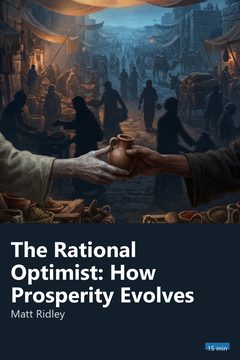
A family that cuts off all exchange with the rest of the world and tries to produce everything on its own does not become freer. It becomes poorer and more fragile, because no individual talent can handle doing every step of every task in life well.
 17 min
The Brazilian People: The Formation and Meaning of Brazil
Darcy Ribeiro
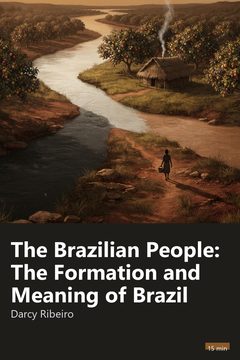
Darcy calls the emptiness of the mixed-race person of the first centuries "nobodiness" (ninguendade): with no full place in the Indigenous, Portuguese, or African tradition, they had to invent an identity of their own.
 16 min
The Better Angels of Our Nature: Why Violence Has Declined
Steven Pinker
Good table manners began as a status contest among nobles in European courts; without realizing it, we inherited that impulse control for our whole lives, not just for dinner.
 17 min
Roots of Brazil
Sérgio Buarque de Holanda
According to Sérgio Buarque, the resistance to impersonal rules and orderly lines that many people today call the Brazilian way was not born here: it arrived in the cultural baggage of Portugal, of an Iberian Peninsula that valued the standout individual more than anonymous association among strangers.
 13 min
Freakonomics
Steven D. Levitt and Stephen J. Dubner
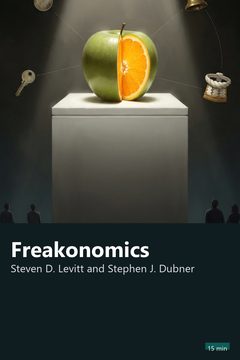
Where the payoff is big and nobody is watching closely, shortcuts tend to show up, even among respectable people.
 17 min
Predictably Irrational
Dan Ariely
Asking for a favor out of affection and charging for it with money are different contracts, and mixing the two usually ruins the first.
 14 min
The Crowd
Gustave Le Bon
For Le Bon, anonymity gives the impression that no one will answer for what the group does, and that loosens brakes a person alone would keep on.
 17 min
Noise
Daniel Kahneman, Olivier Sibony and Cass R. Sunstein
In a company that never compares decisions, the gap between professionals can be far bigger than anyone imagines: at the insurance company in the book, it was more than five times what was expected.
 19 min
Why Nations Fail: The Origins of Power, Prosperity, and Poverty
Daron Acemoglu and James A. Robinson
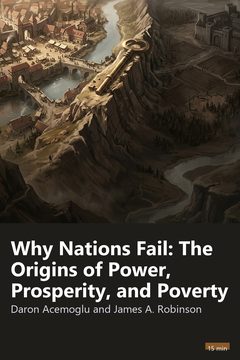
The difference in quality of life between two neighboring towns does not come from climate or soil, but from the rules of the game that determine whether ordinary citizens have the security to work and keep the fruits of their labor.
 18 min
On Tyranny: Twenty Lessons from the Twentieth Century
Timothy Snyder
Laws and courts only remain standing as long as citizens actively choose to defend them in the real world.
 18 min
Factfulness
Hans Rosling
Most of humanity does not live in the extremes of misery or opulence, but in a middle range that a hurried glance usually overlooks.
 18 min
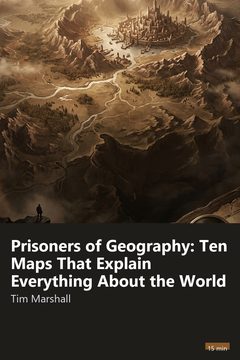
Prisoners of Geography: Ten Maps That Explain Everything About the World
Tim Marshall
For the author, governments that occupy vast plains without natural barriers tend to spend more energy creating buffer states around themselves than nations protected by seas.
 17 min
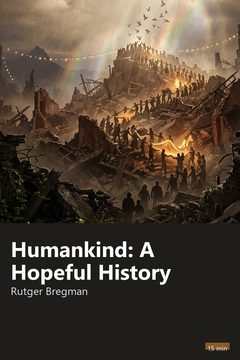
Humankind: A Hopeful History
Rutger Bregman
In real situations of emergency and isolation, human groups tend to organize themselves around mutual solidarity, debunking the stereotype that chaos brings out only savagery.
 17 min
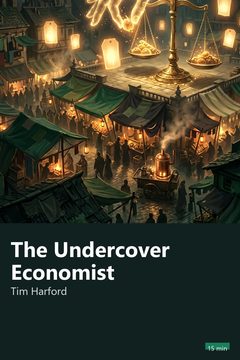
The Undercover Economist
Tim Harford
The price of a product downtown often pays for the scarcity of prime retail space, rather than the actual cost of making it.
 18 min
23 Things They Don't Tell You About Capitalism
Ha-Joon Chang
Markets do not spring up in a natural vacuum; they operate backed by collective rules that define what can and cannot be sold.
 19 min
Capital in the Twenty-First Century
Thomas Piketty
Similar salaries can conceal very different degrees of freedom when only one person already owns assets.
 19 min
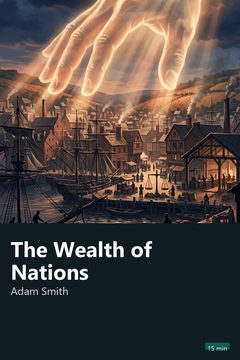
The Wealth of Nations
Adam Smith
Specializing tasks can multiply production, but coordinating responsibilities is what turns efficient parts into a working whole.
 18 min
Doughnut Economics
Kate Raworth
When an indicator becomes the destination, whatever it fails to measure can end up treated as if it has no value.
 21 min
Structural Racism
Silvio Almeida
A classification may have no biological basis and still produce material consequences when it guides how people are treated.
 18 min
The Power of Crisis: How Three Threats, and Our Response, Will Change the World
Ian Bremmer
Political inertia in the face of long-term risks is overcome only when the shock of a crisis hits society with undeniable, visible force.
 16 min
Black Skin, White Masks
Frantz Fanon
For Fanon, the psychic wound of racism cannot be resolved in the therapist's office alone: the social conditions that produce it must also change.
 17 min
Women, Race & Class
Angela Y. Davis
A victory that benefits only one group can leave out the people who needed it most.
 15 min
The World Is Flat
Thomas L. Friedman
According to the author, globalization has had three phases, with the current one driven by individuals connected through networks.
 16 min
New Power
Henry Timms and Jeremy Heimans
Cases like the Ice Bucket Challenge share a clear invitation, a simple way to participate, and a sense of belonging.
 14 min
The Year of Living Danish
Helen Russell
For the author, Danish happiness has less to do with an upbeat outlook and more to do with fewer worries about basics like healthcare, education, and old age.
 15 min
Politics: So You're Not an Idiot
Mario Sergio Cortella & Renato Janine Ribeiro
Staying out of the decisions of your condo board, your school or your neighborhood is not neutrality: it is handing your vote to whoever showed up.
 16 min
Why We Love Dogs, Eat Pigs, and Wear Cows
Melanie Joy
According to the book, words like meat and herd help the mind forget that there is an individual with its own experience.
Economy and Society authors
Steven Pinker · Adam Smith · Angela Y. Davis · Cass R. Sunstein · Dan Ariely · Daniel Kahneman, Olivier Sibony · Darcy Ribeiro · Daron Acemoglu · Frantz Fanon · Gilberto Freyre · Gustave Le Bon · Ha-Joon Chang · Hans Rosling · Helen Russell · Henry Timms · Ian Bremmer · James A. Robinson · Jeremy Heimans · Kate Raworth · Mario Sergio Cortella · Matt Ridley · Melanie Joy · Renato Janine Ribeiro · Rutger Bregman · Sérgio Buarque de Holanda · Silvio Almeida · Stephen J. Dubner · Steven D. Levitt · Thomas L. Friedman · Thomas Piketty · Tim Harford · Tim Marshall · Timothy Snyder
Journeys with Economy and Society books
Sequences of books that complete each other, to follow in the app.
🇧🇷 Brazil in Books
Understand where Brazil came from and why it is the way it is.
📊 Understand the Economy
How money and people's choices move the world.
🧩 Think Better
See the biases in your own head and decide with fewer mistakes.
✊ Voices Against Injustice
People and ideas that stood up to racism, tyranny, and blind obedience.
♟️ How Power Works
Geography, politics, and markets: who runs the world and why.
🗺️ Thinking Brazil
Classics and voices that explain where we came from and where the country is heading.
👀 Why We Act This Way
Morality, lies, crowds, and violence: what social psychology explains about us.
Frequently asked questions
+Do the authors of these books agree with each other?
Not always. Pinker and Rosling highlight improvements in health, income and violence. Thomas Piketty looks at wealth inequality. Timothy Snyder writes about threats to democracy. The summaries present what each one argues so you can compare the arguments.
+Where should I start with the books on Brazil?
Roots of Brazil by Sérgio Buarque de Holanda is a classic of Brazilian thought. The Brazilian People by Darcy Ribeiro tells how the country's population formed. The Masters and the Slaves is also a classic, now read with a critical eye, and Structural Racism by Silvio Almeida discusses how racism shows up in institutions.
+How does 15 Minutes work?
On this site you can see who each book is for, its key ideas and a preview of the summary. In the app you get the full summary as text, a quiz at the end of each book, guided Journeys and new books every week. The app is free to download and you can read one full book free every day. Premium: $19.99/year in the US (price shown in your App Store). Audio narration for the English summaries is coming soon.
Other categories
Economy and Society in your pocket
Full text summaries, a quiz at the end of each book and guided Journeys. New books every week.
Download the appFree to download • one full book free every day • Premium: $19.99/year in the US