
Science
Best science books summarized in 15 minutes
Good science writing makes you look at the sky, your own body or your own decisions differently. Here are the big names of the genre: Carl Sagan in Cosmos, Stephen Hawking in A Brief History of Time, Richard Dawkins in The Selfish Gene and Bill Bryson in A Short History of Nearly Everything.
The selection covers physics and the universe with Carlo Rovelli and Brian Greene, evolution with Charles Darwin and Dawkins, and the science of judgment with Daniel Kahneman in Thinking, Fast and Slow and Leonard Mlodinow in The Drunkard's Walk, two books showing how chance and mental shortcuts fool even well-prepared people. Guns, Germs, and Steel and The Brain add history and neuroscience.
The summaries explain concepts in plain language, with everyday examples and no equations. In 15 minutes you grasp the central idea of each book and gain the vocabulary to keep reading on your own, whether that means the full book or another title in the same field.
Science summaries
 15 min
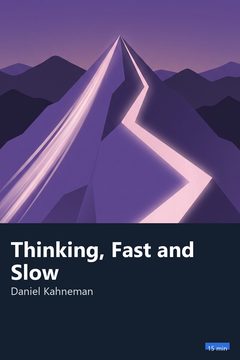
Thinking, Fast and Slow
Daniel Kahneman
Your fast mind answers before you even realize a question was asked, and it doesn't always answer the right question.
 15 min
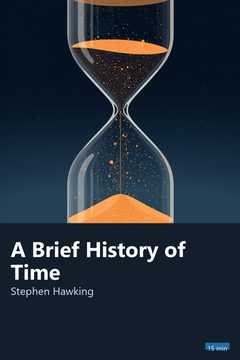
A Brief History of Time
Stephen Hawking
Gravity is not a rope pulling two objects together. It is the space around a large mass becoming curved, guiding other bodies along.
 15 min
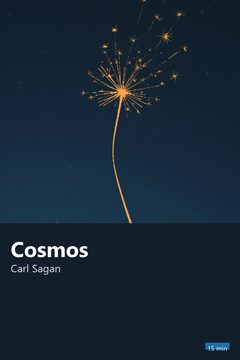
Cosmos
Carl Sagan
Science is the habit of testing an idea over and over and throwing out your favorite if the evidence points another way.
 15 min
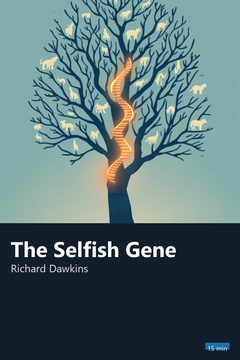
The Selfish Gene
Richard Dawkins
A generous behavior can be, deep down, the best long-term play for copying genes similar to your own.
 17 min
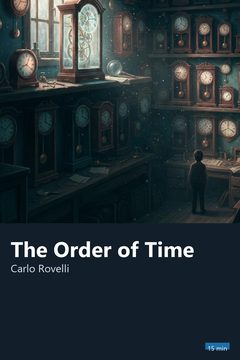
The Order of Time
Carlo Rovelli
According to Rovelli's bet, time may not be a basic ingredient of the universe, just an effect that shows up when we look at a system from far away.
 18 min
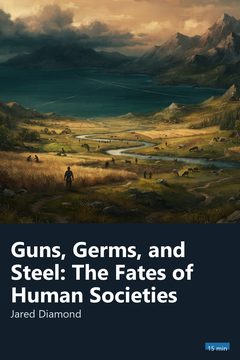
Guns, Germs, and Steel: The Fates of Human Societies
Jared Diamond
According to Diamond, of the tens of thousands of wild plants, only a handful could become reliable crops, and a good share of them were concentrated in the Fertile Crescent.
 16 min
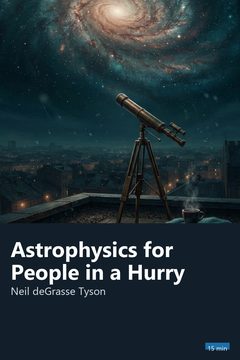
Astrophysics for People in a Hurry
Neil deGrasse Tyson
The same physical laws that hold in your neighborhood hold in any distant galaxy, and that consistency is what lets astronomers study stars far beyond the reach of any human trip.
 17 min
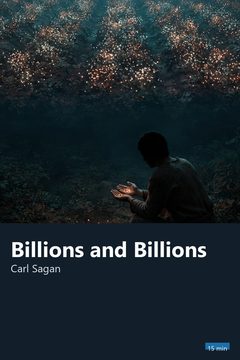
Billions and Billions
Carl Sagan
For centuries we imagined the world had only four corners, because one person's direct experience reached only a small patch of territory.
 17 min
A Short History of Nearly Everything
Bill Bryson
Bryson shows that the most obvious questions about our own planet rarely have easy answers, until someone gets bothered enough to chase them for years.
 16 min
The Drunkard's Walk: How Randomness Rules Our Lives
Leonard Mlodinow
Two or three times in a row do not make a reliable pattern; they make a sample too small to prove anything on its own.
 16 min
The Blind Watchmaker
Richard Dawkins
Natural selection can't see the future and isn't chasing a goal: generation after generation, it just keeps whatever worked well enough to survive and leave offspring.
 16 min
The Elegant Universe: Superstrings, Hidden Dimensions, and the Quest for the Ultimate Theory
Brian Greene
The two best-tested theories in physics, the one about gravity and the one about the quantum world, agree on almost everything, except what happens inside a black hole or at the instant the universe was born.
 15 min
The Universe in a Nutshell
Stephen Hawking
According to Hawking's theoretical prediction, not yet directly observed, quantum effects make a black hole slowly give off radiation: even the darkest object in the universe wouldn't be completely black.
 17 min
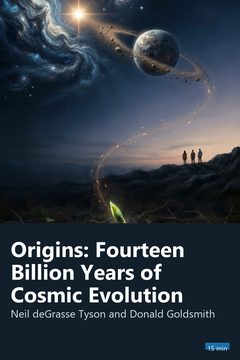
Origins: Fourteen Billion Years of Cosmic Evolution
Neil deGrasse Tyson and Donald Goldsmith
The amount of matter left over in the universe after matter and antimatter collided was small enough to fit in a ratio of one in a billion, and even so, it is what makes up everything that exists today.
 16 min
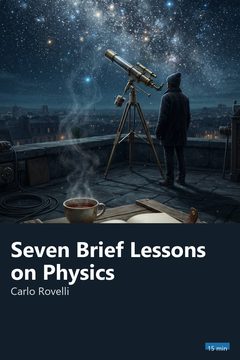
Seven Brief Lessons on Physics
Carlo Rovelli
Every generation thought it was finally seeing the limits of the universe, and the next one discovered it was only seeing the nearest wall.
 15 min
At Home: A Short History of Private Life
Bill Bryson
When the English government taxed windows, whole families bricked up openings in their walls, trading light and air for savings, a reminder that every tax changes behavior, not just budgets.
 17 min
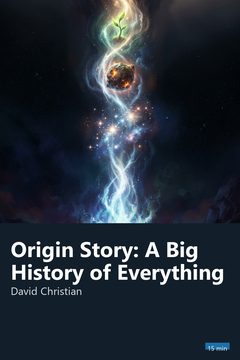
Origin Story: A Big History of Everything
David Christian
For Christian, telling the story of the universe as a science-based origin myth helps give a shared sense of meaning to peoples who once each had their own narrative.
 18 min
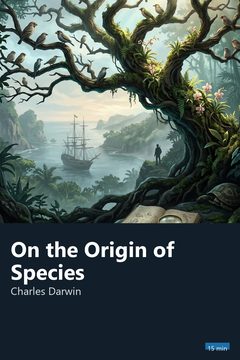
On the Origin of Species
Charles Darwin
The intentional manipulation of traits in domestic plants and animals reveals how small choices accumulated over generations can redesign entire biological forms.
 16 min
Big Data: Does Size Matter?
Timandra Harkness
Pioneers of statistics used numbers to save lives on a collective scale, whereas modern digital surveillance seeks to track the isolated individual.
 15 min
Where Good Ideas Come From
Steven Johnson
Lasting innovations usually emerge just one step away from what already exists, rather than out of nowhere.
 18 min
Hackers & Painters
Paul Graham
The teenage obsession with popularity acts as a tournament of appearances that drains the energy needed to master real skills.
 16 min
The Industries of the Future
Alec Ross
Automation advances fastest where it replaces routine tasks, requiring humans to cultivate empathy and creativity.
 15 min
Thinking in Numbers
Daniel Tammet
Mathematics becomes less intimidating when we understand that numbers are a language of imagination and beauty, not just mechanical formulas.
 15 min
The Runaway Species
Anthony Brandt & David Eagleman
When you break a problem into parts and put it back together in a new way, the solution shows up without waiting for inspiration.
 14 min
Thinking in Systems: A Primer
Donella H. Meadows
Most persistent problems result not from individuals' bad intentions, but from the flawed structure of the systems we operate within.
 15 min
Brief Answers to the Big Questions
Stephen Hawking
Black holes emit a faint radiation and can evaporate, which raised the puzzle of what happens to the information that falls into them.
 16 min
Beyond the Self: Conversations between Buddhism and Neuroscience
Matthieu Ricard and Wolf Singer
The self we feel as solid looks, to both the monk and the scientist, more like a stream stitched together by the brain than a fixed thing.
 17 min
The Brain: The Story of You
David Eagleman
Autopilot brings efficiency to everyday life, but it lets biases slip through unnoticed until someone pays attention to them.
 13 min
How to Lie with Statistics
Darrell Huff
When someone talks about an average salary, it pays to ask which average was used, because the middle of the line can tell a very different story from the divided total.
 16 min
Parallel Worlds
Michio Kaku
According to inflation theory, the universe expanded incredibly fast at the very beginning, smoothing out its own differences.
 16 min
The Female Brain
Louann Brizendine
For the author, childhood friendships are so important to girls that exclusion can hurt as much as a major loss.
 14 min
The Numbers Game
Chris Anderson and David Sally
Those who fire the coach at the worst moment usually end up celebrating an improvement that would have come anyway.
Science authors
Stephen Hawking · Bill Bryson · Carl Sagan · Carlo Rovelli · David Eagleman · Neil deGrasse Tyson · Richard Dawkins · Alec Ross · Anthony Brandt · Brian Greene · Charles Darwin · Chris Anderson · Daniel Kahneman · Daniel Tammet · Darrell Huff · David Christian · David Sally · Donald Goldsmith · Donella H. Meadows · Jared Diamond · Leonard Mlodinow · Louann Brizendine · Matthieu Ricard · Michio Kaku · Paul Graham · Steven Johnson · Timandra Harkness · Wolf Singer
Journeys with Science books
Sequences of books that complete each other, to follow in the app.
🔁 Habits That Stick
Swap willpower for a system: small habits that last.
🧠 How the Mind Works
Understand why we decide, feel, and repeat what we repeat.
🔭 Science Curiosity
The universe, evolution, and the history of humankind, 15 minutes each.
🧩 Think Better
See the biases in your own head and decide with fewer mistakes.
🏺 World History
From Rome and the czars to the wars that drew today's map.
🌌 The Universe Made Simple
Black holes, time, and modern physics in plain language.
Frequently asked questions
+Do I need physics or math to follow the summaries?
No. The summaries explain concepts in simple language with examples. Astrophysics for People in a Hurry and A Short History of Nearly Everything are great for readers with no background at all.
+Which science book should I read first?
If you are drawn to the universe, try Cosmos or Astrophysics for People in a Hurry. For human behavior, Thinking, Fast and Slow. For our history as a species, Guns, Germs, and Steel.
+How does 15 Minutes work?
On this site you can see who each book is for, its key ideas and a preview of the summary. In the app you get the full summary as text, a quiz at the end of each book, guided Journeys and new books every week. The app is free to download and you can read one full book free every day. Premium: $19.99/year in the US (price shown in your App Store). Audio narration for the English summaries is coming soon.
Other categories
Science in your pocket
Full text summaries, a quiz at the end of each book and guided Journeys. New books every week.
Download the appFree to download • one full book free every day • Premium: $19.99/year in the US