
Personal Finance
Best personal finance books summarized in 15 minutes
A good money book rarely promises easy wealth. It changes how you see your paycheck, your debt and your time. This selection runs from old classics like The Richest Man in Babylon and The Intelligent Investor to modern voices such as Morgan Housel, Ramit Sethi and J.L. Collins, plus Brazilian authors like Gustavo Cerbasi and Thiago Nigro, whose ideas travel well.
The books cover three steps. First, getting organized: knowing where your money goes and building a cushion, with titles like Your Money or Your Life and The Total Money Makeover. Next, the mindset: the beliefs and habits behind autopilot spending, the theme of The Psychology of Money and Secrets of the Millionaire Mind. Finally, investing with patience, from index funds in The Little Book of Common Sense Investing and A Random Walk Down Wall Street to the stock-picking views of Peter Lynch and Philip A. Fisher.
Each summary takes about 15 minutes and ends with ideas you can try the same day. None of them is investment advice. They simply show what each author argues, so you can compare the different views side by side and then decide for yourself what fits your life.
Personal Finance summaries
 15 min
Rich Dad Poor Dad
Robert T. Kiyosaki
Before you call something an investment, check whether it pays you every month or just sends you a bill after the purchase.
 15 min
Secrets of the Millionaire Mind
T. Harv Eker
Earning more without changing your habits around money tends to land you right back at the same old balance.
 15 min
The Richest Man in Babylon
George S. Clason
Saving money is less about how much you earn and more about the order in which you decide to spend.
 15 min
The Intelligent Investor
Benjamin Graham
A stock isn't just a number flashing on a screen. It's a real piece of a company, with profits, debt, and people showing up to work.
 15 min
Smart Couples Get Rich Together
Gustavo Cerbasi
A couple that never talks about money is not avoiding the problem, just postponing it until it gets too big.
 15 min
The Millionaire Next Door
Thomas J. Stanley and William D. Danko
You can earn well your whole life and never build any wealth, if your spending habits grow at the same pace as your paycheck.
 15 min
Antifragile: Things That Gain from Disorder
Nassim Nicholas Taleb
Taking the hit and going back to how you were before is a tie; what makes a difference in the long run is coming out of the hit a little better.
 15 min
The Psychology of Money
Morgan Housel
Real wealth is what nobody sees: money saved, not a showroom display meant to impress visitors.
 16 min
Your Money or Your Life
Vicki Robin and Joe Dominguez
The pay stub hides the real cost of an hour of work, and it only shows up once you add up the time and the spending that the job itself demands in order to exist.
 14 min
From Thousand to Million: Without Cutting Out the Coffee
Thiago Nigro
The three pillars only work together: without controlling spending, whatever extra you earn disappears as fast as it came in.
 17 min
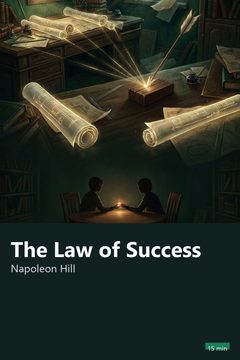
The Law of Success
Napoleon Hill
Chasing a single, specific goal with a written deadline tends to produce more practical decisions than chasing several vague goals at once.
 16 min
The Black Swan
Nassim Nicholas Taleb
The more days a routine repeats without failing, the more confident you get, right when the risk behind it has also grown.
 15 min
Smart Women Finish Rich
David Bach
A woman's biggest financial risk isn't picking the wrong investment. It's never deciding anything and leaving her entire financial life in someone else's hands.
 15 min
How to Organize Your Financial Life
Gustavo Cerbasi
Without a diagnosis, every budget turns into a list of good intentions that won't survive the first surprise.
 16 min
Me Poupe! Enriqueça sem Cortar o Cafezinho
Nathalia Arcuri
Compound interest works the same way in both directions: against you in expensive debt, and in your favor in savings that grow with time and patience.
 16 min
Money: Master the Game
Tony Robbins
If you decide to set aside a slice of your paycheck before you even see the money land in your account, you've already won the hardest part of the game, before you've picked a single investment.
 16 min
Money: The Secrets of Those Who Have It
Gustavo Cerbasi
Having money isn't about earning a lot. It's about spending less than comes in, year after year, without exception.
 17 min
I Will Teach You to Be Rich
Ramit Sethi
Automating the transfer of your paycheck to what matters is stronger than relying on willpower at the end of every month.
 15 min
Financial Freedom
Grant Sabatier
How much you save every month matters more to the final result than how much you earn: you can go far saving a little, and you can never get anywhere earning a lot.
 16 min
Rule #1
Phil Town
Buying a stock without understanding what the company does is like lending money to a partner you've never seen work.
 16 min
Women & Money
Suze Orman
The order the author proposes is people first, then money, then things: whoever flips that sequence usually sacrifices relationships and security to buy stuff.
 16 min
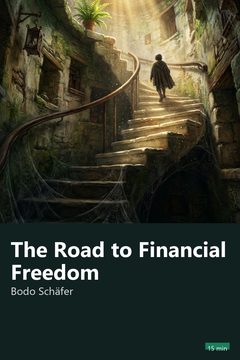
The Road to Financial Freedom
Bodo Schäfer
Blaming the economy, the boss, or bad luck for your own bank balance is comfortable, but it also means giving up the only control that really exists: the next decision about the money coming in.
 16 min
The Simple Path to Wealth
J.L. Collins
The more complicated your investing plan is, the more likely you are to wreck it yourself out of anxiety. Simplicity isn't laziness, it's protection.
 15 min
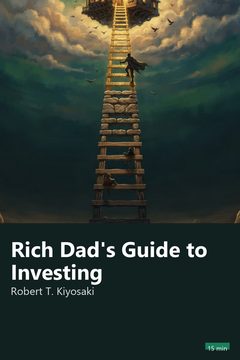
Rich Dad's Guide to Investing
Robert T. Kiyosaki
Saving money is only the zero rung: someone who just saves is not an investor yet, and the book describes four more rungs before anyone becomes an owner of their own business.
 15 min
Millionaire Teacher
Andrew Hallam
Rebalancing your portfolio once a year forces you to sell a little of what went up and buy a little of what went down, exactly the opposite of what your instinct tells you to do.
 16 min
Think and Grow Rich
Napoleon Hill
Persistence, for this book, is not stubbornness without thinking: it means adjusting the plan after every attempt that didn't work and trying again with a better plan.
 15 min
The Automatic Millionaire
David Bach
If you depend on remembering to save every month, you are at the mercy of your own mood on a bad day; if you schedule the transfer once, you never have to remember anything again.
 15 min
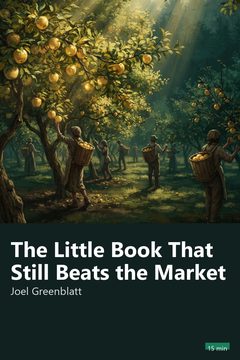
The Little Book That Still Beats the Market
Joel Greenblatt
A profitable company that needs little money to keep earning is worth more, in practice, than one that earns the same but devours capital just to stay on its feet.
 16 min
Rich Dad's Cashflow Quadrant
Robert T. Kiyosaki
Switching quadrants changes less about how much you earn and more about the kind of contract you have with your own time.
 16 min
The Zurich Axioms
Max Gunther
Real confidence isn't believing things will work out. It's having already decided what you'll do if they don't.
 17 min
The Little Book of Common Sense Investing
John C. Bogle
A cost that looks small every year turns into a huge hole after twenty or thirty years, because it gets multiplied by compound interest too, only this time against you.
 16 min
The Outsiders: Eight Unconventional CEOs and Their Radically Rational Blueprint for Success
William N. Thorndike
Almost no business course teaches what to do with profit after it lands in the bank account, and that is exactly where ordinary CEOs and the ones who stand out part ways.
 16 min
The Four Pillars of Investing
William Bernstein
Studying past bubbles doesn't teach you to predict the next one. It teaches you to recognize the same emotional script playing out again with a new character center stage.
 15 min
Principles: Life and Work
Ray Dalio
Failing fast and writing down why you failed teaches you more than succeeding without understanding the reason.
 16 min
Second Chance
Robert T. Kiyosaki
Swapping a dollar backed by gold for a dollar backed by trust in the government did not change the paper in your pocket. It changed who decides how much of that paper will exist tomorrow.
 16 min
A Random Walk Down Wall Street
Burton G. Malkiel
A price that only rises because it rose yesterday is being held up by other people's expectations, not by any real value behind it.
 17 min
One Up On Wall Street
Peter Lynch
Noticing a change in your neighborhood's businesses before it hits the news is a real advantage, but it is only worth something after it becomes research, never before.
 16 min
Common Stocks and Uncommon Profits
Philip A. Fisher
For Fisher, spreading a little money across lots of unfamiliar stocks usually hides insecurity in the analysis, and doesn't really protect the investor from it.
 16 min
O Rei dos Dividendos: A Saga do Filho de Imigrantes Pobres que se Tornou o Maior Investidor Pessoa Física da Bolsa de Valores Brasileira
Luiz Barsi Filho
People who keep swapping stocks to chase whatever is hot this week end up chasing their own tails; people who pick a few good companies and hold on let time do the work on its own.
 16 min
Nudge: Improving Decisions About Health, Wealth, and Happiness
Richard H. Thaler and Cass R. Sunstein
According to the book, being asked to save more out of a raise that hasn't arrived yet hurts less than being asked to save more out of the paycheck that's already in your pocket.
 16 min
The Warren Buffett Way
Robert G. Hagstrom
According to Hagstrom, an executive who admits a mistake in writing in the shareholder letter reveals more about the company's future than any single number from that quarter.
 18 min
Rich People's Stuff: The Lives of Wealthy Brazilians
Michel Alcoforado
The perception of wealth in Brazil works like a moving horizon: people at the top of the income pyramid usually see themselves as middle class when comparing their earnings to even larger fortunes.
 18 min
The Big Short
Michael Lewis
Taking the time to examine original contracts and raw numbers reveals severe risks that ready-made market opinions usually disguise.
 17 min
The Most Important Thing
Howard Marks
Identifying an excellent company is not enough. To earn a real profit, you must assess whether market optimism has already inflated its price enough to wipe out future returns.
 17 min
Financial Therapy: Achieve Your Dreams with Financial Education
Reinaldo Domingos
Saving money without a clear purpose feels like punishment, but setting aside funds for a specific goal turns daily sacrifice into a planned victory.
 20 min
The Total Money Makeover
Dave Ramsey
Paying off a debt can strengthen your determination to keep going, but motivation needs to be weighed against the cost of interest.
 17 min
I Want to Be Rich!
Maurício Bastter Hissa
True financial independence is the income generated by your assets paying for your essential expenses; everything else is just a high salary with a fancy name.
 15 min
Think and Grow Rich for Women
Sharon Lechter
Managing the household budget is already management training; what many people still lack is learning how to make their own money grow.
 16 min
Endgame
John Mauldin
Debt is future consumption brought forward: when it piles up for decades, society has to work for years just to pay for the past.
 19 min
Venture Deals
Brad Feld & Jason Mendelson
Every investment negotiation comes down to two fundamental pillars: how much money each party receives and who has the power to decide the direction of the business.
 16 min
Economic Facts and Fallacies
Thomas Sowell
An income bracket is a statistic, not a fixed group of people: when someone moves up in life, they leave that bracket and disappear from the comparison.
 16 min
The Man Who Solved the Market: How Jim Simons Launched the Quant Revolution
Gregory Zuckerman
Hiring mathematicians and physicists who knew nothing about traditional stock investing made it possible to spot statistical patterns that market veterans overlooked.
 16 min
The Essays of Warren Buffett
Warren Buffett
According to the book, today's price is one day's opinion, while a business's value needs to be estimated carefully.
 15 min
Crisis Economics
Nouriel Roubini
According to the book, financial crises are recurring phenomena with known causes, not bolts from the blue.
 15 min
How Countries Go Broke
Ray Dalio
According to the book, the top is usually recognized only in hindsight, because people inside the party rarely hear the music stop.
 14 min
Manias, Panics, and Crashes
Charles P. Kindleberger
For the author, crises follow a recognizable script that begins with a shock creating an opportunity for profit.
Personal Finance authors
Robert T. Kiyosaki · Gustavo Cerbasi · David Bach · Napoleon Hill · Nassim Nicholas Taleb · Ray Dalio · Andrew Hallam · Benjamin Graham · Bodo Schäfer · Brad Feld · Burton G. Malkiel · Cass R. Sunstein · Charles P. Kindleberger · Dave Ramsey · George S. Clason · Grant Sabatier · Gregory Zuckerman · Howard Marks · J.L. Collins · Jason Mendelson · Joe Dominguez · Joel Greenblatt · John C. Bogle · John Mauldin · Luiz Barsi Filho · Maurício Bastter Hissa · Max Gunther · Michael Lewis · Michel Alcoforado · Morgan Housel · Nathalia Arcuri · Nouriel Roubini · Peter Lynch · Phil Town · Philip A. Fisher · Ramit Sethi · Reinaldo Domingos · Richard H. Thaler · Robert G. Hagstrom · Sharon Lechter · Suze Orman · T. Harv Eker · Thiago Nigro · Thomas J. Stanley · Thomas Sowell · Tony Robbins · Vicki Robin · Warren Buffett · William Bernstein · William D. Danko · William N. Thorndike
Journeys with Personal Finance books
Sequences of books that complete each other, to follow in the app.
💰 Get Out of Debt
Get your money organized, stop sinking deeper, and build your first safety cushion.
📈 Investing From Scratch
Learn how to invest calmly, with no promise of easy money.
💭 Wealth Mindset
Change your relationship with money before you change your balance.
🏠 Money in Brazil
Organize your financial life with Brazilian authors.
🔭 Science Curiosity
The universe, evolution, and the history of humankind, 15 minutes each.
🧩 Think Better
See the biases in your own head and decide with fewer mistakes.
🌅 Retirement and a New Phase
Take care of your money, health, and purpose after 50.
🔑 First Apartment and Adult Life
Home in order, bills paid, and a routine that fits your month.
⚙️ Management Behind the Scenes
How real companies organize people, goals, and strategy.
💹 Invest Like the Greats
The methods of Buffett, Lynch, and Fisher for picking good companies, with no promise of profit.
✨ Positive Mind and Success
The classics of positive thinking and success self-help, from Peale to Robbins.
Frequently asked questions
+Which personal finance book should I read first?
If debt or lack of control is the problem, start with an organizing book such as Your Money or Your Life or The Total Money Makeover. If you are already organized and want a better relationship with money, try The Psychology of Money. To start investing, The Simple Path to Wealth and The Little Book of Common Sense Investing keep it plain.
+Do these summaries work outside the United States?
Lessons about behavior travel anywhere. Products, taxes and fees differ by country, so anything specific to one market needs adapting. Some authors here, such as Gustavo Cerbasi and Thiago Nigro, write from a Brazilian context, which helps if that is your market. No summary is investment advice.
+How does 15 Minutes work?
On this site you can see who each book is for, its key ideas and a preview of the summary. In the app you get the full summary as text, a quiz at the end of each book, guided Journeys and new books every week. The app is free to download and you can read one full book free every day. Premium: $19.99/year in the US (price shown in your App Store). Audio narration for the English summaries is coming soon.
Other categories
Personal Finance in your pocket
Full text summaries, a quiz at the end of each book and guided Journeys. New books every week.
Download the appFree to download • one full book free every day • Premium: $19.99/year in the US