15 Minutes
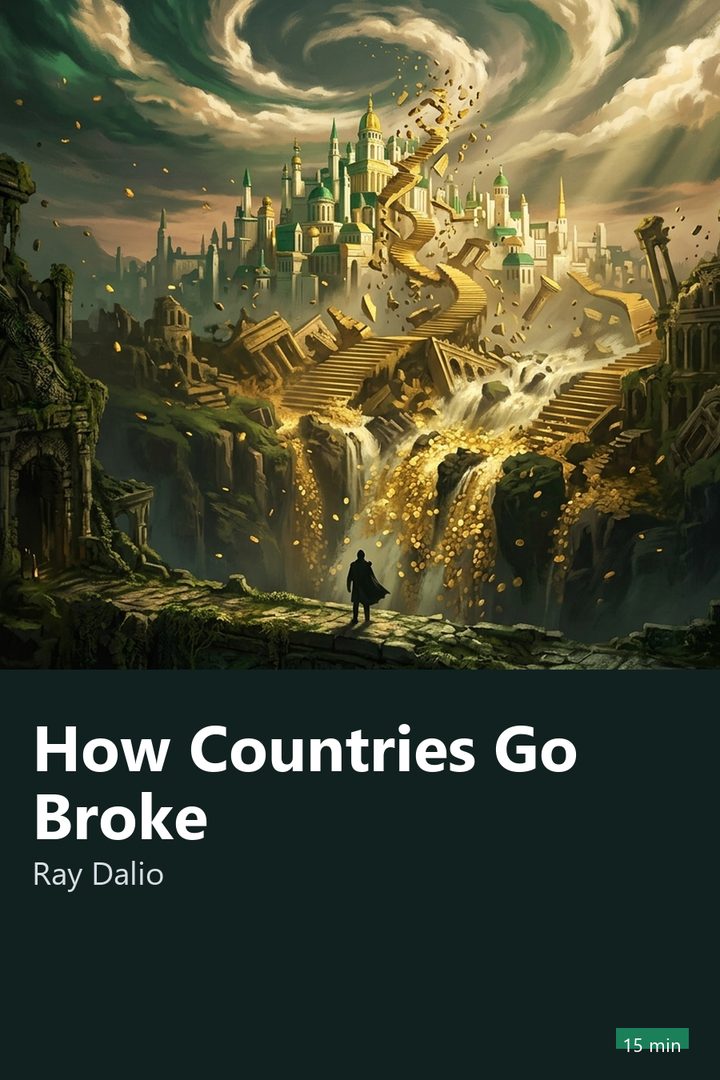
Cover of How Countries Go Broke

Personal Finance · 15 min

How Countries Go Broke

Ray Dalio · 2018

Who it's for

For anyone who wants to understand why debt crises happen and how news about interest rates, inflation, and credit fit into a broader script. The book offers a clear framework that is useful for following the news, rather than investment advice.

Read it in the app

⚡ Free to download • 🎁 One full book free every day

🎧 Audio coming soon in the app

Narration for the English summaries is on its way. Meanwhile you can read the full summary in the app.

3 ideas to take with you

1

According to the book, the top is usually recognized only in hindsight, because people inside the party rarely hear the music stop.

2

According to the book, the best way out combines the four levers in the right dose, instead of relying solely on cutting spending.

3

The model helps you recognize the climate of a crisis, but it does not promise to predict the exact day it breaks out.

“
Debt is a promise to pay with money that does not exist yet, and too many promises become a problem when income stops growing.
An idea from How Countries Go Broke, in the words of 15 Minutes

Preview

Start reading now

Why study crises that haven't happened yet

Ray Dalio is known as the founder of one of the largest investment firms in the world, but in this book he speaks as a student of economic history. His question is practical: if debt crises follow patterns, can we recognize them before the damage is done?

The answer he offers is a model. After examining dozens of episodes across rich and poor countries in different centuries, the author puts together a script he calls the archetype of a big debt crisis. The idea is that despite differences in era and currency, the underlying mechanics repeat themselves.

The book has three parts: an explanation of the general template, three detailed case studies, and a compendium of many other cases. This summary focuses on the conceptual part, which is the most useful for non-economists, and brings in everyday examples to make the ideas concrete.

Credit is spending ahead of income

The starting point is simple. When someone takes on credit, they spend money today that they will only earn tomorrow. That is how the economy works: one person's spending is another person's income, and when credit grows, spending rises, incomes rise, and everything seems to be going well.

Dalio compares debt to a promise. The debtor promises to pay, and the creditor counts on that as if it were guaranteed money. The entire system depends on trust that those promises will be kept.

The problem appears when the volume of promises exceeds the money that will actually be generated to honor them. Think of a family that finances a car, a refrigerator, and a vacation on a credit card assuming their paycheck will grow. As long as income grows, everything is fine. When it stops, the bill comes due.

The two overlapping cycles

The author describes two cycles. The first is the short-term cycle, lasting five to eight years, tied to credit and economic activity: the central bank lowers interest rates, credit grows, the economy heats up, inflation rises, interest rates go up, and the economy cools down. That is the familiar back-and-forth.

The second is the long-term cycle, lasting decades, in which debt builds up from one recession to the next. With each round, people feel safe taking on a little more borrowing, and the total tab only grows. In the end, debt becomes too high relative to income.

When debt weighs so heavily that lowering interest rates no longer works, the long cycle reaches its turning point. That is where big crises are born, the ones in which the usual medicine stops working.

11 more sections and the quiz

Continue in the app

Read the whole summary, finish with the How Countries Go Broke quiz and follow the guided Journeys. No ads in the app.

About Ray Dalio

Ray Dalio is an American investor and entrepreneur, and the founder of the investment firm Bridgewater Associates, created in 1975. He became well known for writing about life and work principles and for analyzing economic cycles. His book on big debt crises was released in 2018, following his bestseller Principles. Dalio also frequently explains his ideas through videos and articles.

Explore

Part of the Journeys:
Invest Like the Greats