15 Minutes
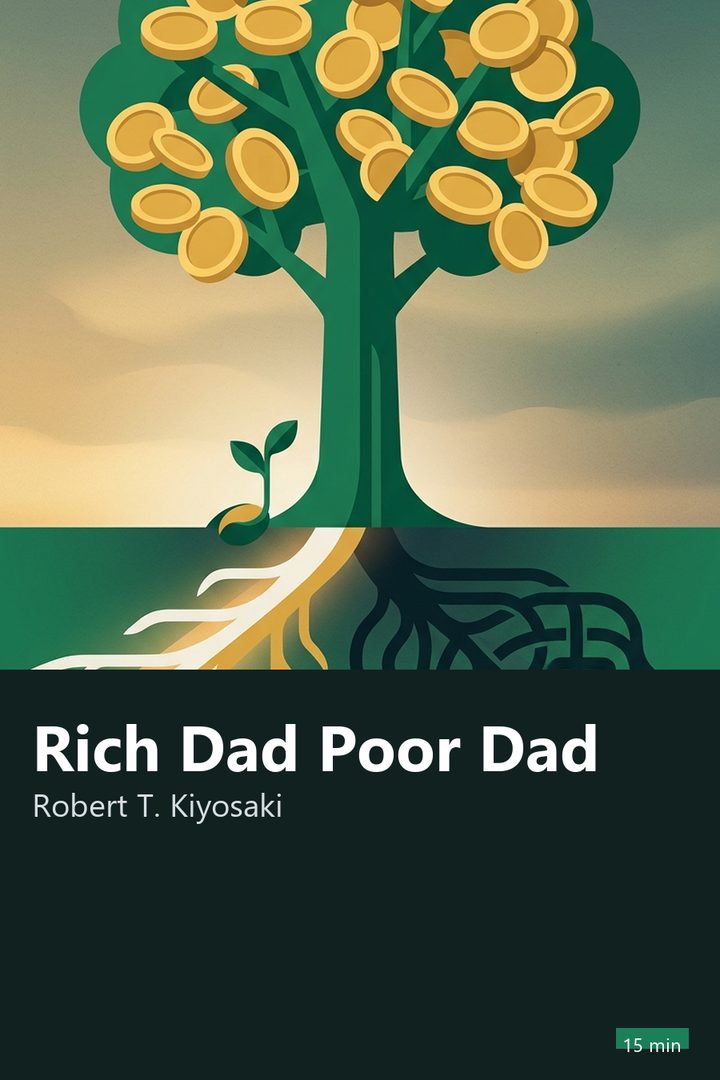
Cover of Rich Dad Poor Dad

Personal Finance · 15 min

Rich Dad Poor Dad

Robert T. Kiyosaki · 1997

Who it's for

For people who earn a decent salary, pay the bills on time, and still feel like the money never leaves a cushion big enough to make a real difference.

Read it in the app

⚡ Free to download • 🎁 One full book free every day

🎧 Audio coming soon in the app

Narration for the English summaries is on its way. Meanwhile you can read the full summary in the app.

3 ideas to take with you

1

Before you call something an investment, check whether it pays you every month or just sends you a bill after the purchase.

2

Earning more without changing how you spend only pushes the financial squeeze up to a more expensive level to maintain.

3

People who understand how money moves are less afraid to take risks than people who just stack up paychecks.

“
What you call wealth may actually be draining your cash every month.
An idea from Rich Dad Poor Dad, in the words of 15 Minutes

Preview

Start reading now

Two minds, two destinies

Before you decide whether the two dads in the title are real or just a teaching device, it helps to treat them as two voices living in your head every time some extra money lands in your account.

One voice asks whether the choice is safe, and it bets on a degree, a steady job title, and a career that climbs slowly. The other asks whether the choice makes you freer, and it looks at every dollar as a seed, not a trophy to show off.

You don't need to kick either voice out of your head. The book's exercise is to notice which one yells loudest when it's time to spend, and to remember that it was installed in you long before you could choose.

What an asset really is

The yardstick Kiyosaki proposes is blunt: an asset is what puts money in your pocket even when you stop working; a liability is what takes money out of it, month after month, one way or another.

It doesn't matter what fancy name the salesperson gave the product. The brand-new car financed over 60 payments, the priciest internet plan you don't even fully use, the credit card maxed out in installments: none of that becomes an asset just because it looks like success to people watching from outside.

On the other side sit the share of a rental property that leaves cash over after expenses, the stock that pays dividends, the course that qualified you for a better-paid contract. The mix-up between those two columns is, for the author, the root of why people who earn well still live under pressure.

Try a quick test on any big purchase you're considering right now: once you've bought it, will it deposit money in your pocket every month, or will it charge you a payment, upkeep, or insurance? The honest answer already tells you which side of the yardstick it falls on.

The wheel that spins faster with every raise

Kiyosaki calls this cycle the rat race: you get a promotion, your salary goes up, and in the same month your car moves up a class, your rent moves to a pricier neighborhood, and your credit card payments follow the new standard.

Take a common example: someone passes a civil-service exam, escapes the monthly squeeze for a week, and within six months is exactly as strained as before, only now in a bigger house with an HOA bill that didn't exist.

The problem isn't earning more. It's letting every raise automatically turn into a fixed expense, without a single slice of it going to something that produces money in return.

12 more sections and the quiz

Continue in the app

Read the whole summary, finish with the Rich Dad Poor Dad quiz and follow the guided Journeys. No ads in the app.

About Robert T. Kiyosaki

Robert Toru Kiyosaki was born in 1947 in Hawaii, the son of a public-service educator. He served as a helicopter pilot in the U.S. Marine Corps during the Vietnam War before building and selling businesses of his own. In 1997 he self-published 'Rich Dad Poor Dad', a book that became one of the biggest personal finance bestsellers in the world. He later founded the Rich Dad Company, which sells books, games, and courses on financial education.

Explore

Part of the Journeys:
Get Out of Debt