15 Minutes
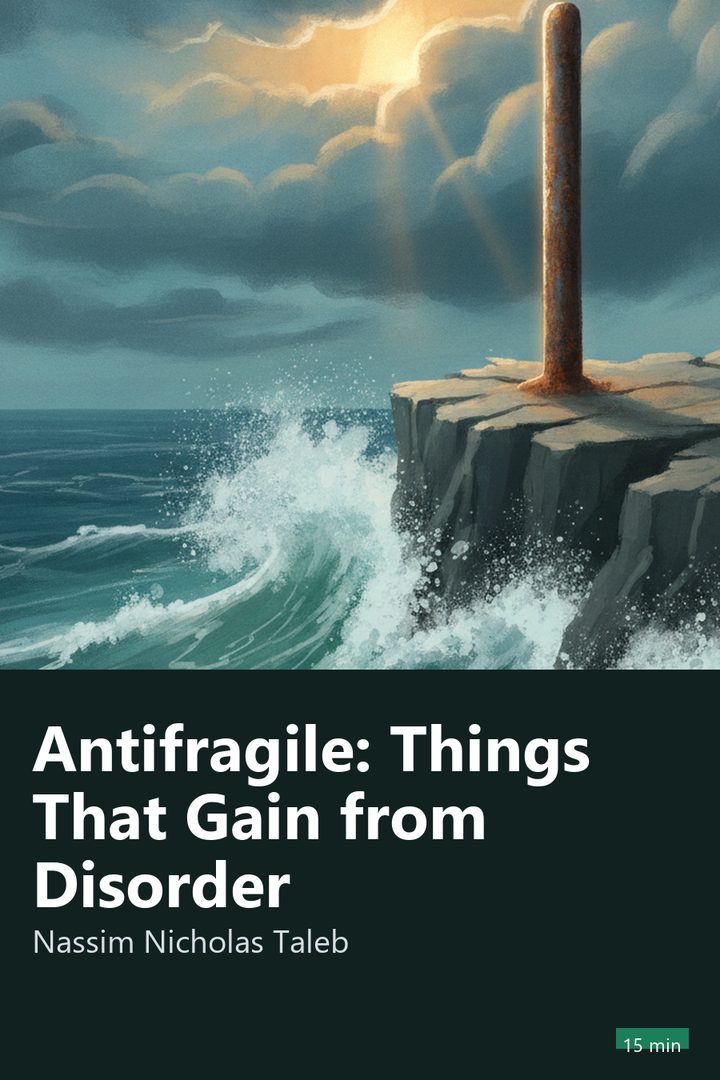
Cover of Antifragile: Things That Gain from Disorder

Personal Finance · 15 min

Antifragile: Things That Gain from Disorder

Nassim Nicholas Taleb · 2012

Who it's for

For you if you've ever watched a tightly built plan fall apart in a crisis and wondered how some people come out of those falls stronger than they went in. It's a map for shaping your career, your money, and your routine so that the unexpected works in your favor instead of knocking you down.

Read it in the app

⚡ Free to download • 🎁 One full book free every day

🎧 Audio coming soon in the app

Narration for the English summaries is on its way. Meanwhile you can read the full summary in the app.

3 ideas to take with you

1

Taking the hit and going back to how you were before is a tie; what makes a difference in the long run is coming out of the hit a little better.

2

Income from a single source feels like security because the risk stays invisible until the day it shows up all at once.

3

Whoever puts out every small fire is just storing fuel for the big one.

“
Shaking in the right dose is school; shaking with no limit is demolition.
An idea from Antifragile: Things That Gain from Disorder, in the words of 15 Minutes

Preview

Start reading now

Three ways to react to chaos

Picture three things inside the same backpack that drops on the floor of the bus. The wine glass breaks. The aluminum mug gets a slight dent and holds coffee just the same. No ordinary object comes out of the fall better than it went in, and that third possibility is exactly what the book spent a lifetime hunting for.

The first group is the fragile: it breaks when the world shakes. The second is the resistant, which a lot of people call resilient: it takes the hit and goes back to being what it was before. The third had no popular name, so the book coined one, antifragile, to describe whatever comes out stronger from the jolt.

The difference isn't a vocabulary detail, it's the heart of the whole thing. Being resilient is a tie: you get beaten up and stay the same. Being antifragile is profit: you get beaten up and come out better. Almost everything alive works this way, and almost everything built on a rigid plan works the opposite way.

The muscle that grows because it gets beaten up

The easiest example to see is in your own body. Someone lifting weights at the gym doesn't get strong during the workout: they get weaker, with damaged fibers and wobbly legs. The strength shows up afterward, when the body patches the damage expecting that the same hit will come again next week.

Notice the detail that usually slips by: the body doesn't just fix what broke, it fixes it with a surplus. That surplus is the central idea in its purest form. No factory machine does this. An engine that runs too much wears down, while a muscle that runs too much, within limits, gets thicker.

But there's a dose, and it rules everything. Training too hard, without rest, becomes injury. The body improves within a narrow band of stress and breaks outside it. Hold on to that band, because it applies to the rest of the text: a little jolt strengthens, a jolt without limits destroys.

The freelancer with five clients and the employee with one boss

Compare two Americans with the same income at the end of the month. One is a freelance designer who bills five small clients. The other has a salaried job at a single company. On paper, the second looks like the safer of the two, and that's what the whole family will repeat at Sunday dinner.

Now shake the table. The freelancer loses a client and takes a twenty percent cut in income: it hurts, he complains, he scrambles to find another. The employee loses the boss and takes a hundred percent cut on the same day. The steady paycheck was hiding an enormous risk concentrated in a single signature.

There's more. Every client who leaves teaches the freelancer something, and he adjusts his prices, his portfolio, and his target audience. He gets small, frequent shakes, and he improves with them. The employee goes years without a single jolt and then gets them all at once, on the worst possible day, with no training at all.

11 more sections and the quiz

Continue in the app

Read the whole summary, finish with the Antifragile: Things That Gain from Disorder quiz and follow the guided Journeys. No ads in the app.

About Nassim Nicholas Taleb

Nassim Nicholas Taleb is an essayist and former market trader born in Lebanon in 1960, based in the United States since the 1980s. He spent more than two decades trading options on exchanges in New York and London before becoming a professor of risk engineering at New York University. He became known worldwide with The Black Swan, published in 2007, which dealt with rare and unpredictable events. Antifragile, from 2012, is the fourth volume in a series of essays on uncertainty that he calls the Incerto.

Explore

Part of the Journeys:
Think Better