
Health
Best health books summarized in 15 minutes
The health books in this selection share one trait: they start from research and explain the why instead of just giving orders. Sleep is covered by Why We Sleep and The Sleep Revolution, food by How Not to Die, In Defense of Food and The Obesity Code, and longevity by Outlive, The Blue Zones, Lifespan and The Longevity Diet.
There are also books on the brain and stress, such as Sharpen, Spark and The Relaxation Response, and on the body itself, like The Body and Breath. Physicians such as Atul Gawande, Sherwin Nuland and Siddhartha Mukherjee write about aging, dying and disease with rare frankness in Being Mortal, How We Die and The Emperor of All Maladies.
Authors often disagree with each other, especially about diet. The summaries show what each one argues so you can compare their claims. Nothing here replaces medical advice: use the ideas to have better, more informed conversations with your own doctor.
Health summaries
 15 min
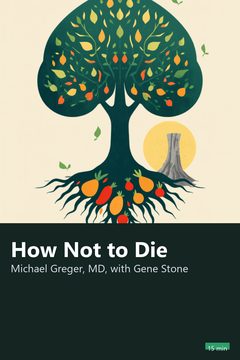
How Not to Die
Michael Greger, MD, with Gene Stone
Preventing chronic disease has much more to do with habits repeated for years than with any radical change lasting a few weeks.
 15 min
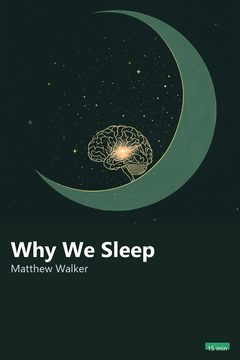
Why We Sleep
Matthew Walker
A bad night's sleep doesn't vanish the next day. It leaves a buildup that your body bills you for all week.
 15 min
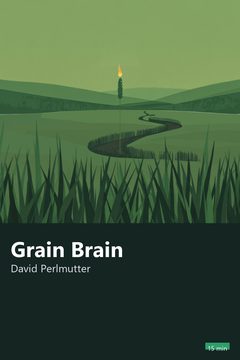
Grain Brain
David Perlmutter
The book uses inflammation to explain almost every symptom it mentions, simplifying a process that science treats as far more varied.
 15 min
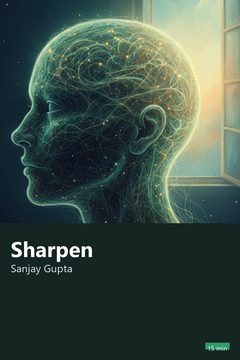
Sharpen
Sanjay Gupta
The adult brain keeps reshaping itself after age sixty, and that changes what you can expect from a routine you start late.
 16 min
The Longevity Diet
Valter Longo
An entire community with a naturally lower growth signal, and less cancer and diabetes over a lifetime, is the kind of human evidence that lab research alone could never provide.
 14 min
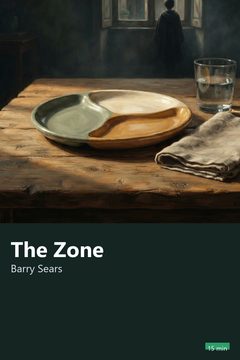
The Zone
Barry Sears
According to the author, every meal tilts your production of eicosanoids toward the good side or the bad side, a theory that later biochemistry never confirmed with the same degree of certainty the book suggests.
 17 min
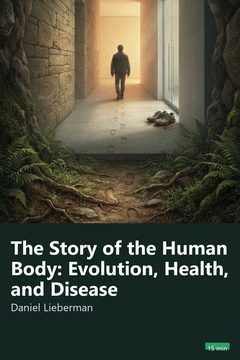
The Story of the Human Body: Evolution, Health, and Disease
Daniel Lieberman
According to Lieberman, running long distances in the heat was, for much of prehistory, the most effective hunting weapon of the genus Homo, more so than speed.
 16 min
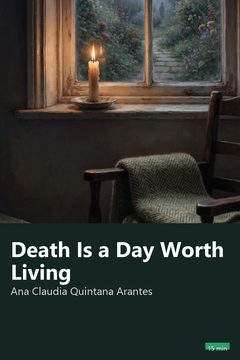
Death Is a Day Worth Living
Ana Claudia Quintana Arantes
According to the accounts the author gathered, the most common regret at the end of life tends to be about what a person didn't do, not about what they did.
 16 min
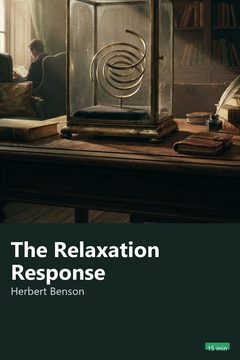
The Relaxation Response
Herbert Benson
According to the author, the state of deep calm that took years of practice in religious traditions could, to a large extent, be brought on by almost anyone in a few minutes, using just four simple elements.
 17 min
The Blue Zones
Dan Buettner
Having one day a week when work is off limits by a rule bigger than your own willpower, like the Saturday in Loma Linda, protects rest in a way that willpower alone rarely manages to guarantee.
 16 min
Good Calories, Bad Calories
Gary Taubes
A government report had to recommend something to the public before scientists had even finished arguing among themselves.
 17 min
In Defense of Food: An Eater's Manifesto
Michael Pollan
Taking the fat out of a processed product often meant putting more sugar in its place, swapping one problem for another disguised as a solution.
 16 min
Carandiru Station
Drauzio Varella
Preventing disease inside a prison depends less on pamphlets and more on trust built one visit at a time.
 16 min
The Omnivore's Dilemma
Michael Pollan
A meal that seems to have dozens of different ingredients can, at its source, come almost entirely from the same cornfield, disguised under different names.
 18 min
Outlive: The Art and Science of a Longer, Better Life
Peter Attia
Treating disease only when it shows up is like changing the tire after the blowout: the medicine that prevents the flat starts decades before the diagnosis.
 15 min
By a Thread
Drauzio Varella
Hiding how serious a diagnosis is in order to protect someone you love usually costs a lot in trust when the truth comes out later.
 17 min
Breath: The New Science of a Lost Art
James Nestor
The sinuses release a meaningful amount of nitric oxide only when air passes through the nose, and this gas helps widen blood vessels and get oxygen circulating better.
 15 min
Brain Maker
David Perlmutter
Antibiotics don't pick sides: when they kill the bad bacteria, they also wipe out part of the population of good bacteria living in your gut.
 16 min
Food: What the Heck Should I Eat?
Mark Hyman
Hyman argues that part of the nutrition guidelines of recent decades carried the influence of those who profit from grain, sugar and industrial dairy, and not just scientific evidence.
 15 min
How Not to Diet
Michael Greger (with Gene Stone)
A poor night's sleep messes with your hunger hormones, which helps explain why diets that ignore sleep tend to deliver less than they promise.
 16 min
Being Mortal: Medicine and What Matters in the End
Atul Gawande
Aging isn't a single event. It's a slow process of small losses that accumulate, and conventional medicine trains doctors to treat acute crises, not this ongoing decline.
 16 min
The Obesity Code
Jason Fung
For Fung, treating obesity as a hormonal disease rather than a character flaw changes the entire target of treatment: the problem stops being willpower and becomes how the body is regulated.
 17 min
The China Study
T. Colin Campbell and Thomas M. Campbell II
A scientist noticing that his own data contradicts what he was trained to believe is often the real beginning of honest research, not the end of it.
 18 min
The Emperor of All Maladies: A Biography of Cancer
Siddhartha Mukherjee
A broken genetic brake inside the cell itself explains cancer better than any idea of an invader coming from outside the body.
 17 min
Salt Sugar Fat: How the Food Giants Hooked Us
Michael Moss
At a 1999 meeting, the CEOs of the biggest food companies in the United States were warned that what they sold was helping fuel an obesity epidemic, and they collectively decided to keep selling it the same way.
 16 min
Spark
John J. Ratey
In Naperville, putting gym class first thing in the morning went hand in hand with better scores on international tests, according to the book's account of that school district.
 19 min
Lifespan: Why We Age, and Why We Don't Have To
David A. Sinclair (with Matthew D. LaPlante)
Treating only the illnesses that show up in old age fights the visible branches rather than attacking the common root of the problem.
 17 min
Glucose Revolution
Jessie Inchauspé
Organizing your plate by starting with vegetables slows down the absorption speed of the carbohydrates that follow.
 17 min
Wheat Belly
William Davis
According to the book's theory, the carbohydrates in refined wheat raise blood glucose levels just as fast as, or even faster than, regular table sugar.
 17 min
The Body: A Guide for Occupants
Bill Bryson
The raw materials that make up the body have negligible monetary value in nature. The real biological marvel lies in the coordination of trillions of cells working together.
 19 min
How We Die: Reflections on Life's Final Chapter
Sherwin B. Nuland
Seeking a serene death in purely biological terms creates unnecessary guilt, because the human body rarely shuts down its functions in a gentle, poetic way.
 18 min
Intuitive Eating
Evelyn Tribole and Elyse Resch
A food rule can look like a solution while at the same time feeding the very cycle of urgency it tries to control.
 17 min
The 4-Hour Body
Tim Ferriss
Finding the smallest intervention capable of triggering a stimulus saves time and prevents unnecessary wear and tear in your fitness routine.
 15 min
The Sleep Revolution
Arianna Huffington
Your brain does not shut off at night: it organizes memories and processes the day across different stages.
 15 min
The Bulletproof Diet
Dave Asprey
Two or three strength training sessions a week usually change a sedentary adult's body and appetite far more than doing lots of light daily cardio.
 15 min
30 Ways to Reboot Your Body
Ben Greenfield
Treating your body like a biological machine with its own manual swaps the anxious question of what broke for a calm search for the habit you have been neglecting.
 18 min
Eat, Move, Sleep
Tom Rath
Every bite at a meal represents a conscious choice between nourishing cellular vitality or fueling inflammatory processes.
 15 min
Keto: The Complete Guide to Success on The Ketogenic Diet, including Simplified Science and No-cook Meal Plans
Maria Emmerich & Craig Emmerich
Reducing insulin spikes unlocks the use of stored fat and promotes a steadier supply of energy.
 19 min
The Vitamin Solution
Arielle Levitan & Romy J. Block
Your micronutrient needs are highly individual, varying with your age, daily habits, and personal history.
 14 min
The XX Brain: The Groundbreaking Science Empowering Women to Maximize Cognitive Health and Prevent Alzheimer's Disease
Lisa Mosconi
According to the book, Alzheimer's-related changes can begin decades before the first symptoms, making prevention in midlife especially important.
 16 min
Why We Get Fat: And What to Do About It
Gary Taubes
According to the book, insulin works like the key to the storage room: when it is high, fat goes in and has a hard time getting out.
Health authors
David Perlmutter · Drauzio Varella · Gary Taubes · Michael Pollan · Ana Claudia Quintana Arantes · Arianna Huffington · Arielle Levitan · Atul Gawande · Barry Sears · Ben Greenfield · Bill Bryson · Craig Emmerich · Dan Buettner · Daniel Lieberman · Dave Asprey · David A. Sinclair · Elyse Resch · Evelyn Tribole · Herbert Benson · James Nestor · Jason Fung · Jessie Inchauspé · John J. Ratey · Lisa Mosconi · Maria Emmerich · Mark Hyman · Matthew Walker · Michael Greger · Michael Greger, MD · Michael Moss · Peter Attia · Romy J. Block · Sanjay Gupta · Sherwin B. Nuland · Siddhartha Mukherjee · T. Colin Campbell · Thomas M. Campbell II · Tim Ferriss · Tom Rath · Valter Longo · William Davis
Journeys with Health books
Sequences of books that complete each other, to follow in the app.
🍎 Lasting Health
Sleep, food, and brain health grounded in science (not a substitute for medical advice).
😴 Truly Rest
Sleep better, breathe, and lower your stress (not a substitute for a doctor).
🕊️ Grief and Loss
Get through losing someone and face mortality with less fear.
🌅 Retirement and a New Phase
Take care of your money, health, and purpose after 50.
📝 Study Smarter
Learn faster, stay focused, and remember what you studied.
🕰️ Witnesses to History
Survivor accounts that show what history did to real people.
🥗 Eat Better
Understand food, industry, and diets through science (not a substitute for a dietitian).
Frequently asked questions
+Do health summaries replace medical advice?
No. They explain what each author argues, based on the research the author cites. Changes to your diet, medication or treatment should always be discussed with a qualified health professional who knows your history.
+Where should I start with health books?
Why We Sleep is a strong start because sleep affects almost everything else. Then The Blue Zones offers a broad look at the habits of long-lived people, and Breath shows how something as simple as breathing makes a difference.
+How does 15 Minutes work?
On this site you can see who each book is for, its key ideas and a preview of the summary. In the app you get the full summary as text, a quiz at the end of each book, guided Journeys and new books every week. The app is free to download and you can read one full book free every day. Premium: $19.99/year in the US (price shown in your App Store). Audio narration for the English summaries is coming soon.
Other categories
Health in your pocket
Full text summaries, a quiz at the end of each book and guided Journeys. New books every week.
Download the appFree to download • one full book free every day • Premium: $19.99/year in the US