15 Minutes
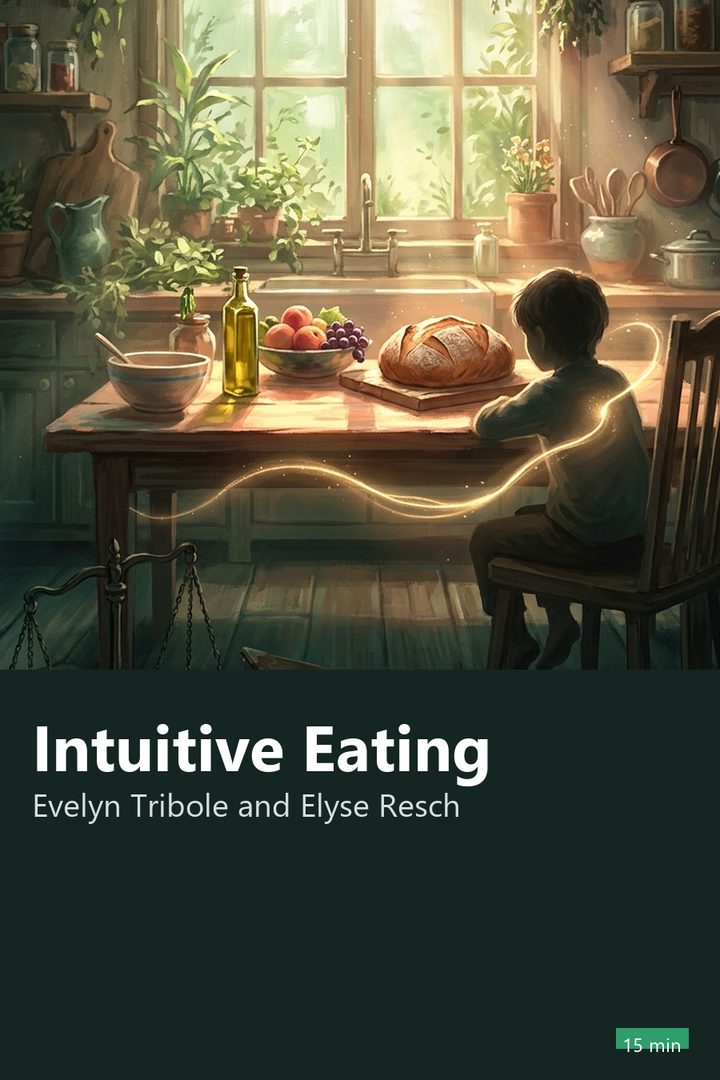
Cover of Intuitive Eating

Health · 18 min

Intuitive Eating

Evelyn Tribole and Elyse Resch · 1995

Who it's for

For anyone caught between food rules, guilt, and attempts at control who wants to build a more caring relationship with food. People with eating disorders or medical conditions should use this reading as a supplement to professional care.

Read it in the app

⚡ Free to download • 🎁 One full book free every day

🎧 Audio coming soon in the app

Narration for the English summaries is on its way. Meanwhile you can read the full summary in the app.

3 ideas to take with you

1

A food rule can look like a solution while at the same time feeding the very cycle of urgency it tries to control.

2

Noticing fullness loses part of its value when that awareness turns into just one more reason to judge yourself.

3

Food autonomy also depends on money, time, and real conditions of choice.

“
The pleasure of a meal deserves a place in the conversation about care.
An idea from Intuitive Eating, in the words of 15 Minutes

Preview

Start reading now

1. Stepping Out of the War with Your Plate

Intuitive Eating proposes a shift in the question we ask: instead of looking for yet another rule to control the body, it explores how to rebuild a trusting relationship with food. Evelyn Tribole and Elyse Resch present ten principles that combine bodily awareness, satisfaction, and care. Their main target is the diet mentality, in which eating becomes a moral test, weight acts like a report card, and every meal seems to confirm personal success or failure.

This approach is not the same as abandoning all standards or eating impulsively all day long. It seeks to replace rigid obedience with autonomy, taking physical needs, emotions, and circumstances into account. For someone who leaves home early, takes two buses, and eats lunch whenever work allows, that autonomy has concrete limits. The book becomes most useful when its principles help you negotiate the life that is actually possible, instead of creating one more ideal routine to chase.


2. The Cycle That Restriction Feeds

A central contribution of the book is showing how dietary restriction can set the stage for episodes of overeating. Spending the day holding back hunger to save calories usually increases urgency around food at night. Then guilt shows up, followed by a promise of even tighter control. The authors question the idea that this cycle proves a lack of character: part of the struggle may actually grow out of the strategy itself.

This does not mean that every planned change in eating is harmful or that any limit triggers binge eating. Dietary guidance for celiac disease, for instance, has a very different purpose than a cosmetic ban. The key distinction lies between context-aware care and punishment. In everyday life, it is worth noticing whether a rule improves health with flexibility or produces fear, isolation, and a need to compensate. That assessment may require professional help, especially when distress keeps returning.

3. Hunger Is Information, Not an Inconvenience

Honoring hunger means recognizing that the body needs to receive energy regularly. Waiting for dizziness, irritability, or a feeling of losing control before allowing yourself to eat can make the meal much harder. Interoception, the ability to perceive internal signals, helps with this reading, though it does not work like a precision app. Poor sleep, medications, anxiety, and long periods of dieting can alter how those signals show up or how a person recognizes them.

Think of someone who sits in traffic and gets to work without breakfast. A snack packed in a bag can be a more caring choice than waiting for a perfectly identified hunger cue. Eating preventively before a long meeting can also make sense. The point is not to obey an imaginary biological clock, but to combine bodily signals with practical planning. When perception feels muddled, nutritional support can help restore some regularity without turning mealtimes into surveillance.

11 more sections and the quiz

Continue in the app

Read the whole summary, finish with the Intuitive Eating quiz and follow the guided Journeys. No ads in the app.

About Evelyn Tribole and Elyse Resch

Evelyn Tribole and Elyse Resch are American registered dietitians and the coauthors of Intuitive Eating, originally published in 1995. Tribole is also an author who trains professionals in the approach. Resch maintains a clinical practice in Beverly Hills, California, focusing on eating-related issues. Together they developed the ten-principle model and have taken part in revising it across editions.

Explore

Category:
Health
Part of the Journeys:
Lasting Health