15 Minutes
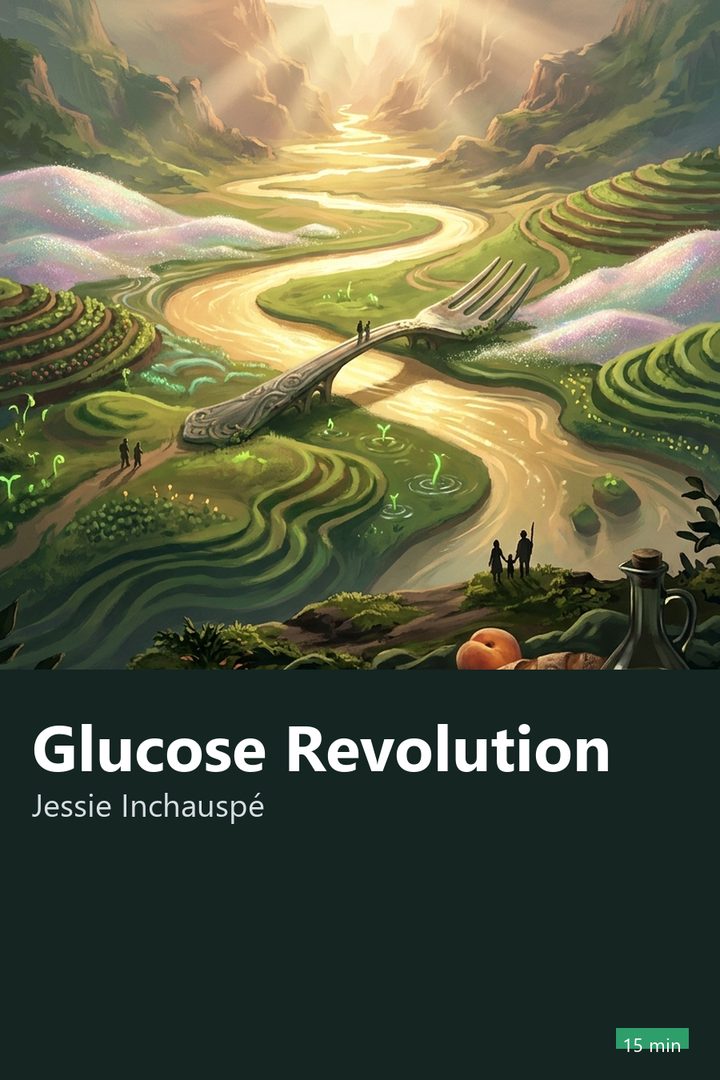
Cover of Glucose Revolution

Health · 17 min

Glucose Revolution

Jessie Inchauspé · 2022

Who it's for

Recommended for anyone who experiences sharp energy crashes throughout the day, deals with uncontrollable sugar cravings, and wants to understand how the order and combination of foods affect metabolism. It is also a useful read for those looking to improve health markers without going on restrictive diets or giving up the pleasure of eating.

Read it in the app

⚡ Free to download • 🎁 One full book free every day

🎧 Audio coming soon in the app

Narration for the English summaries is on its way. Meanwhile you can read the full summary in the app.

3 ideas to take with you

1

Organizing your plate by starting with vegetables slows down the absorption speed of the carbohydrates that follow.

2

Starting the morning with foods rich in protein and fat helps keep fullness stable for the next several hours.

3

Short walks right after meals stimulate the muscles to soak up circulating fuel independently.

“
Pairing sources of fat or protein with carbohydrates softens the metabolic impact of digestion on the body.
An idea from Glucose Revolution, in the words of 15 Minutes

Preview

Start reading now

The invisible blood sugar rollercoaster

You wake up, drink coffee with sugar, grab a piece of bread on the run, and two hours later, on a crowded bus or at the office, you feel a sudden slump and a craving for another sweet treat. Many people blame the grind of a nine-to-five job, but the biological explanation lies in the chemical swings inside your arteries. Fast-digesting foods release a flood of glucose into the bloodstream within minutes, creating what is known as a glucose spike.

Glucose is the primary fuel for our cells, but the body needs it to arrive at a gentle pace. When levels rise quickly, the pancreas unloads insulin to clear away the excess and protect the blood vessels. This rapid intervention drops blood sugar below the normal baseline, creating a glucose crash that brings irritability and shakiness right at the bakery counter.

Over the course of months, repeating this swing dozens of times a week overloads the body. Over time, cells become less sensitive to the hormonal signal, paving the way for insulin resistance. Understanding this cycle is not about demonizing food, but about seeing the machinery that dictates your daily energy.

Invisible stress on mitochondria and cellular aging

To understand why spikes create fatigue instead of lasting energy, look at the mitochondria, the cellular powerhouses that convert nutrients into usable energy. When they receive fuel in a balanced flow, they ensure focus and mental clarity throughout the entire workday.

If a sudden overload arrives, however, the mitochondria go into overdrive and stall. Instead of energy, they produce free radicals and oxidative stress, inflaming tissues. That is why a heavy Sunday lunch packed with refined carbohydrates and soda is usually followed by a stupor on the couch: the body is trying to contain a small metabolic fire.

Beyond the stress on cellular powerhouses, excess circulating sugar speeds up cellular glycation. In this silent process, sweet molecules chemically bond to essential proteins, such as skin collagen and blood vessel walls, stiffening tissues and accelerating the biological aging of vital organs.

The order of foods changes the metabolic impact

One of the most popular takeaways from the book is that you do not need to cut out the foods you love, just change the sequence in which they hit your fork. The practical recommendation is to eat vegetable fiber first, move on to proteins and fats, and save starches and carbohydrates for last. Human digestion is sequential, and the first food that touches the stomach sets the absorption pace for the entire plate.

When you eat leafy greens or vegetables at the start, soluble fiber forms a kind of viscous gel along the intestinal walls. This natural barrier slows down gastric emptying and reduces the speed at which nutrients pass into the blood. When the starch from the rice in your lunchbox or from a boiled potato arrives minutes later, it meets this cushioned path, turning a steep spike into a gentle, body-friendly, and lasting curve.

11 more sections and the quiz

Continue in the app

Read the whole summary, finish with the Glucose Revolution quiz and follow the guided Journeys. No ads in the app.

About Jessie Inchauspé

Jessie Inchauspé is a French biochemist and science communicator who graduated from King's College London and holds a master's degree in biochemistry from Georgetown University. She worked in Silicon Valley at the genetics company 23andMe, where she began researching the relationship between biological data analysis and everyday habits. She became internationally known after creating the Glucose Goddess community on Instagram, translating complex metabolic concepts for the general public. She published Glucose Revolution in 2022, a work that became an international bestseller and was translated into more than forty languages.

Explore

Category:
Health
Part of the Journeys:
Lasting Health