
Family and Parenting
Best family and parenting books summarized in 15 minutes
Family is the first place we learn to relate, which is why it raises so many questions and so many books. This selection brings authors who look at it from different angles: psychoanalysts, psychiatrists, educators and writers. Each summary shows what the author argues, without dictating how you should raise your kids.
Some books are about child development: The Making and Breaking of Affectional Bonds by John Bowlby, The Child, the Family, and the Outside World and Playing and Reality by D. W. Winnicott, The Whole-Brain Child and No-Drama Discipline by Daniel J. Siegel and Tina Payne Bryson, and The Teenage Brain by Frances E. Jensen. Others go to daily life at home: Positive Discipline by Jane Nelsen, Siblings Without Rivalry and Peaceful Parent, Happy Kids.
Some look at family through the eyes of the grown child, such as Adult Children of Emotionally Immature Parents, Toxic Parents and The Drama of the Gifted Child. There is also How to Raise an Adult and The Danish Way of Parenting, which compare approaches to raising capable, happy kids.
Family and Parenting summaries
 16 min
Brilliant Parents, Fascinating Teachers
Augusto Cury
A child learns more from watching parents make mistakes and recover than from hearing a ready-made speech about how to get things right.
 16 min
How to Talk So Kids Will Listen & Listen So Kids Will Talk
Adele Faber and Elaine Mazlish
Listening all the way through before giving advice takes away the child's need to argue just to be heard.
 15 min
Discipline, Limits in the Right Measure
Içami Tiba
According to the author, a parent who avoids setting any limit, afraid of repeating their own authoritarian father, also leaves the child lost, just in a different way.
 17 min
The Making and Breaking of Affectional Bonds
John Bowlby
According to the book, a baby's attachment grows out of a search for contact and comfort, not simply out of whoever fills the fridge.
 16 min
Peaceful Parent, Happy Kids
Laura Markham
Taking a deep breath for a few seconds before responding often keeps a spilled glass of juice from turning into a five-minute scream.
 15 min
Those Who Love, Educate!
Içami Tiba
For Tiba, always rushing in to save your child from his own forgetfulness keeps him from discovering for himself what it costs to be careless.
 15 min
Positive Discipline
Jane Nelsen
Many provocations from kids are requests for connection, made in the only way the child knows how.
 16 min
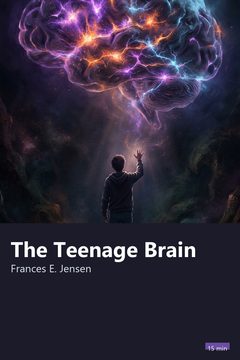
The Teenage Brain
Frances E. Jensen
The stage when the brain learns fastest is also the stage when it is most sensitive to certain influences.
 15 min
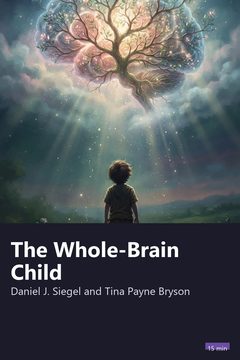
The Whole-Brain Child
Daniel J. Siegel and Tina Payne Bryson
Learning to observe what you feel without being swallowed by it is a skill the book proposes teaching from an early age.
 15 min
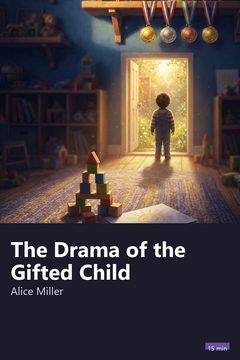
The Drama of the Gifted Child
Alice Miller
According to the author, grandiosity and depression can be two faces of a sense of self-worth that depends on approval, which is why applause may never be enough.
 15 min
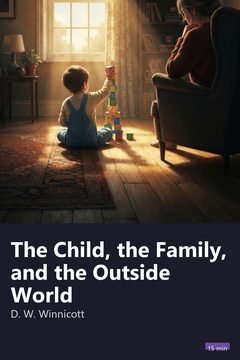
The Child, the Family, and the Outside World
D. W. Winnicott
Caring for the caregiver is part of childcare: an exhausted, unsupported mother has a much harder time comforting her child.
 14 min
Motherhood and the Encounter with One's Own Shadow
Laura Gutman
According to the author, a baby stirs up the mother's own history: today's crying can awaken the helplessness of the child she once was.
 16 min
Bullying: Dangerous Minds in Schools
Ana Beatriz Barbosa Silva
Bullying is not just kids being kids: it is repeated aggression in which one side cannot defend itself, and brushing it off leaves scars.
 15 min
No-Drama Discipline
Daniel J. Siegel and Tina Payne Bryson
True discipline is about teaching, not punishing: the useful question is what the child needs to learn from this, not how to make them suffer.
 16 min
Adult Children of Emotionally Immature Parents
Lindsay C. Gibson
In the book's view, the person who always gives in and the one who blows up may have come from the very same home where feeling was risky.
 14 min
Raising an Emotionally Intelligent Child
John Gottman and Joan DeClaire
According to the book, a child's emotion is an opportunity to teach, not a problem to be silenced as quickly as possible.
 13 min
Siblings Without Rivalry
Adele Faber and Elaine Mazlish
Treating children equally is not the same as treating them fairly: each child needs what is right for them, at the moment they need it.
 13 min
Playing and Reality
D. W. Winnicott
Separation in small doses teaches us to cope with absence, and a cherished object can help us through that transition.
 15 min
Toxic Parents
Susan Forward and Craig Buck
People who grow up trying to please often become adults who apologize for everything, and perfectionism turns into a shield that is never enough.
 19 min
Dear Ijeawele, or A Feminist Manifesto in Fifteen Suggestions
Chimamanda Ngozi Adichie
Preserving your own projects and professional individuality after childbirth does not diminish a mother's love; it teaches children that mothers are also complete human beings.
 14 min
The 5 Love Languages of Children
Gary Chapman and Ross Campbell
According to the authors, many tantrums are just a child trying to fill their emotional tank the only way they know how.
 14 min
How to Raise an Adult
Julie Lythcott-Haims
Much of overprotection grows out of fear, and fear is a terrible advisor when you are raising a child.
 16 min
The Danish Way of Parenting
Jessica Joelle Alexander & Iben Dissing Sandahl
Free play is practice in negotiation, losing, and creativity, things that no workbook teaches with the same power.
Family and Parenting authors
Adele Faber · D. W. Winnicott · Daniel J. Siegel · Elaine Mazlish · Içami Tiba · Tina Payne Bryson · Alice Miller · Ana Beatriz Barbosa Silva · Augusto Cury · Chimamanda Ngozi Adichie · Craig Buck · Frances E. Jensen · Gary Chapman · Iben Dissing Sandahl · Jane Nelsen · Jessica Joelle Alexander · Joan DeClaire · John Bowlby · John Gottman · Julie Lythcott-Haims · Laura Gutman · Laura Markham · Lindsay C. Gibson · Ross Campbell · Susan Forward
Journeys with Family and Parenting books
Sequences of books that complete each other, to follow in the app.
🍼 Parenting With Love and Limits
Raise kids with boundaries and affection, without yelling and without guilt.
🎒 Teenage Kids
Understand the teen brain, the phone, and the crises of adolescence at home.
🚩 Relationships That Hurt
Spot toxic people, emotional blackmail, and difficult parents, and learn to set boundaries.
🌱 Childhood and Attachment
How attachment, play, and childhood shape the adult: Bowlby, Winnicott, and Erikson.
Frequently asked questions
+Do family books teach you how to raise children?
Each author defends a path, and they do not always agree. Siegel and Bryson focus on the developing brain, Jane Nelsen on firmness with respect, Laura Markham on calm connection. The summaries set these ideas side by side so you can compare and talk at home. They do not replace a pediatrician, therapist or school guidance.
+Are there books for understanding your own childhood?
Yes: Adult Children of Emotionally Immature Parents by Lindsay C. Gibson, Toxic Parents by Susan Forward and Craig Buck, and The Drama of the Gifted Child by Alice Miller. These are sensitive topics. If reading brings up hard memories, consider talking to a therapist.
+How does 15 Minutes work?
On this site you can see who each book is for, its key ideas and a preview of the summary. In the app you get the full summary as text, a quiz at the end of each book, guided Journeys and new books every week. The app is free to download and you can read one full book free every day. Premium: $19.99/year in the US (price shown in your App Store). Audio narration for the English summaries is coming soon.
Other categories
Family and Parenting in your pocket
Full text summaries, a quiz at the end of each book and guided Journeys. New books every week.
Download the appFree to download • one full book free every day • Premium: $19.99/year in the US