
Technology and the Future
Best technology and the future books summarized in 15 minutes
Artificial intelligence, algorithms and information networks are in the news every day. The books in this selection explain these subjects calmly, and many disagree about what the future holds. Yuval Noah Harari examines in Homo Deus, 21 Lessons for the 21st Century and Nexus what technology might do to society. Nexus tells the history of information networks, from writing to AI.
On AI, Superintelligence by Nick Bostrom and Life 3.0 by Max Tegmark discuss what happens if machines get smarter than us, while Co-Intelligence by Ethan Mollick and Human Compatible by Stuart Russell look at living and working with them. Weapons of Math Destruction by Cathy O'Neil looks at something closer: algorithms that already shape decisions about credit and work. Algorithms to Live By applies computer science to everyday choices, and The Signal and the Noise by Nate Silver covers prediction.
Michio Kaku explores science fiction ideas through physics in Physics of the Impossible and The Future of Humanity. How Google Works and Exponential Organizations look at tech companies and how they organize. Predictions about the future are bets, and the summaries show what each author argues.
Technology and the Future summaries
 13 min
How Google Works
Eric Schmidt and Jonathan Rosenberg
The question isn't whether your business has smart, creative people. It's whether you give those people room to think, and not just to execute.
 17 min
Exponential Organizations
Salim Ismail, Michael S. Malone, and Yuri van Geest
A company doesn't have to own the car, the building, or the employee to grow fast. What it needs is to organize well the people who already have those resources and are willing to lend them.
 16 min
21 Lessons for the 21st Century
Yuval Noah Harari
The speed of a change matters as much as its size: you can adapt to almost anything, just not to everything at once.
 15 min
Physics of the Impossible
Michio Kaku
In 2008, Kaku noted that in robotics the mechanical body was advancing faster than common sense: it was easier to teach an arm to weld than to teach a machine to notice that a full glass can tip over.
 16 min
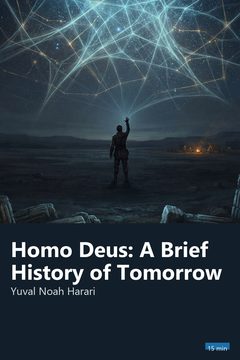
Homo Deus: A Brief History of Tomorrow
Yuval Noah Harari
For Harari, when a species solves its oldest problems, it doesn't stop dreaming. It trades hunger and war for bigger goals, like extending life and expanding its own mind.
 17 min
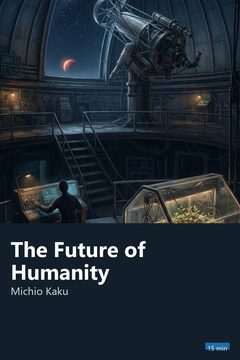
The Future of Humanity
Michio Kaku
According to the author, having a colony on another planet would work as insurance against catastrophe, but putting the species' hopes on a distant second home can't become an excuse to neglect the home we already have.
 19 min
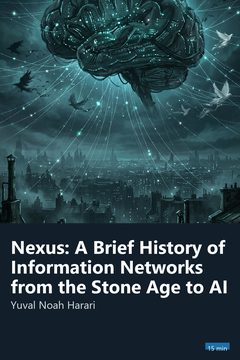
Nexus: A Brief History of Information Networks from the Stone Age to AI
Yuval Noah Harari
Connecting people and pouring out data doesn't guarantee collective wisdom, because human networks often prefer simple myths that bring people together over complex truths that create conflict.
 18 min
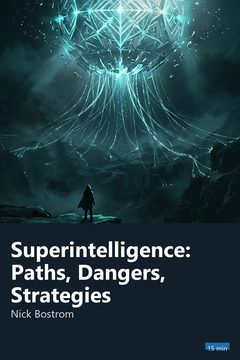
Superintelligence: Paths, Dangers, Strategies
Nick Bostrom
Wanting to reap the benefits of a superior mind before figuring out how to control it is like adopting a baby predator and expecting it to obey orders once it grows up.
 18 min
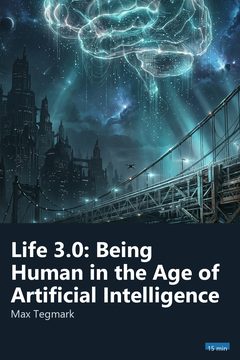
Life 3.0: Being Human in the Age of Artificial Intelligence
Max Tegmark
The great turning point in technological life is the ability to redesign both its own body and its cognitive processes, moving beyond the slow pace of natural selection.
 18 min
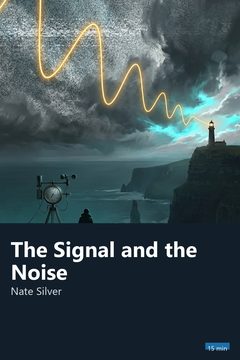
The Signal and the Noise
Nate Silver
Amassing an enormous volume of information does not guarantee better decisions if you cannot filter out what actually has practical relevance.
 20 min
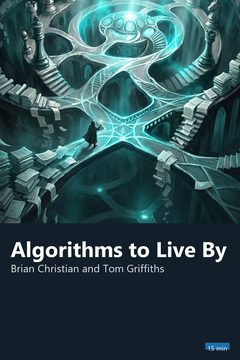
Algorithms to Live By
Brian Christian and Tom Griffiths
The cost of a decision includes the attention that is no longer available for other parts of life.
 18 min
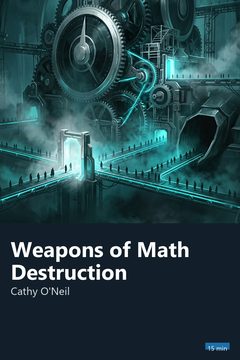
Weapons of Math Destruction
Cathy O'Neil
A metric can help make work visible, and once it becomes the sole objective, begin to distort it.
 17 min
Console Wars: Sega, Nintendo, and the Battle that Defined a Generation
Blake J. Harris
Challenging an established leader requires breaking away from polite market norms and embracing a bold identity that speaks to young people.
 15 min
Dogfight
Fred Vogelstein
An idea can be on the right track and still get rebuilt from scratch in just a few months when a competitor unveils a product that resets the bar for the entire market.
 15 min
Competing in the Age of AI: Strategy and Leadership When Algorithms and Networks Run the World
Marco Iansiti & Karim R. Lakhani
Artificial intelligence is not just an office automation tool, but a new operating engine that replaces human bureaucracy at the core of the company.
 18 min
Don't Make Me Think: A Common Sense Approach to Web Usability
Steve Krug
Visitors do not read digital pages word for word; instead, they scan the screen looking for terms that seem to satisfy their immediate urgency.
 17 min
Hooked: How to Build Habit-Forming Products
Nir Eyal
A consolidated habit makes the user open an app seeking emotional relief without consciously thinking about the decision.
 16 min
AI 2041
Kai-Fu Lee & Chen Qiufan
A system that learns from past data can repeat the injustices of that past, only now wearing a mask of mathematical neutrality.
 14 min
The Phoenix Project: A Novel about IT, DevOps, and Helping Your Business Win
Gene Kim, Kevin Behr & George Spafford
Unplanned work acts like operational antimatter, devouring the organization's entire productive capacity.
 17 min
The Singularity Is Nearer: When We Merge with AI
Ray Kurzweil
In the book's timeline, each leap in history arrived faster than the one before because it built on what the previous stage left ready.
 15 min
Co-Intelligence: Living and Working with AI
Ethan Mollick
According to the book, the usefulness of AI has a jagged frontier: it nails difficult tasks and stumbles on trivial ones, and only real-world use reveals where.
 15 min
Emotional Design
Donald A. Norman
According to Norman, studies with ATMs suggest that more attractive layouts actually seem easier to use.
 15 min
Brave New Words
Salman Khan
According to the book, the promise of an AI tutor is to bring everyday students closer to the one-on-one attention that only wealthy families could previously afford.
 15 min
Human Compatible
Stuart Russell
According to the author, the safety of a powerful machine depends on its having doubt about what we want, rather than being overly certain about its goal.
 14 min
The Filter Bubble
Eli Pariser
For Pariser, the filter is dangerous because it is invisible and turned on by default, not because personalization itself is bad.
 15 min
The Innovators
Walter Isaacson
Innovation rarely fits inside a single person: it usually takes someone who imagines, someone who builds, and someone who organizes the crew.
Technology and the Future authors
Yuval Noah Harari · Michio Kaku · Blake J. Harris · Brian Christian · Cathy O'Neil · Chen Qiufan · Donald A. Norman · Eli Pariser · Eric Schmidt · Ethan Mollick · Fred Vogelstein · Gene Kim, Kevin Behr · George Spafford · Jonathan Rosenberg · Kai-Fu Lee · Karim R. Lakhani · Marco Iansiti · Max Tegmark · Nate Silver · Nick Bostrom · Nir Eyal · Ray Kurzweil · Salim Ismail, Michael S. Malone, · Salman Khan · Steve Krug · Stuart Russell · Tom Griffiths · Walter Isaacson · Yuri van Geest
Journeys with Technology and the Future books
Sequences of books that complete each other, to follow in the app.
Frequently asked questions
+Do I need a tech background to read these books?
No. The summaries explain concepts in plain language, with examples. Algorithms to Live By and Weapons of Math Destruction start from everyday situations, and 21 Lessons for the 21st Century is a good entry point for anyone new to the subject.
+Do the authors agree about the future of artificial intelligence?
No. Bostrom worries about the risks of systems far smarter than us. Tegmark discusses different scenarios, good and bad. Cathy O'Neil writes about harm algorithms already cause today. Harari asks what happens to society and to whoever controls information. The summaries show each author's thesis.
+How does 15 Minutes work?
On this site you can see who each book is for, its key ideas and a preview of the summary. In the app you get the full summary as text, a quiz at the end of each book, guided Journeys and new books every week. The app is free to download and you can read one full book free every day. Premium: $19.99/year in the US (price shown in your App Store). Audio narration for the English summaries is coming soon.
Other categories
Technology and the Future in your pocket
Full text summaries, a quiz at the end of each book and guided Journeys. New books every week.
Download the appFree to download • one full book free every day • Premium: $19.99/year in the US