15 Minutes
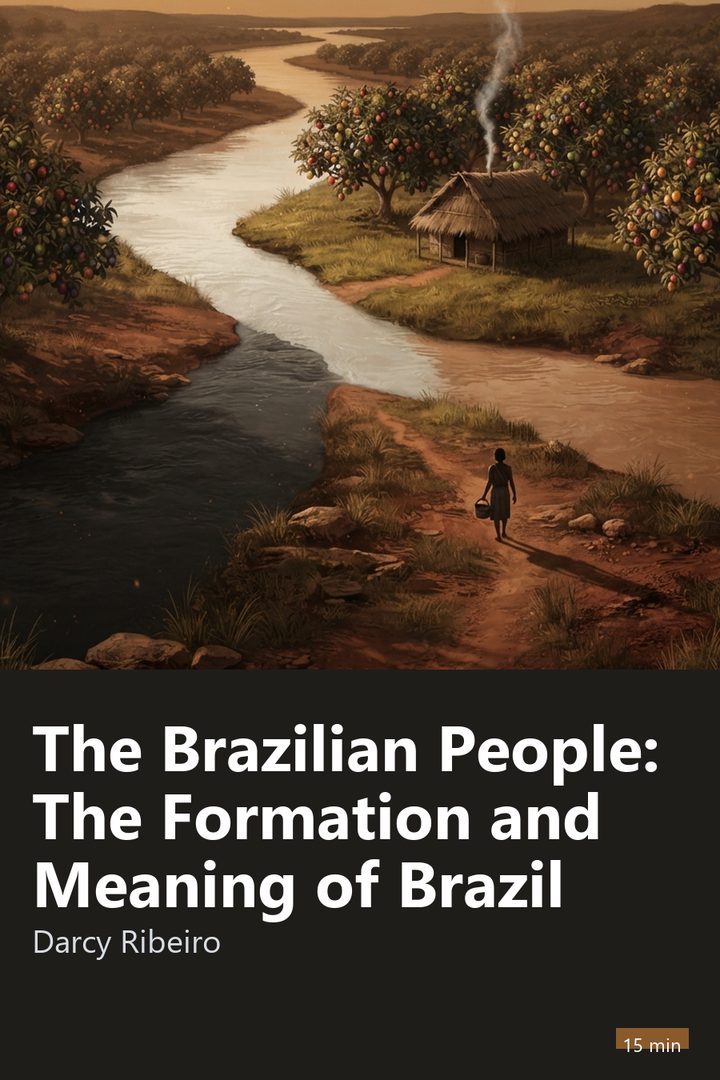
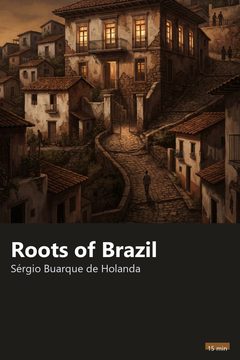
Cover of The Brazilian People: The Formation and Meaning of Brazil

Economy and Society · 17 min

The Brazilian People: The Formation and Meaning of Brazil

Darcy Ribeiro · 1995

Who it's for

Original title (Portuguese): O Povo Brasileiro: A Formação e o Sentido do Brasil. For anyone who has ever wondered why Brazil is so unequal and, at the same time, so inventive with so little: a deep dive into the violent formation of the Brazilian people, written by an anthropologist who helped design the very country he studied.

Read it in the app

⚡ Free to download • 🎁 One full book free every day

🎧 Audio coming soon in the app

Narration for the English summaries is on its way. Meanwhile you can read the full summary in the app.

3 ideas to take with you

1

Darcy calls the emptiness of the mixed-race person of the first centuries "nobodiness" (ninguendade): with no full place in the Indigenous, Portuguese, or African tradition, they had to invent an identity of their own.

2

For Darcy, the result of Brazilian colonization was not a copy of Portugal or an extension of Africa: it was a new people, with a language, a cuisine, and a culture that did not exist in any of the original sources taken separately.

3

For Darcy, Brazilian inequality did not arise by accident: it was designed from the very beginning, in a colony organized to concentrate land, power, and income in a few families.

“
For Darcy, the colony worked like a mill: it spun around making sugar and gold, and it ground up enslaved Indigenous and African lives as if they were disposable fuel.
An idea from The Brazilian People: The Formation and Meaning of Brazil, in the words of 15 Minutes

Preview

Start reading now

Who Darcy Ribeiro was and why this book is different

Darcy Ribeiro spent his life inside the question this book tries to answer: what makes Brazil a country so unequal and, at the same time, so inventive with so little? He did not write as someone looking in from the outside. He was an anthropologist, lived for years among Indigenous peoples in the country's interior, and helped found the University of Brasília.

The book closes a trilogy Darcy wrote about the formation of the peoples of the Americas. The first two volumes dealt with Indians and with the colonization of the Americas in broader terms. This third one is the most personal: the tone stops being strictly academic and becomes almost a family story, full of indignation and pride.

Don't expect a neutral book. Darcy writes taking sides, angry at the suffering colonization imposed and full of admiration for the Brazilian people's ability to invent culture under so much violence. That mix is the signature of the whole text, from the first chapter to the last.

A colony built to turn a profit, not to become a country

Portugal did not send people to Brazil to build a new nation. It sent them to exploit a territory and extract wealth: first brazilwood, then sugar, then gold. The whole organization of the colony was built around one central criterion: how much profit it brought the mother country, not how much well-being was left for the people living there.

The land was divided into enormous grants called sesmarias, handed to a few families who were supposed to settle and exploit the area in the Crown's name. There was no intention of creating small landowners. The design was to concentrate land and power in the hands of a few owners, a pattern Brazil still carries today in the distribution of land and income.

This commercial logic, the country existing first as a business and only later as a community of people, is the key Darcy uses to explain almost everything that follows: inequality, weak institutions, the elite's habit of treating the state as private property.

The mill that grinds up people

Darcy uses a powerful image to describe the colonial machinery: a mill that grinds up people. Producing sugar and later gold demanded a gigantic number of workers, and the solution was not to look after the workforce but to replace it whenever it was used up, first enslaving Indians, then bringing enslaved Africans by the millions.

The math is brutal: millions of people brought by force from Africa, dying on the crossing or at work, and replaced by more enslaved people as soon as production needed more hands. Buying new people was cheaper than caring for the ones already here.

This mill that grinds up people, in Darcy's reading, was not an accident or the excess of a few isolated planters: it was the economic engine of the entire colony, backed by law, Church, and Crown, with organized resistance in quilombos scattered across the territory. That explains why Brazil reached the end of slavery, in 1888, as the last country in the Americas to abolish the system.

12 more sections and the quiz

Continue in the app

Read the whole summary, finish with the The Brazilian People: The Formation and Meaning of Brazil quiz and follow the guided Journeys. No ads in the app.

About Darcy Ribeiro

Darcy Ribeiro (1922-1997) was a Brazilian anthropologist, educator, and politician, one of the country's foremost scholars of Indigenous peoples. He founded the University of Brasília in 1961 and, decades later, as lieutenant governor of Rio de Janeiro, created the CIEPs, full-time public schools. He was also a U.S.-style senator of the Republic and a member of the Brazilian Academy of Letters. The Brazilian People, published in 1995 by Companhia das Letras, closes a trilogy of studies on the formation of Brazilian civilization that he wrote over the course of decades.

Explore

Part of the Journeys:
Brazil in Books, Thinking Brazil