A house that became an explanation for an entire country
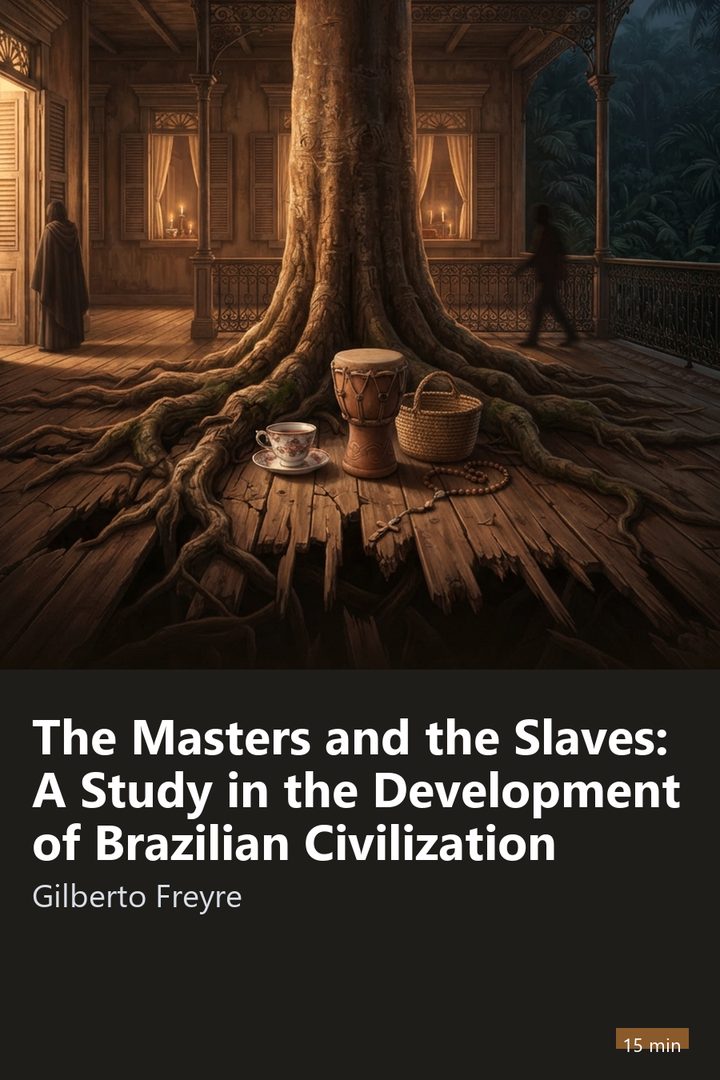
The Masters and the Slaves is not a book about battles, kings, or memorized dates. Gilberto Freyre chose to tell the story of how Brazil was formed through the house where colonial life really happened: the big house of the sugar plantation, with the slave quarters next door, and everything that passed between the two.
The central idea is that you can understand an entire country by looking at the kitchen, the bed, the raising of children, and the daily routine of the people who lived in that house, not just the big political events. That was a rare choice for a history book published in 1933.
The result is both an ambitious portrait of how Brazil took shape and one of the most debated and most criticized books in the country's intellectual history, because the way it describes slavery inside that house set off decades of argument.
The book is in the public domain, so this summary offers our own analysis of its central ideas, with no passages copied word for word: the goal is to give you the full picture so you can decide whether the whole book is worth reading.