15 Minutes
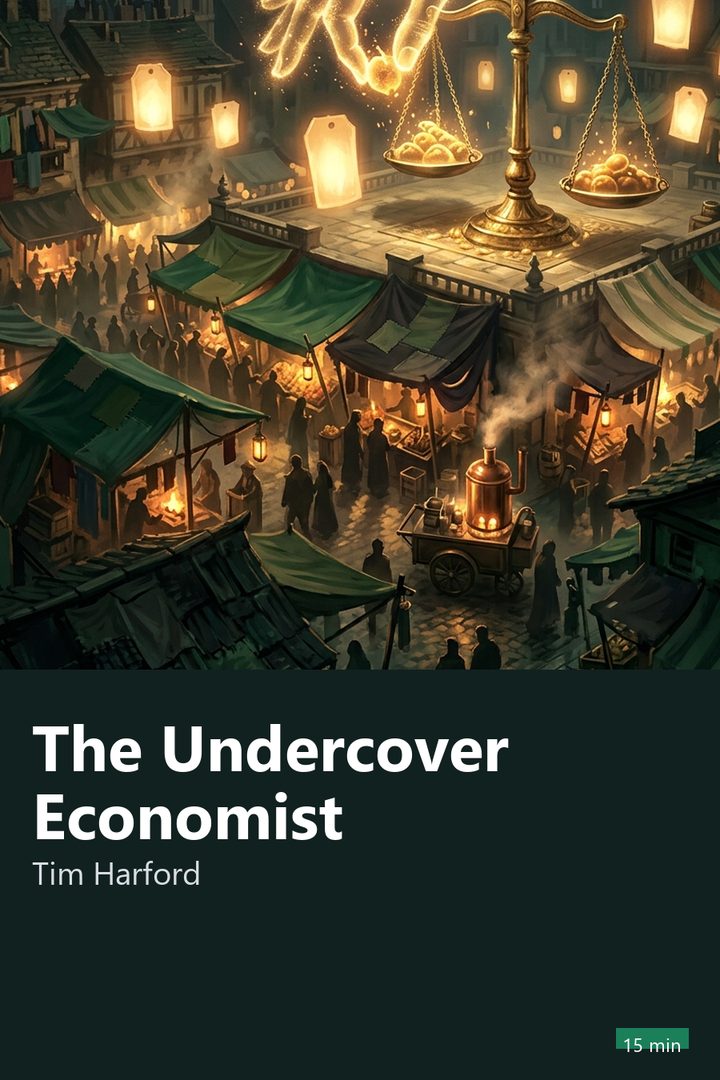
Cover of The Undercover Economist

Economy and Society · 17 min

The Undercover Economist

Tim Harford · 2005

Who it's for

For anyone who wants to understand the invisible logic behind everyday prices, from coffee at the bus station to public transit fares. This is essential reading for seeing how markets work without getting bogged down in math.

Read it in the app

⚡ Free to download • 🎁 One full book free every day

🎧 Audio coming soon in the app

Narration for the English summaries is on its way. Meanwhile you can read the full summary in the app.

3 ideas to take with you

1

The price of a product downtown often pays for the scarcity of prime retail space, rather than the actual cost of making it.

2

When a shared resource is free to use, each user tends to overlook the time lost and costs imposed on other people.

3

A lack of transparency about product quality drives cautious buyers away and can leave only the worst options on the market.

“
Companies create slightly different versions of an item so that consumers with less time or more money voluntarily choose to pay more.
An idea from The Undercover Economist, in the words of 15 Minutes

Preview

Start reading now

Coffee at the Station and the Mystery of High Prices

Anyone passing through Penn Station in New York or Union Station in Washington notices the steep price of espresso at the counter near the exit. It is the same coffee the corner bakery sells cheaply, but during the morning rush, everyone pays without complaining. The popular explanation blames the seller's greed, but economics reveals another reason.

The secret lies in the scarcity of retail space. Thousands of workers pass through that corridor every morning, and there is no physical room to open dozens of competing kiosks. Customers accept paying more for the immediate convenience of not having to take a detour on their way to work.

But the coffee shop owner has no bargaining power over the property owner. When the lease expires, the landlord raises the rent to capture the profit generated by foot traffic. If the shopkeeper refuses, someone else takes the spot immediately. What profits from that morning line is scarce real estate, not coffee.
How Brands Get You to Reveal Your Budget

Nobody walks into a store announcing how much they earn each month. If a salesperson asks about your income at the door, you play it down to get a discount. To get around this barrier, companies use price discrimination, creating situations in which wealthier customers voluntarily choose to pay more.

The classic method is self-selection through small conveniences. Coffee shops sell a regular drink at a modest price and charge almost twice as much for a version with plant-based milk or specialty syrup. These extras cost very little, but the upgraded option attracts people who do not mind paying more for a daily treat.

The same logic governs airlines. Business class costs much more not just because of its wider seats, but because it lets travelers change flights the day before without a penalty. Business travelers pay full fare because their company covers the expense, while families buy discounted tickets with restrictions.

Supermarket Tricks and the Illusion of a Bargain

At a supermarket or warehouse club, heavily discounted rice and beans are always at the back of the store. That long walk forces customers through aisles packed with treats and new products from familiar brands, strategically displayed at eye level to encourage impulse purchases.

Retailers know that comparing the price per pound of dozens of laundry detergents takes time and patience. For someone who works hard all week, checking every penny carries a high opportunity cost, since that energy could go toward relaxing with family. Being tired makes choosing the more expensive item easier.

Tiny packaging differences complete the retail trap. Competing products arrive on shelves in slightly different weights, making a quick, straightforward price comparison difficult. If you really want to save, you need to pay extra attention and resist the convenience retailers push.

11 more sections and the quiz

Continue in the app

Read the whole summary, finish with the The Undercover Economist quiz and follow the guided Journeys. No ads in the app.

About Tim Harford

Tim Harford is a British economist, journalist, and broadcaster who graduated from the University of Oxford. He became internationally known for his Financial Times column, The Undercover Economist. He is the author of bestsellers including The Logic of Life and hosts More or Less on BBC Radio Four. His work focuses on making economic concepts accessible to general audiences through practical examples from everyday life.

Explore

Part of the Journeys:
Understand the Economy