15 Minutes
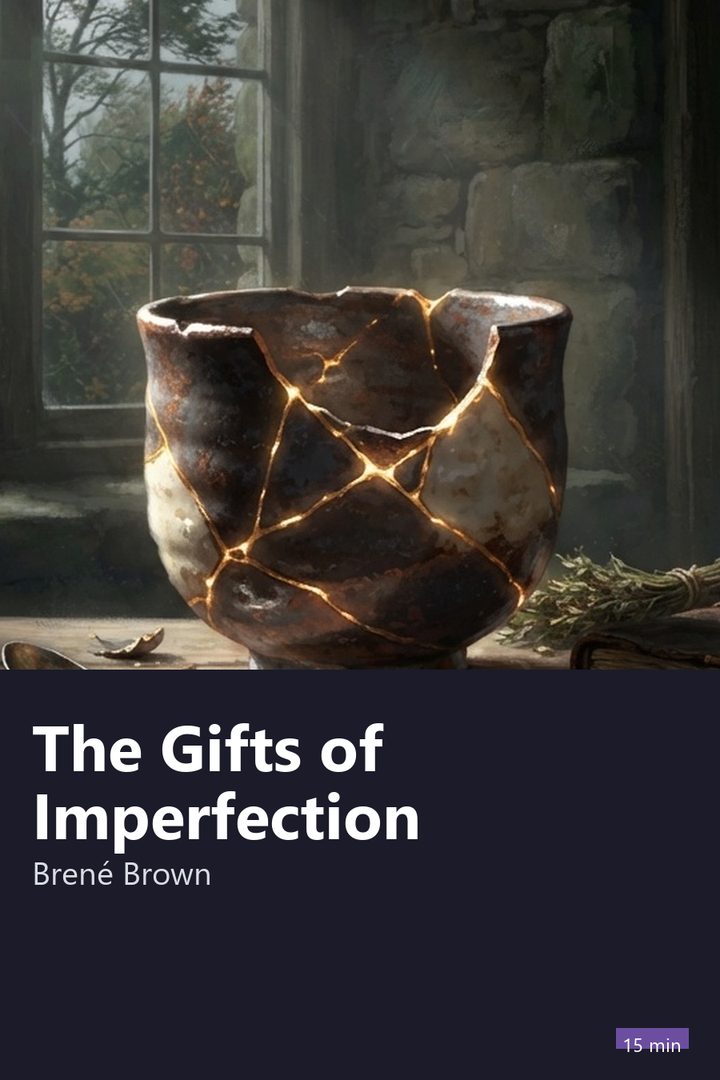
Cover of The Gifts of Imperfection

Psychology · 14 min

The Gifts of Imperfection

Brené Brown · 2010

Who it's for

For you if you keep pushing yourself to be perfect at work, at home, and on social media, and end the day feeling you're never enough. The book offers ten practices for dropping the act and living more honestly.

Read it in the app

⚡ Free to download • 🎁 One full book free every day

🎧 Audio coming soon in the app

Narration for the English summaries is on its way. Meanwhile you can read the full summary in the app.

3 ideas to take with you

1

Feeling that you did something wrong is different from feeling that you are wrong, and that difference decides whether a mistake teaches you or paralyzes you.

2

Joy that comes with the fear of losing it gets lighter when we practice gratitude instead of rehearsing tragedy.

3

Truly resting is also part of taking care of yourself, not a prize you only earn after you've exhausted your to-do list.

“
People who only show the tidy side of their lives get tired of maintaining the storefront and forget to live in it.
An idea from The Gifts of Imperfection, in the words of 15 Minutes

Preview

Start reading now

The researcher who had to apply what she studied

Brené Brown began her career studying connection between people. Listening to hundreds of interviews, she realized the subject kept running into its opposite, shame, that fear of not being worthy of belonging. She says that once she understood this, she also saw her own life clearly and went through a personal crisis that led her to seek therapy.

The book was born from this meeting of research and experience. The author separates the people who reported a strong sense of worthiness, what she calls living wholeheartedly, from those who fought a constant feeling of not being enough, and asks what the first group did differently.

The answer comes in ten practices, which she calls guideposts. They are not rules or mandatory steps, but an invitation to cultivate habits and let go of beliefs that weigh you down. The common thread is a single one: the courage to be real.


Living wholeheartedly

The central idea of the book is living wholeheartedly, which means facing life from the belief that you have worth, even when you fail. It is not a state of constant happiness but a stance: trying, failing, asking for help, and showing up without putting on a show.

According to the author, these people tend to share three traits: the courage to be imperfect, compassion for themselves and others, and genuine connection, which appears when you give up the idea that you have to be someone different to be accepted.

Think about the difference between the coworker who shows up at the office party to be seen and the one who shows up because he enjoys being there. The first spends energy on image, the second can really talk. The book argues that the second stance can be trained.

Guilt hurts, shame paralyzes

One of the most useful concepts in the book is the difference between guilt and shame. Guilt is the feeling that I did something bad, and it can motivate you to apologize and make amends. Shame is the feeling that I am bad, and it usually leads to hiding, running away, and going silent.

The author says shame grows in silence and secrecy. When someone makes a mistake at work and, instead of telling anyone, spends days hiding, the problem gets bigger and self-esteem gets smaller. Shame loses power when it is spoken aloud to a trusted person who responds with empathy.

This applies to everyday life: the mother who thinks she is terrible because her child got a bad grade, the father ashamed of being unemployed, the teenager who hides his body at the beach. Talking with someone safe usually relieves more than isolation does.

12 more sections and the quiz

Continue in the app

Read the whole summary, finish with the The Gifts of Imperfection quiz and follow the guided Journeys. No ads in the app.

About Brené Brown

Brené Brown is an American researcher and professor at the University of Houston Graduate College of Social Work in Texas. For more than twenty years she has studied topics such as shame, courage, vulnerability, and empathy. She became widely known after a TED talk in 2010 that reached millions of views. Her other books include Daring Greatly.

Explore

Category:
Psychology
Part of the Journeys:
Self-Esteem and Courage