15 Minutes
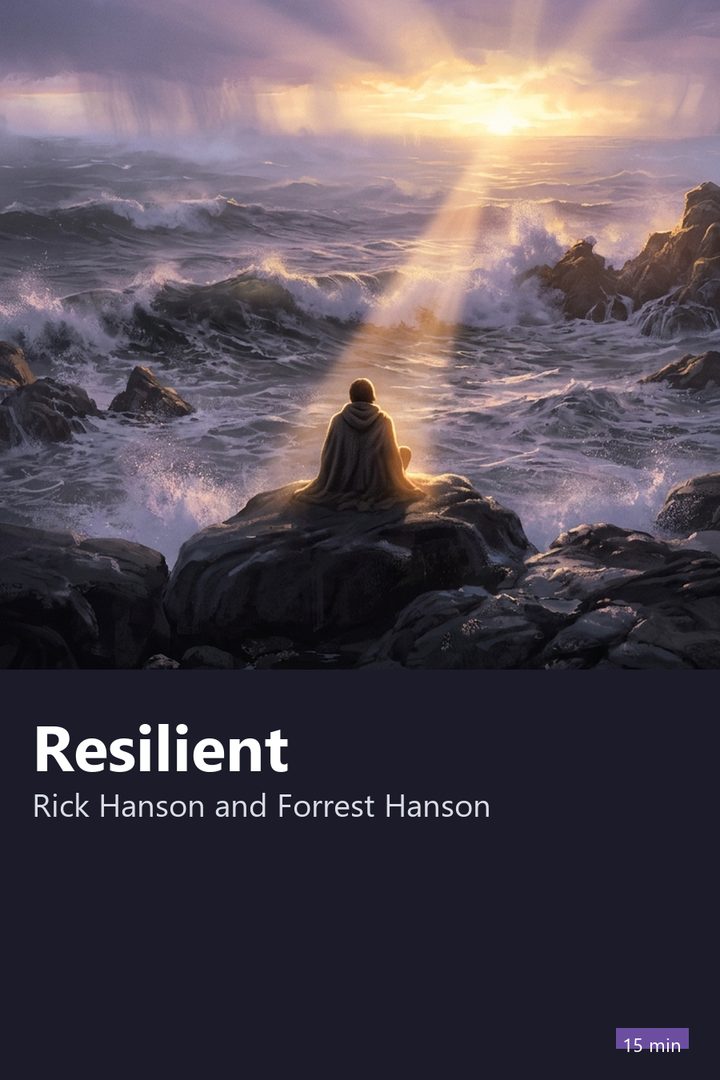
Cover of Resilient

Psychology · 15 min

Resilient

Rick Hanson and Forrest Hanson · 2018

Who it's for

For anyone living under pressure, dwelling on what went wrong, and looking for short practices to build calm, confidence, and stronger relationships. It's also for anyone interested in applying neuroscience to everyday life.

Read it in the app

⚡ Free to download • 🎁 One full book free every day

🎧 Audio coming soon in the app

Narration for the English summaries is on its way. Meanwhile you can read the full summary in the app.

3 ideas to take with you

1

According to the Hansons, the brain evolved to detect threats, which is why bad experiences stick more easily than good ones.

2

Safety, satisfaction, and connection are our three foundational needs. When one is consistently met, the others get a boost.

3

Individual resilience has limits: without income, housing, and a social safety net, asking someone to stay calm is offering too little for a much bigger problem.

“
Criticism keeps echoing on the bus ride home while a compliment disappears, because the brain holds on to the bad with stronger glue.
An idea from Resilient, in the words of 15 Minutes

Preview

Start reading now

Resilience Means Having Inner Resources

Everyone knows someone who goes through a layoff, an illness in the family, or financial trouble and seems to bounce back faster than other people. Rick Hanson and Forrest Hanson, father and son, take that observation as the starting point for a book about building this capacity. Their answer is that resilience isn't an inborn gift or an act of toughness: it's a set of inner strengths you can gradually develop.

Published in 2018, the book combines psychology, neuroscience, and mindfulness practices. The central idea is that, just as your body needs energy reserves to get through a demanding week, your mind needs reserves of calm, confidence, and affection. People with those reserves get through difficulties with less damage. Those without them end up spending whatever they have left just protecting themselves.
Why the Brain Holds On to the Bad

The authors explain that the human brain was shaped over thousands of years when misjudging a danger could cost you your life. People who ignored rustling in the bushes became lunch, while those who overreacted just felt embarrassed. That's why the mind learned to give more weight to threats than to pleasures. This tendency is called the negativity bias.

Hanson uses an easy-to-remember image: the brain is like Velcro for bad experiences and Teflon for good ones. A compliment goes in one ear and out the other, but criticism of your report keeps echoing on the bus ride home. This mechanism isn't a moral failing. It's a biological inheritance, and understanding it takes away much of the guilt we feel about dwelling on what went wrong.

The practical consequence is significant. If bad experiences register more strongly than good ones, the mind becomes increasingly sensitive to danger over time, even when life has improved. The book proposes deliberately working to offset this imbalance.

Three Needs: Safety, Satisfaction, and Connection

According to the authors, the brain works to meet three basic needs. The first is safety: avoiding harm, whether it's a dark street or a budget that doesn't balance at the end of the month. The second is satisfaction: seeking pleasure, meaning, and energy through things like a good lunch, an exciting project, or a well-earned rest. The third is connection: belonging, being seen, and being cared for by others.

These three pillars appear throughout the book, and each inner strength helps support at least one of them. Without safety, you live on alert. Without satisfaction, life becomes a gray routine you want to escape. Without connection, loneliness weighs on you physically, too.

It's worth noting that these needs are connected. Feeling safe gives you more courage to pursue what you want, and feeling loved helps you handle risk. When one need is consistently met, the others usually have more room to breathe.

11 more sections and the quiz

Continue in the app

Read the whole summary, finish with the Resilient quiz and follow the guided Journeys. No ads in the app.

About Rick Hanson and Forrest Hanson

Rick Hanson is an American psychologist and senior fellow at the Greater Good Science Center at the University of California, Berkeley. He has written books on well-being and neuroscience, including Buddha's Brain, published in 2009, and Hardwiring Happiness, published in 2013. Forrest Hanson, Rick's son, is the coauthor of Resilient, the original title of this 2018 book.

Explore

Category:
Psychology