A book designed to explain structure, not just tell stories
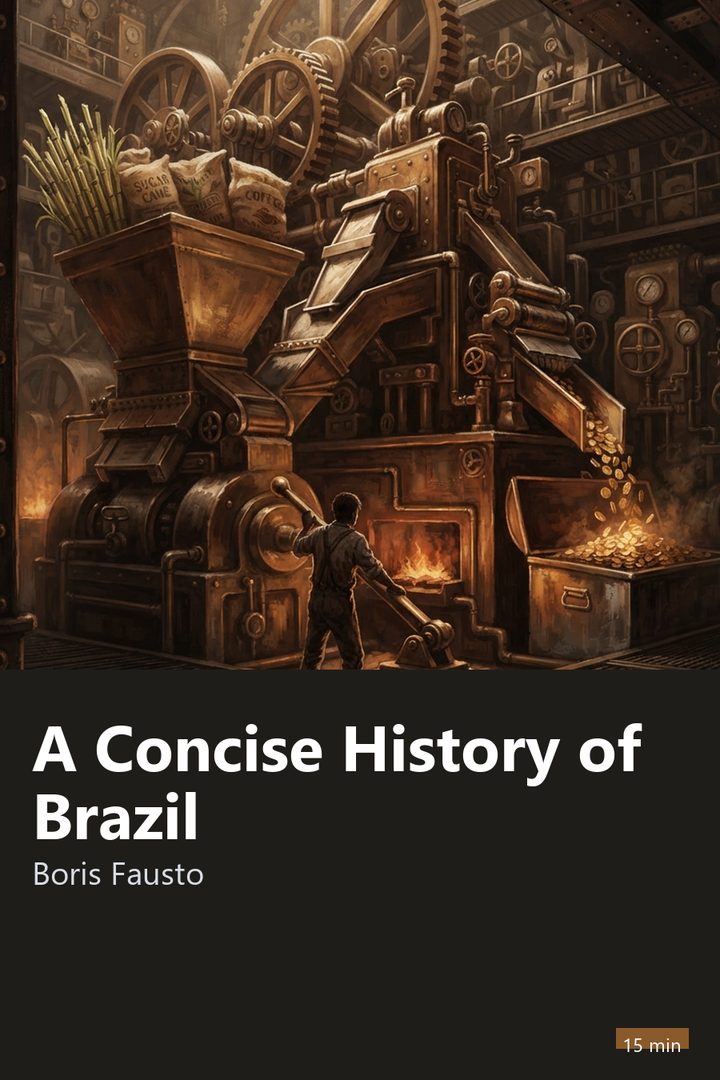
Boris Fausto was a political scientist before he became a historian, and that changes the way this book is organized. He is not chasing colorful characters or juicy behind-the-scenes gossip: he wants to understand why colonial Brazil worked the way it did, who profited from each economic arrangement, and how each political crisis grew out of tensions that had been building up for decades.
Because of that, the book reads like an undergraduate lecture, not a historical novel. Fausto divides the country into blocks: colony, empire, First Republic, the Vargas Era, democracy, military regime, and redemocratization. In each block he repeats the same kind of question: how the economy was organized, who actually held power, and why that arrangement collapsed in the next block.
For anyone who ever crammed a study guide the night before a college entrance exam, this structure feels familiar: it is the way nearly every Brazilian high school history teacher organizes the subject to this day, having drawn directly or indirectly from this book.