A book that changes the question: not who, but how
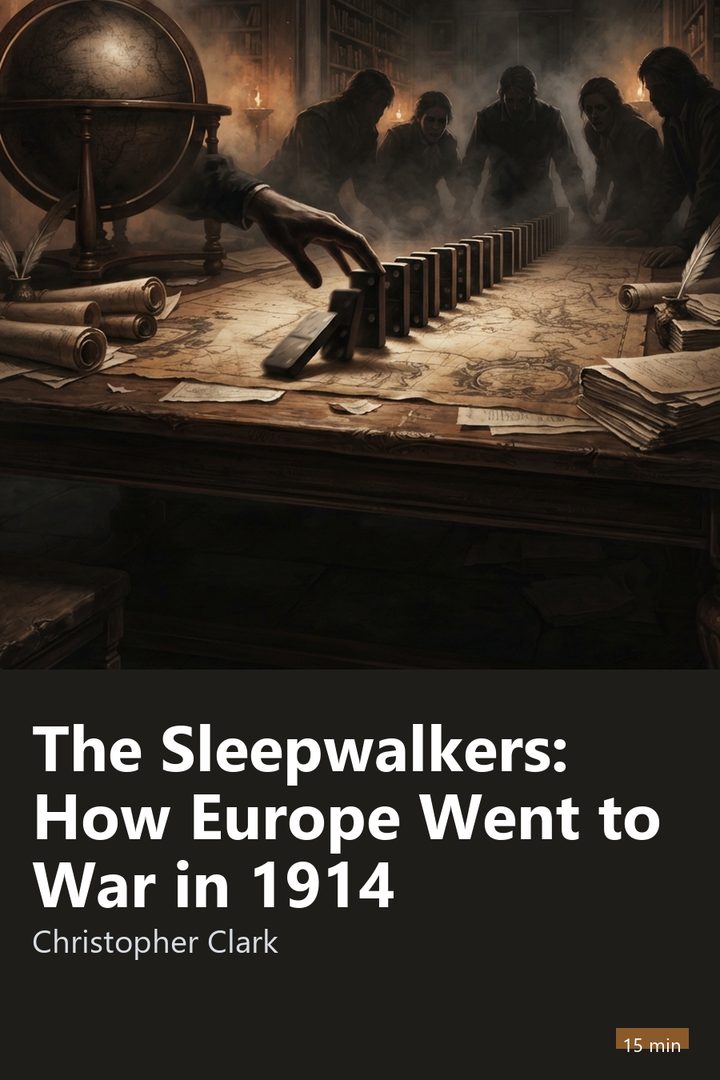
Clark starts from a simple shift. Instead of asking who started World War I, he asks how an assassination in a Balkan city turned, in little more than a month, into a war that involved almost all of Europe. The question of who pushes the reader to look for a single culprit; the question of how forces you to look at the whole process, with dozens of small decisions adding up.
This choice is not neutral. For decades, much of the historical scholarship treated Germany as the main party responsible for the war, following the line of the historian Fritz Fischer. Clark does not deny that Germany acted irresponsibly, but he argues that putting the main weight on a single country hides how much other powers also pushed the crisis forward.
The result is a book about group decision-making under pressure, not about villains. Think of a family argument that escalates because nobody wants to be the first to back down: each side feels defensive, every gesture is read as a threat, and nobody in the middle of it has the full picture of how it will end.