15 Minutes
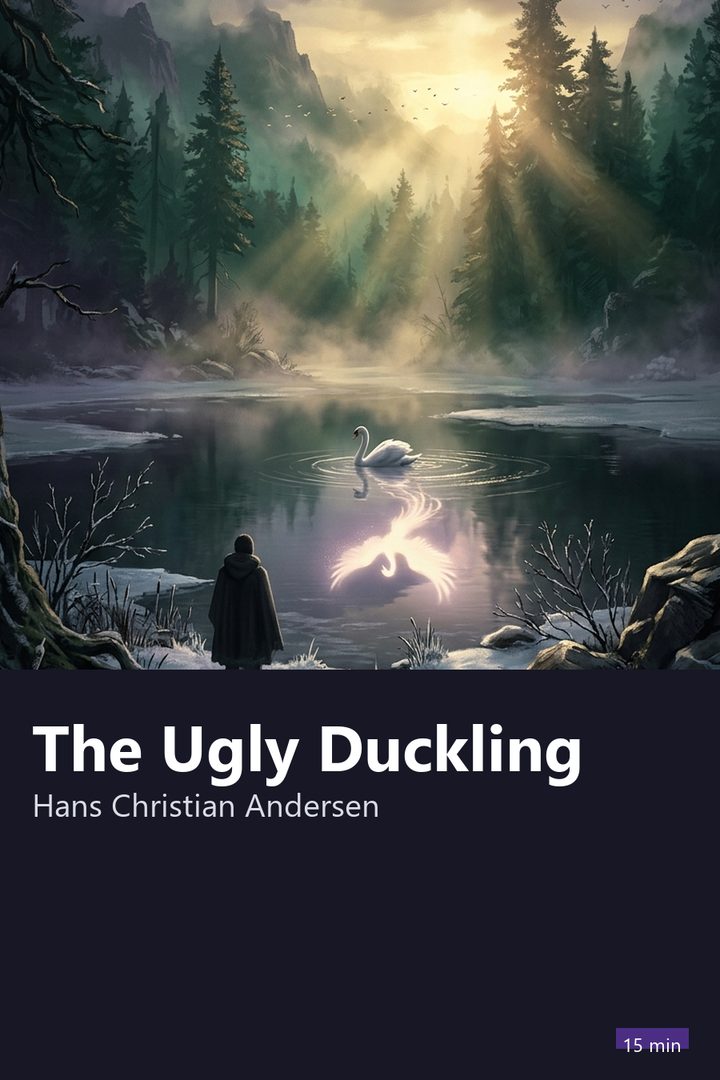
Cover of The Ugly Duckling

Fiction · 15 min

The Ugly Duckling

Hans Christian Andersen · 1843

Who it's for

For you if you enjoy revisiting classic tales through adult eyes, reading with children, or thinking about rejection, identity, and belonging. The story is short, but it opens up some great conversations.

Read it in the app

⚡ Free to download • 🎁 One full book free every day

🎧 Audio coming soon in the app

Narration for the English summaries is on its way. Meanwhile you can read the full summary in the app.

3 ideas to take with you

1

People who grow up in an environment that rejects them tend to accept the label they are given as the truth about themselves.

2

Being welcomed by a group that resembles us can reveal a value our old surroundings could not recognize.

3

Group cruelty is sustained less by the hatred of a few than by the silence of everyone else.

“
People who judge others only by what they themselves can do call anyone with a different talent useless.
An idea from The Ugly Duckling, in the words of 15 Minutes

Preview

Start reading now

A Little Tale That Became a Mirror

The Ugly Duckling is one of the world's best-known fairy tales, published in 1843 by the Danish writer Hans Christian Andersen. The story is short and simple, but it has endured for generations because it touches on an experience almost everyone has had: feeling out of place, too different from the group, without understanding why.

In this summary, we'll tell the whole story, including the ending, and then look at what it means. Since the work is in the public domain, we can retell it in detail, but we'll use our own words to bring out its meaning.

One caution is worth keeping in mind: the message many adults remember, that everyone is beautiful inside and will shine someday, is one possible reading. But the tale has rough edges more interesting than that greeting-card moral.

Summer in the Country and the Egg That Takes Its Time

The story begins in the Danish countryside in midsummer, with golden wheat fields, green meadows, and an old estate surrounded by canals. In a patch of burdock plants, a mother duck broods over her eggs, bored and tired of waiting, because the other ducks would rather swim than visit her.

The eggs begin to crack, and tiny yellow ducklings emerge from the first ones. Only one egg, the largest of all, has not opened. An old duck who comes to visit examines it and says it looks like a turkey egg, advising the mother to leave it alone. Stubborn and devoted, the mother decides to brood a little longer.

When the last egg finally opens, a large, gangly, gray chick emerges. The mother duck is startled: none of her other children look like this. To settle her doubts, she takes them all to the water. The chick swims very well, leading her to conclude that he cannot be a turkey and must therefore really be her child, however strange.

Life Among the Ducks: Rejection at Every Turn

In the barnyard, the mother duck introduces her brood to the other animals. The reception is cruel. The ducks complain that there are already too many of them and that the gray one is far too ugly. One pecks the chick on the neck, and soon everyone is pushing, biting, and taunting him. The hen pecks him, the girl who feeds them kicks him, and even his siblings say they wish the cat would catch him.

His mother tries to defend him at first, saying he is a good swimmer and his appearance will improve. But the pressure from the group grows, and even she eventually gives in, muttering that she wishes he would go away. Surrounded by humiliation, the chick realizes there is no place for him there.

This passage portrays an environment where aggression comes from every direction: peers, other kinds of animals, adults, and even family. The tale does not present a single villain, but a whole community that grows accustomed to mistreating anyone who is different.

11 more sections and the quiz

Continue in the app

Read the whole summary, finish with the The Ugly Duckling quiz and follow the guided Journeys. No ads in the app.

About Hans Christian Andersen

Hans Christian Andersen was born in Odense, Denmark, in 1805, into a very poor family. He moved to Copenhagen as a young man to pursue a career as a performer and eventually established himself as a writer. His stories include The Little Mermaid, The Snow Queen, and The Emperor's New Clothes. He died in 1875, famous in many countries.

Explore

Category:
Fiction