15 Minutes
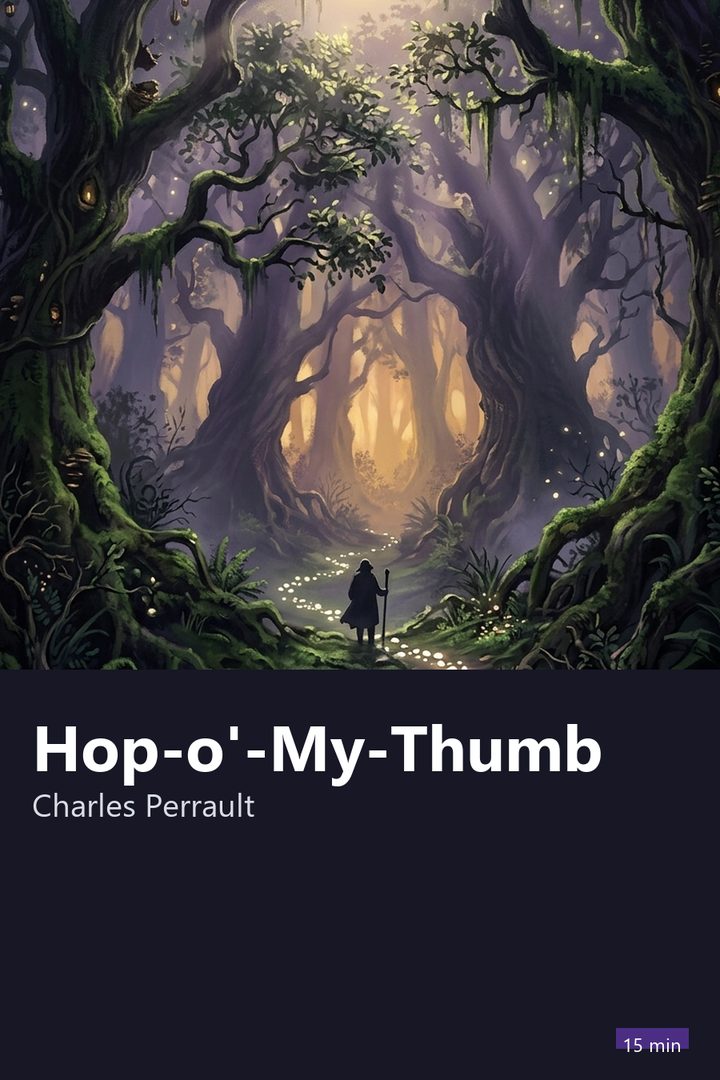
Cover of Hop-o'-My-Thumb

Fiction · 15 min

Hop-o'-My-Thumb

Charles Perrault · 1697

Who it's for

For anyone who wants to discover a fairy-tale classic and understand why it still frightens and enchants us. It's also for parents, teachers, and storytellers who want to retell the story with care.

Read it in the app

⚡ Free to download • 🎁 One full book free every day

🎧 Audio coming soon in the app

Narration for the English summaries is on its way. Meanwhile you can read the full summary in the app.

3 ideas to take with you

1

In the story, the ogre is huge and slow, and loses to someone who plans calmly: brute force without attention to detail is vulnerable.

2

The story shows that size and a reputation for being foolish don't measure ability, and that a first impression can be far from the truth.

3

For today's reader, the scene with the seven daughters is a reminder that even a hero's victory can carry a moral cost worth discussing.

“
Quiet people are often underestimated, and a reputation for being distracted can serve as a disguise for someone who notices everything.
An idea from Hop-o'-My-Thumb, in the words of 15 Minutes

Preview

Start reading now

A Tale of Hunger Written for the Court

Hop-o'-My-Thumb is one of the tales Charles Perrault collected in 1697 in the volume that became known as Tales of Mother Goose. The book was written in Louis XIV's France to be read in fashionable salons, but it grew out of stories passed around among peasants, told by the fire on winter nights. Perrault polished the language, added irony, and ended the tales with a moral, but he kept the people's fears: hunger, abandonment, and the monster that eats children.

The story that follows is easy to summarize and hard to forget. Seven brothers are taken into the forest by their own parents and find their way back thanks to the smallest, who impresses no one with his size but thinks faster than everyone else. That boy is Hop-o'-My-Thumb, and this fairy tale is, at heart, the story of how cunning defeats strength. There isn't a single fairy in the plot, just an ogre, a forest, and plenty of hunger, but the genre has carried that name since those days.

The Woodcutter's Family

Once upon a time, a woodcutter and his wife had seven sons. The oldest was ten, and the youngest was seven. The boys had been born practically one after another, and the household was always stretched thin: many mouths, little food, the day's earnings spent before nightfall. Any family that has ever divided a plate of rice among many siblings will recognize the scene.

The youngest came into the world tiny, no bigger than a thumb, which earned him the nickname that gives the story its title. He rarely spoke, so his family decided he was foolish. They were wrong. He listened to everything and remembered it all, and his reputation as a fool would become a disguise. Nobody suspects someone who seems to understand nothing.

A Year of Poverty and the Parents' Decision

Then came a year of poor harvests and hunger throughout the region. The woodcutter and his wife could no longer feed their children, and at night, after the boys went to bed, they discussed what seemed unthinkable: taking them into the forest and leaving them there, so they wouldn't have to watch their children die before their eyes.

Hop-o'-My-Thumb wasn't asleep. Hidden beneath his father's little stool, he heard the whole conversation and spent the rest of the night thinking. The story doesn't have the boy cry or beg. He calculates. That quality sets him apart from other child heroes and lays the groundwork for everything that follows.

12 more sections and the quiz

Continue in the app

Read the whole summary, finish with the Hop-o'-My-Thumb quiz and follow the guided Journeys. No ads in the app.

About Charles Perrault

Charles Perrault (1628-1703) was a French writer and a member of the French Academy. He took part in the famous Quarrel of the Ancients and the Moderns during the reign of Louis XIV. In 1697, he published Stories or Tales of Times Past, also known as Tales of Mother Goose, featuring stories such as Cinderella, Puss in Boots, and Sleeping Beauty.

Explore

Category:
Fiction