A Novel Written to Hurt
This summary tells the story of The Slave Isaura from beginning to end, including the ending. If you want to be surprised, save this summary for after you read the book or watch the telenovela. Bernardo Guimarães wrote the novel in 1875, thirteen years before slavery was abolished in Brazil, and he published the story first as a serial, bit by bit, in a newspaper, before it became a book.
The tone is pure melodrama: a cruel villain, a flawless heroine, an impossible love, a happy ending that arrives almost by miracle. That is how nineteenth-century Brazilian Romanticism liked to tell a story, with emotion turned all the way up and very little subtlety. That does not lessen the book's importance: it helped bring the violence of slavery into the parlors of readers who had never set foot on a plantation, at a time when a good part of the reading public preferred not to think about it.
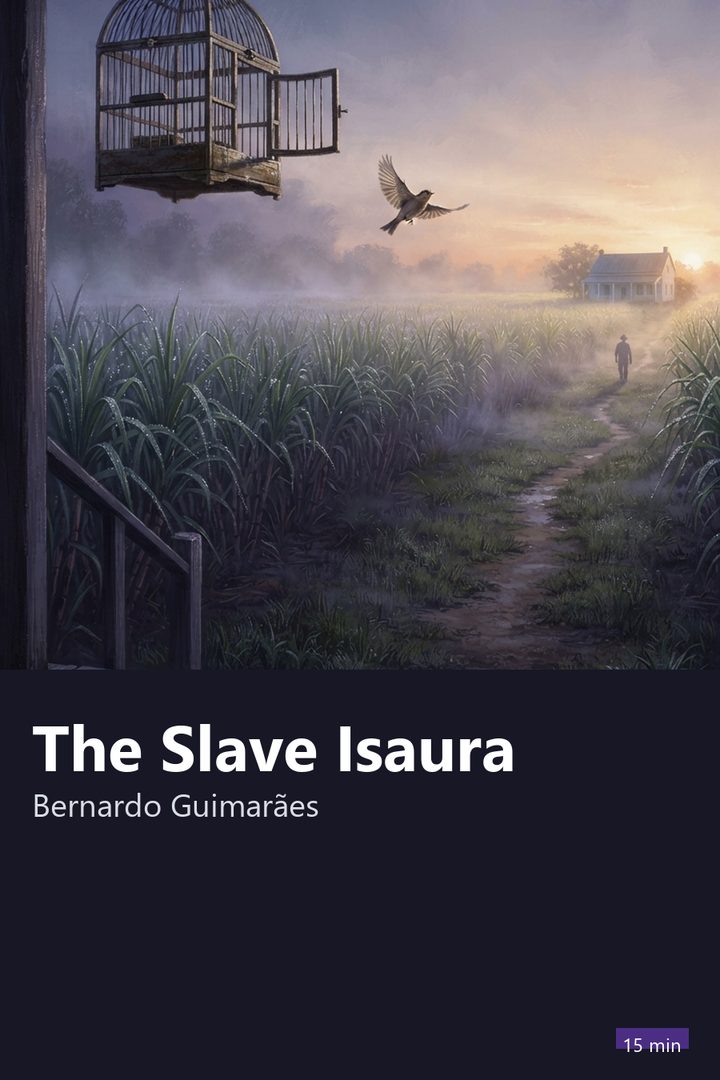
The story takes place on a plantation near Campos dos Goytacazes, in the interior of the state of Rio de Janeiro, at a time when Brazil, by law, had people who could be bought, sold and punished like objects. That real backdrop is what gives weight to Isaura's invented story.