A dead man who decided to write his own life
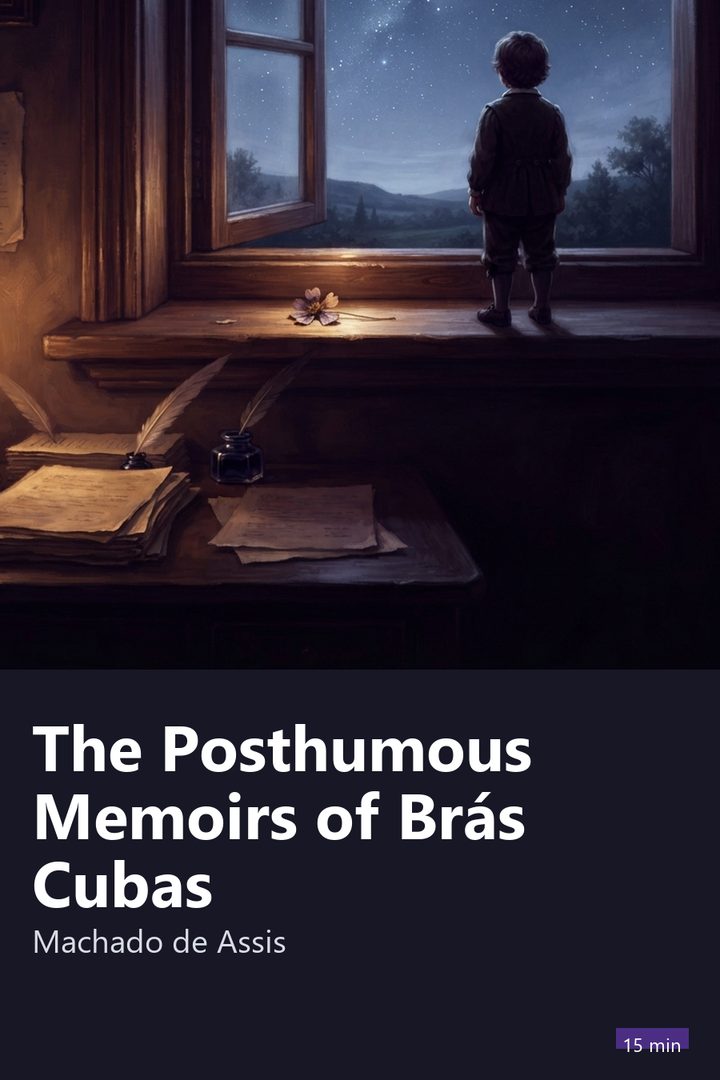
The book begins in a way nobody expected in 1881: the person telling the story is already dead. Brás Cubas writes his memoirs after dying, dedicating the work to the worm that first gnawed on his cold flesh. It is a tasteless joke and, at the same time, the novel's greatest stroke of genius.
Writing as a dead man changes everything. The living still have to watch themselves, spare the reader's vanity, and disguise a bit of who they are. The dead owe nobody an explanation, so Brás Cubas lays out his own pettiness with no shame at all, almost proud of being honest even about the ugly parts.
This narrator also interrupts his own text constantly, talks straight to the reader, and skips chapters whenever he feels like it. It is as if someone were telling their life story at a bar, mixing jokes with confessions, with no obligation to be linear or to look good.