A National Project Written as a Novel
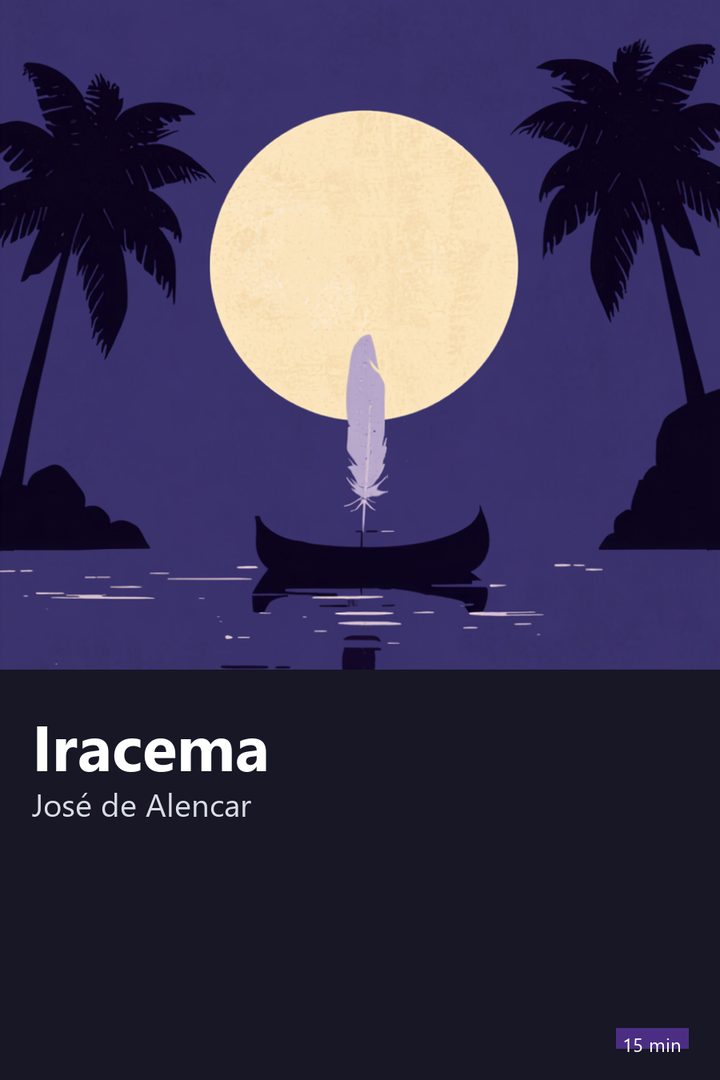
Iracema came out in 1865, forty-three years after Brazil's independence, at a time when the country had practically no mythology of its own to tell about its origins. Europe had the Iliad, it had the Aeneid, it had founding heroes sung in verse for centuries. Brazil, newly separated from Portugal, had nothing like that, and José de Alencar decided to solve this problem all by himself, with his own pen.
That is not a figure of speech. Alencar belonged to Romanticism, in a strand called Indianism, which chose the Brazilian Indigenous person to take the place that the classical European hero held in other literatures. Instead of a hero founding Rome, Brazil got a love legend founding, in fiction, the territory where the state of Ceará now sits.
It is worth reading Iracema knowing this from the first page. It is not just a sad love story, it is a deliberate project to give a young country a literary identity. The rest of this summary tells the story in a few sections, without fear of giving away the ending, because what really matters here is what this project reveals, and also what it hides.