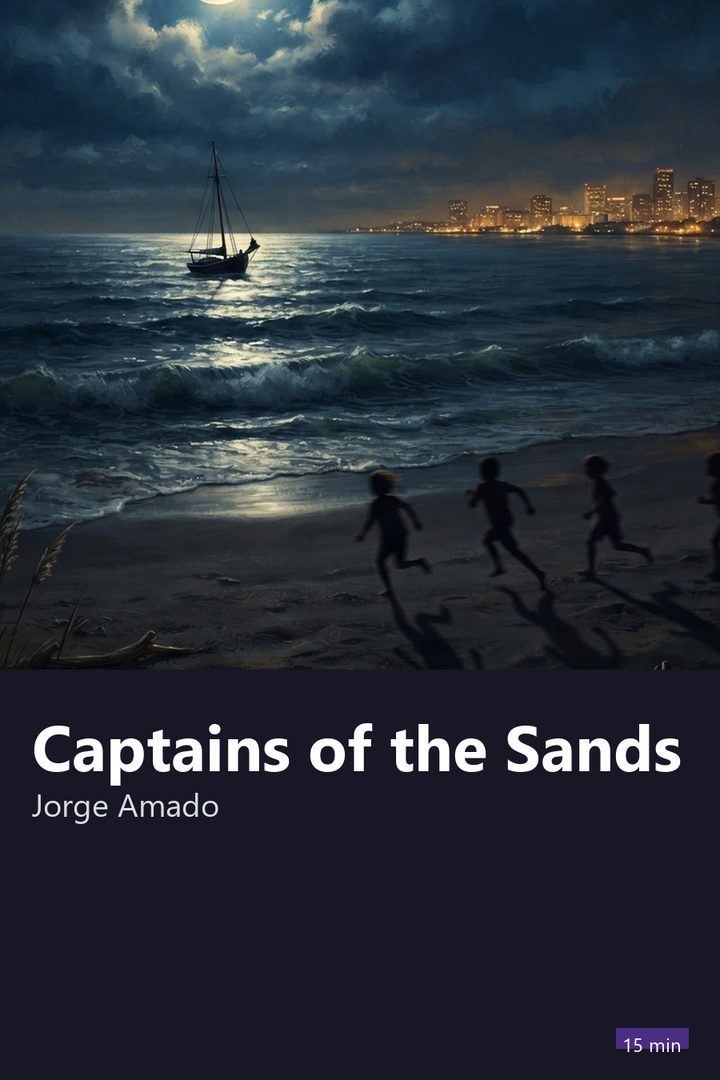
A city, a pier warehouse, and a gang of boys
Captains of the Sands takes place in Salvador, Bahia, in the nineteen-thirties. The city appears full of color, saints, samba, and the smell of the sea, but also of inequality and abandonment. In the middle of all this lives a group of boys without families, who occupy an old abandoned pier warehouse by the docks and survive on petty theft and street smarts.
The group's name comes from the sands of the harbor, where they play and hide. They are real children and teenagers, dealing with hunger, cold, and fear, but also showing humor, bravery, and loyalty. The book treats them with tenderness and gives each one a personality, a backstory, and a dream, instead of reducing them to the word delinquent that the police and the newspapers used.
The intention of the author, Jorge Amado, is clear: to show that those children are the product of a society that abandoned them. It is not an excuse for everything they do, but rather an explanation of where they come from.