A narrator who confesses his fear
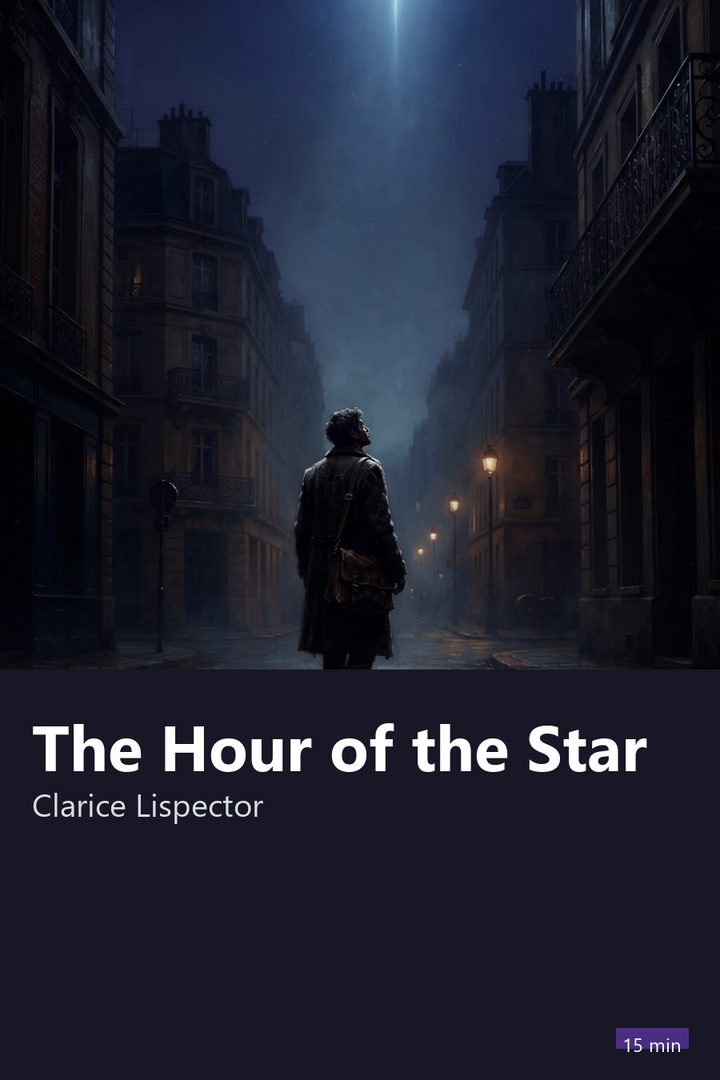
The book is narrated by Rodrigo S.M., an invented writer, who warns right at the start that he will tell the story of a young woman from the Northeast whom he saw on the street. He doesn't want to dress it up: he says he writes with few words and a lot of discomfort, and that the subject frightens him because almost nothing happens in this girl's life.
Throughout the pages, he doubts himself, interrupts the story, talks about toothaches and guilt, offers several alternative titles, and asks whether he has the right to tell another person's life. The novel is, at once, the story of the young woman and the diary of a writer trying to get close to her.
Readers have to accept this game: Macabéa's story comes filtered through a man who considers himself unable to explain her. It's like hearing an acquaintance talk about the neighbor in his building, stammering, ashamed of knowing so little.