A backcountry with a name and a debt
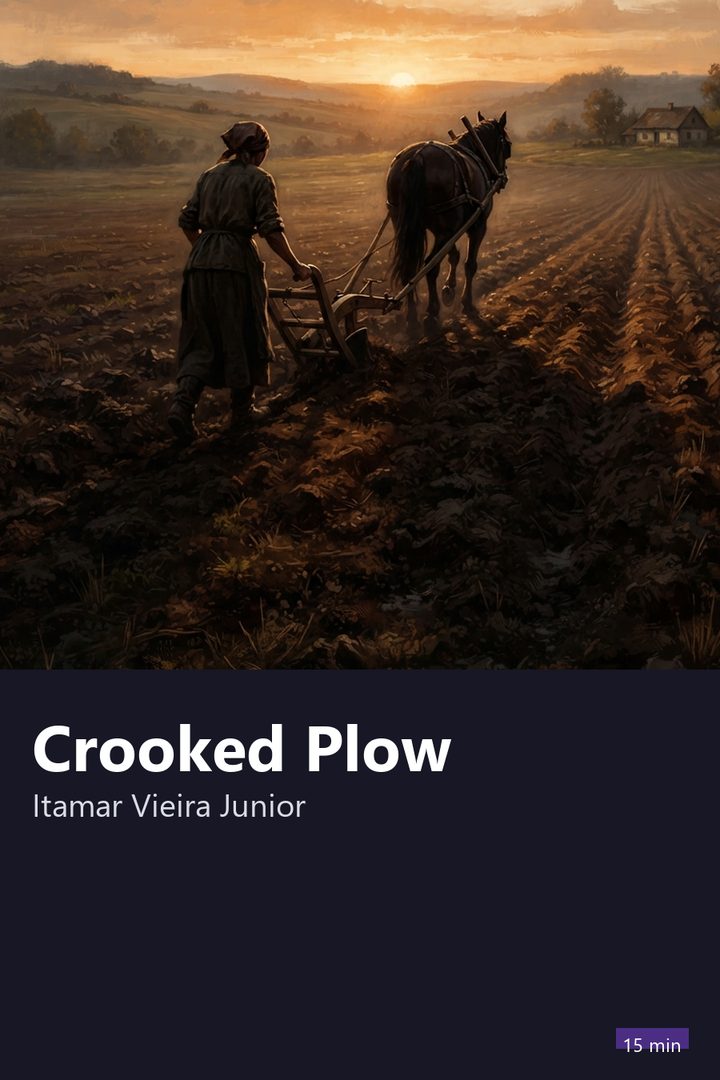
Crooked Plow is set in the interior of Bahia, in the Chapada Diamantina region, on a farm called Água Negra. It is a world of poor farm plots, rivers that swell and run dry, mud houses, and people who live off the land without owning it. The book spans many decades and follows a Black family descended from enslaved people, who, even after abolition, remain trapped in the logic of the farm.
The story is told by three voices, in three parts. The first two belong to two sisters, Bibiana and Belonísia, and the third belongs to a spiritual entity from jarê, a religion typical of the Chapada. This structure gives the novel the feel of a chorus: each narrator sees the same world from a different angle and adds what the other doesn't know.
It is a work that blends social realism with enchantment. Hunger, heavy labor, and the lack of documents coexist with prayers, healing, and the presence of spirits. That lets readers understand local life from the inside, without postcard folklore.