15 Minutes
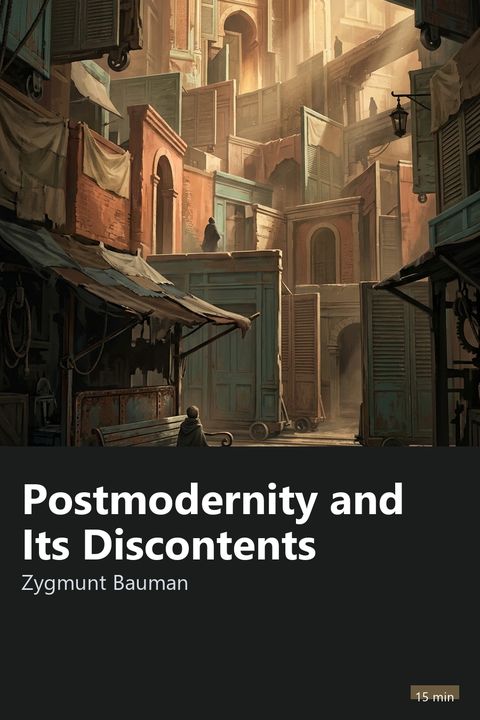
Cover of Postmodernity and Its Discontents

Economy and Society · 15 min

Postmodernity and Its Discontents

Zygmunt Bauman · 1997

Who it's for

For you if you feel anxious in a world of endless choices and few guarantees, and want to understand what sociology has to say about it. This is a demanding essay that engages with Freud and rewards readers willing to take their time.

Read it in the app

⚡ Free to download • 🎁 One full book free every day

🎧 Listen to this summary in the app

Every summary has audio narration. Open the app to read it or listen to it.

3 ideas to take with you

1

For Bauman, postmodernity did not eliminate discontent: it traded the guilt of obedience for the anxiety of making decisions without guarantees.

2

When the market becomes the main source of guidance, order is no longer imposed. Instead, it is sold in the form of styles and products.

3

Tolerance that amounts to leaving everyone alone may protect differences, but it does not build a shared life.

“
Calling something dirty often means saying it is outside the place we have assigned to it.
An idea from Postmodernity and Its Discontents, in the words of 15 Minutes

Preview

Start reading now

A Book That Responds to Freud

The title signals that Zygmunt Bauman is engaging with a classic: Sigmund Freud's Civilization and Its Discontents, published in 1930. Freud argued that living in society requires renouncing impulses, such as aggression and unrestrained sexual desire, and that the price of this renunciation is permanent dissatisfaction.

Bauman takes that reasoning and shifts its angle. He asks what happens when society begins demanding less renunciation and offering more individual freedom. His answer is that discontent does not disappear; it simply moves elsewhere: the guilt of prohibition gives way to the anxiety of insecurity.

This is, then, a book about trade-offs. Every form of shared life seems to offer something while charging something else, and the author's interest lies in examining who pays what in each era.

Civilization's Bargain: Security in Exchange for Freedom

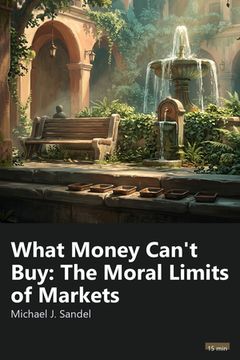
In Bauman's reading, the civilization Freud describes operates like an unspoken contract. In exchange for order, predictability, and protection against violence, people accept rules, discipline, and the loss of some of their freedom. They gain security and lose spontaneity.

That world valued cleanliness, punctuality, obedience, and orderly beauty. Anyone who grew up in a home where everything had its time and place understands the idea: it was an environment with few surprises and a heavy conscience whenever you stepped out of line.

Bauman's thesis is that postmodernity reversed this bargain. Today, people gain more freedom to choose, consume, and reinvent themselves, while losing security. He does not say that one trade-off is better than the other, only that neither comes free.

Purity, Dirt, and the Obsession with Order

One of the book's first themes is purity. Bauman draws on anthropologist Mary Douglas's idea that dirt is matter out of place: a shoe is clean on a shoe rack and dirty on a table. What we call impure therefore depends on the order someone has designed.

This means that the desire for cleanliness is also a desire for order, and that classifying the world into clean and dirty, normal and abnormal, useful and useless takes work. Every system needs a place for everything and a destination for whatever fits nowhere.

Just consider the obsessive care many people take with whatever is considered clean and proper. A taste for order seems innocent, but it can become impatience with anything that disrupts our framework, and that brings us to the figure of the stranger.

11 more sections and the quiz

Continue in the app

Read the whole summary, finish with the Postmodernity and Its Discontents quiz and follow the guided Journeys. No ads in the app.

About Zygmunt Bauman

Zygmunt Bauman was born in Poznań, Poland, in 1925 and died in Leeds, England, in 2017. A sociologist and professor at the University of Leeds, he worked there for decades after leaving Poland in 1968. His books include Modernity and the Holocaust, published in 1989, and Liquid Modernity, published in 2000. Postmodernity and Its Discontents was published in 1997.

Explore