A country told like a life
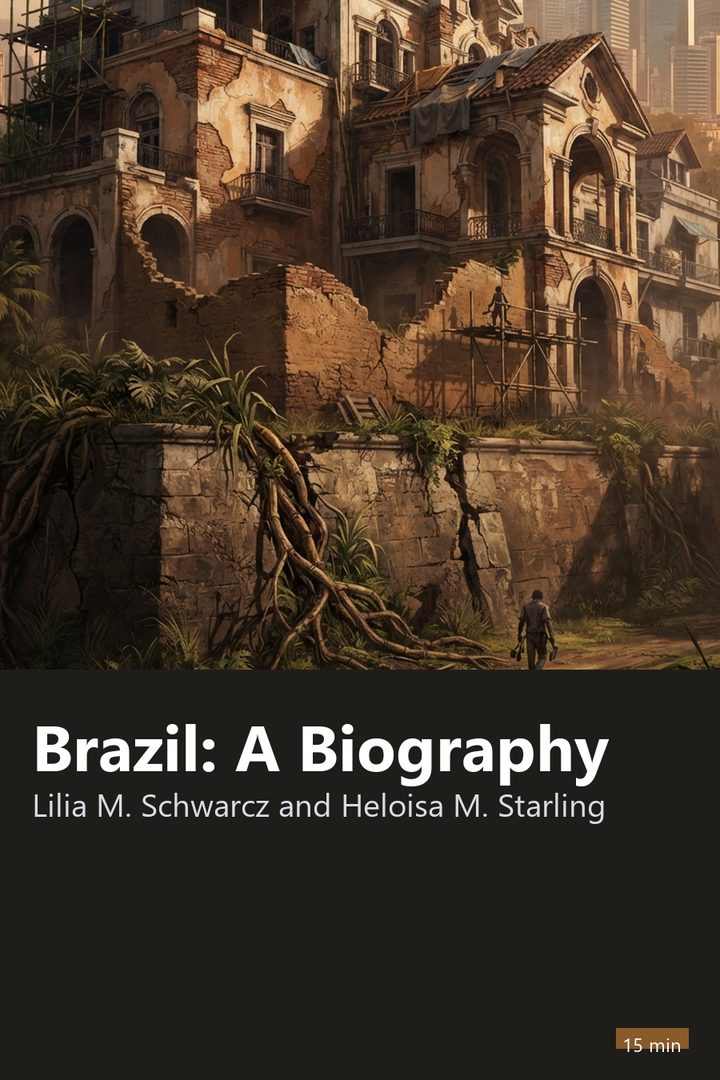
The central idea of the book is right there in the title. Instead of organizing Brazilian history as a line of dates to memorize, the authors treat the country as if it were a person: someone who is born into a specific context and repeats certain behaviors throughout an entire life, even while changing clothes, names, or political regimes along the way. The question guiding the book is not only what happened in each era, but what habit that episode reveals.
This way of telling the story has a logic behind it: look at structures that last for centuries, instead of only at isolated events. An election, a war, or a new law are one-off happenings, but the way power is organized, who answers to whom, and who gets left out of the decision are patterns that cross generations without changing shape much. The book runs from the Portuguese colonization in the 16th century to the return to democracy and the 1988 Constitution, always coming back to the same threads: violence, slavery and racism, bossism, inequality, but also resistance and popular culture.
This is not a book about a hero or about a single date. It's an attempt to show Brazil as a complex character, with real merits and problems that drag on, without hunting for a single culprit or an easy ending that fixes everything.