15 Minutes
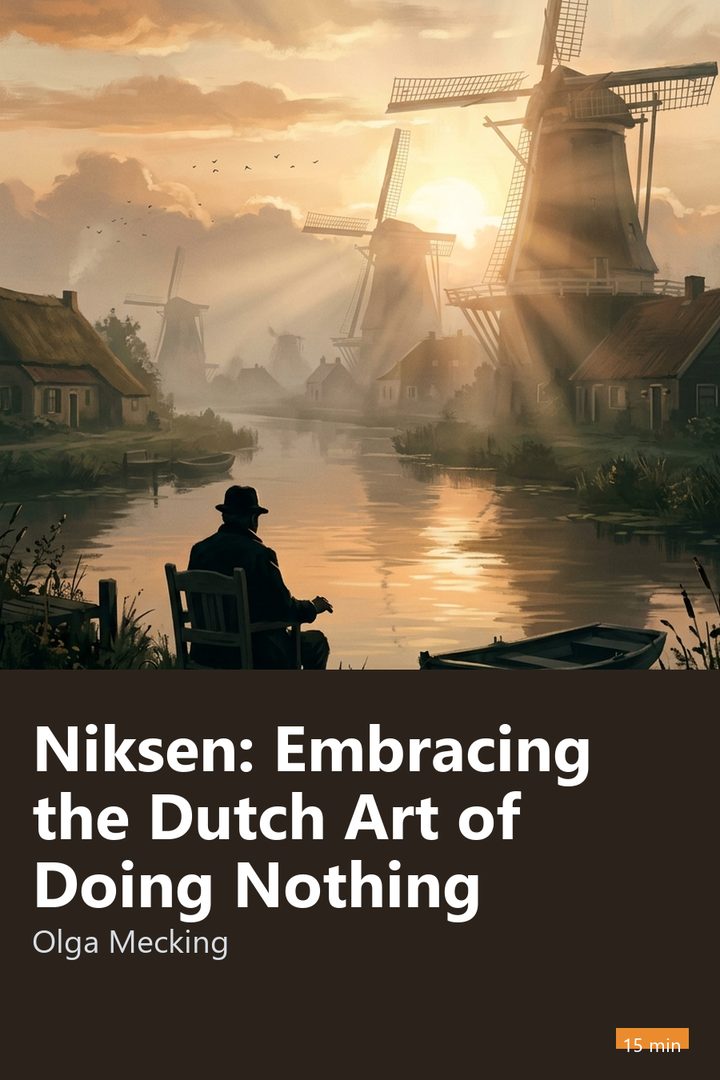
Cover of Niksen: Embracing the Dutch Art of Doing Nothing

Personal Development · 16 min

Niksen: Embracing the Dutch Art of Doing Nothing

Olga Mecking · 2020

Who it's for

For anyone exhausted by work and everyday commitments who feels guilty about resting and wants a simple way to slow down without adopting complicated rituals.

Read it in the app

⚡ Free to download • 🎁 One full book free every day

🎧 Audio coming soon in the app

Narration for the English summaries is on its way. Meanwhile you can read the full summary in the app.

3 ideas to take with you

1

Truly resting means giving your mind a break without turning the moment into another task full of goals and demands.

2

Creativity often emerges when the brain has room to wander without an immediate objective.

3

The guilt of not producing anything comes from a culture that measures personal worth solely through constant busyness.

“
Rest is not a reward granted at the end of the journey, but a basic condition for moving forward with balance.
An idea from Niksen: Embracing the Dutch Art of Doing Nothing, in the words of 15 Minutes

Preview

Start reading now

What Niksen Is and How the Art of Pausing Began

In the fast-paced rhythm of city life, stopping for a few minutes often brings a tightness in the chest, as though we were committing a crime against our own productivity. If someone asks what we did over the weekend and we say absolutely nothing, the awkward silence that follows reveals the weight of social judgment. The idea that every moment must produce something useful has turned rest into a cardinal sin.

To counter this trap, journalist Olga Mecking introduces the Dutch concept of niksen, which literally means doing nothing. Unlike meditation, which requires posture and a focus on breathing, or mindfulness, which calls for full attention to the present moment, niksen means deliberately giving yourself permission to let your mind drift without direction, an agenda, or performance metrics.

In Dutch practice, niksen is not the same as careless laziness or neglecting family or professional responsibilities. It is an intentional pause during the day when you simply look out the window, listen to the rain, or sit on a park bench without reaching for your phone.

The Difference Between Intentional Idleness and Digital Distraction

Many people believe they are resting when they spend forty minutes scrolling through a social media feed or watching short videos on the couch. Yet the human brain is still being bombarded with visual stimulation, social comparisons, and frequent bursts of dopamine, keeping the nervous system on alert and creating even more mental fatigue.

Niksen proposes the opposite approach: removing external stimulation so the body can find a genuine state of rest. When we look at a cup of coffee as it cools or watch cars moving down the street, we allow our thoughts to unravel and reorganize themselves, easing the cognitive overload accumulated during the workday.

This distinction is essential in a culture where excessive screen use on public transportation and during lunch breaks consumes every last scrap of free time. Trading ten minutes on your phone for ten minutes of casual contemplation changes the quality of your energy throughout the day.

Dutch Cultural Roots and the Value of Moderation

To understand why niksen found fertile ground in the Netherlands, the author explores the country's social and historical development. With its strong Calvinist heritage, Dutch society has always valued discipline, punctuality, and diligent work, but it has balanced those demands with a distinctive appreciation for moderation and everyday simplicity.

A Dutch proverb frequently cited in the book captures this mindset: act normal, because that is already crazy enough. Rather than glorifying exhausting workdays and corporate showmanship, the local culture prioritizes work-life balance, with clear boundaries around the end of the workday and time set aside for family life.

This collective context supports the individual practice of resting, something often missing in countries with precarious employment conditions, where workers feel they must prove their loyalty by staying late at the office or answering messages outside their scheduled hours.

10 more sections and the quiz

Continue in the app

Read the whole summary, finish with the Niksen: Embracing the Dutch Art of Doing Nothing quiz and follow the guided Journeys. No ads in the app.

About Olga Mecking

Olga Mecking is a Polish writer, journalist, and translator who has lived in the Netherlands for more than a decade. Her articles on culture, parenting, and lifestyle have appeared in outlets including The New York Times, The Guardian, and BBC Capital. She gained international recognition by exploring how Dutch traditions address the stresses of modern life. This book brings together her research with local experts and her personal experiences in the country.

Explore