15 Minutes
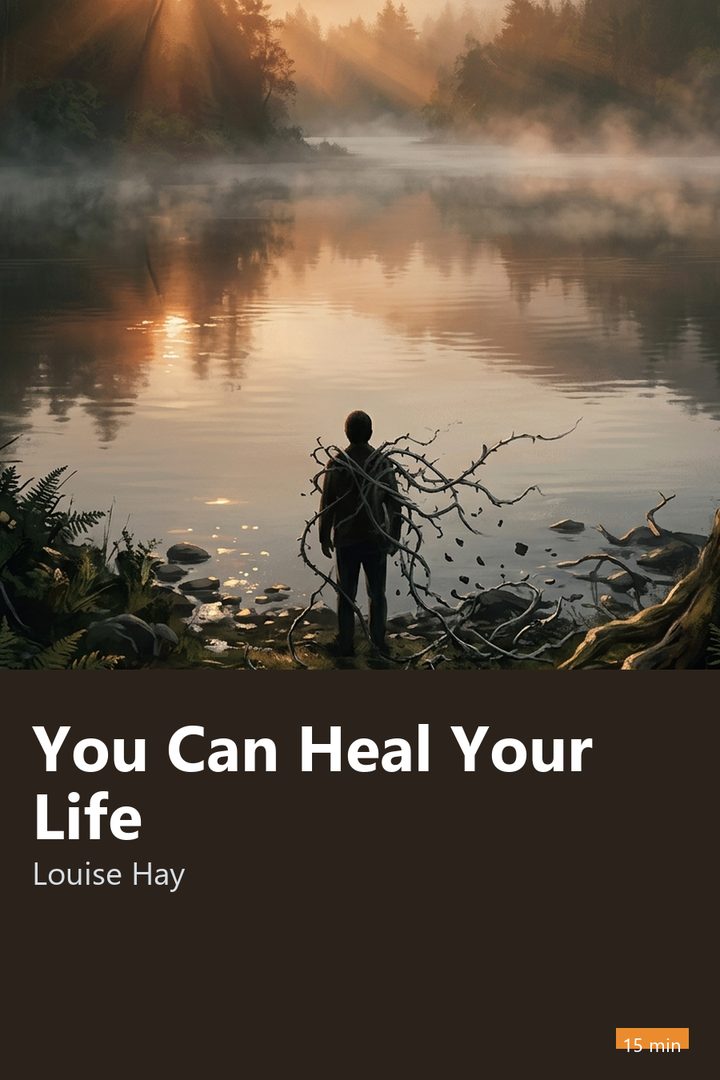
Cover of You Can Heal Your Life

Personal Development · 13 min

You Can Heal Your Life

Louise Hay · 1984

Who it's for

For anyone with a harsh inner critic who wants a simple starting point for treating themselves more kindly. Read with a critical eye: this book is no substitute for medical or psychological care.

Read it in the app

⚡ Free to download • 🎁 One full book free every day

🎧 Audio coming soon in the app

Narration for the English summaries is on its way. Meanwhile you can read the full summary in the app.

3 ideas to take with you

1

In the book's view, the present moment is the only place you can take action, and any change in direction has to start there.

2

According to the author, the discomfort of looking in the mirror and complimenting yourself reveals how thoroughly we have learned to criticize ourselves.

3

Linking illness to negative thinking has no scientific backing and can push someone who is sick toward guilt instead of treatment.

“
A belief is a thought you have repeated so often that you forgot it was once just a sentence.
An idea from You Can Heal Your Life, in the words of 15 Minutes

Preview

Start reading now

A Little Book That Sold Millions

You Can Heal Your Life was published in 1984 and became one of the biggest successes in what is generally called self-help. Louise Hay writes simply, almost conversationally, and makes an argument that fits into a sentence: the way you think and talk to yourself shapes your experience of life, and changing those thoughts changes what comes next.

The book combines personal stories, practical instructions, and a famous list linking health problems to mental patterns. It is an easy read, which is exactly why it is worth approaching with your eyes open: it offers useful advice about self-esteem alongside many claims that science does not support.
The Life Story That Gives the Method Weight

Hay describes a difficult childhood marked by violence and abandonment, followed by much of her adult life spent steeped in self-criticism. Later, she became involved with spiritual groups in the United States, studied ideas about positive thinking, and began working with people, teaching what she was learning.

She also reports being diagnosed with cancer and deciding, rather than relying solely on conventional medicine, to work on forgiveness, diet, and self-image. She credits those efforts with her recovery. This passage is central to the book, but it requires caution: it is one person's account, not a study, and accounts like this do not prove that the method cures disease.

Even with that caveat, her story explains the writing's impact. Hay speaks as someone who has experienced real pain and is trying to offer a way forward.

The Starting Point: Your Thoughts Are Just Thoughts

The method rests on a simple statement: a thought is a sentence repeated in your head, and a belief is a thought you repeat so often that you start treating it as truth. Most of the beliefs we carry come from childhood, from things we heard from parents, teachers, relatives, and neighbors.

According to the author, because a belief is learned, it can be relearned. She invites you to notice inner statements such as I'm not good enough or I never succeed, and to ask where they came from. There is a resemblance here to cognitive therapy, which also works with the idea that automatic thoughts can be examined and questioned.

The difference is in the tone. Where therapy calls for evidence and guided practice, Hay offers short statements and conviction. For some people, this works as a starting point, but it does not replace psychological care when distress is severe.

12 more sections and the quiz

Continue in the app

Read the whole summary, finish with the You Can Heal Your Life quiz and follow the guided Journeys. No ads in the app.

About Louise Hay

Louise Hay was born in Los Angeles in 1926 and died in 2017. A speaker and self-help author, she founded Hay House, the publishing company that released her work and that of other authors. You Can Heal Your Life, published in 1984, is her best-known title and has sold millions of copies in multiple languages.

Explore