Sleeping with your eyes open
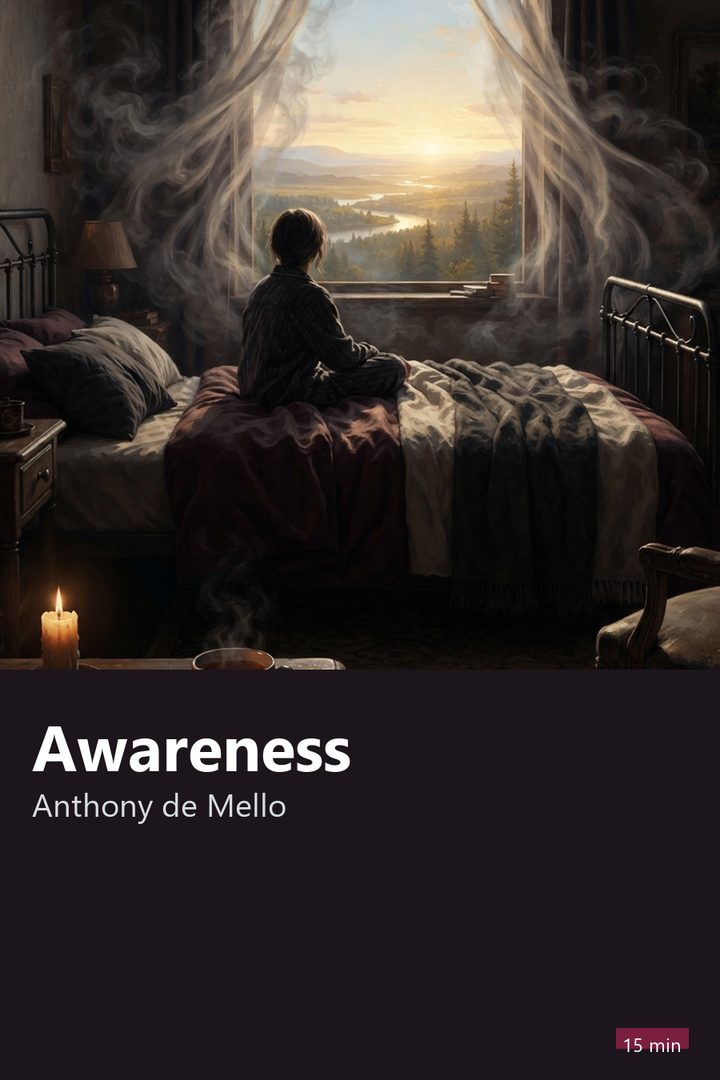
For De Mello, almost everyone spends their whole life in a kind of psychological sleep, even with eyes wide open. A person takes the packed 6:30 bus, works all day, goes home and repeats everything the next day, never noticing what they truly feel along the way. According to the author, this is not laziness or lack of intelligence: it is conditioning, the habit of always reacting the same way to the same situations without checking whether that reaction still makes sense.
Awakening, in the book's vocabulary, is not a rare state reserved for a hermit monk on top of a mountain. It is seeing clearly what has always been right in front of you and what the automatism of everyday life made invisible: the real reason behind your irritation with a coworker, or the sudden urge to buy something you didn't even need until you saw the store window.
De Mello insists that most people prefer to keep sleeping, because waking up hurts: it requires admitting that a good part of daily suffering is manufactured by your own mind, not imposed from outside. A common example is the argument that blows up in the neighborhood group chat over a badly worded message, when the person reacted to what they imagined the neighbor meant, not to what he actually wrote.