A forty-six-year-old bishop digging through his own youth
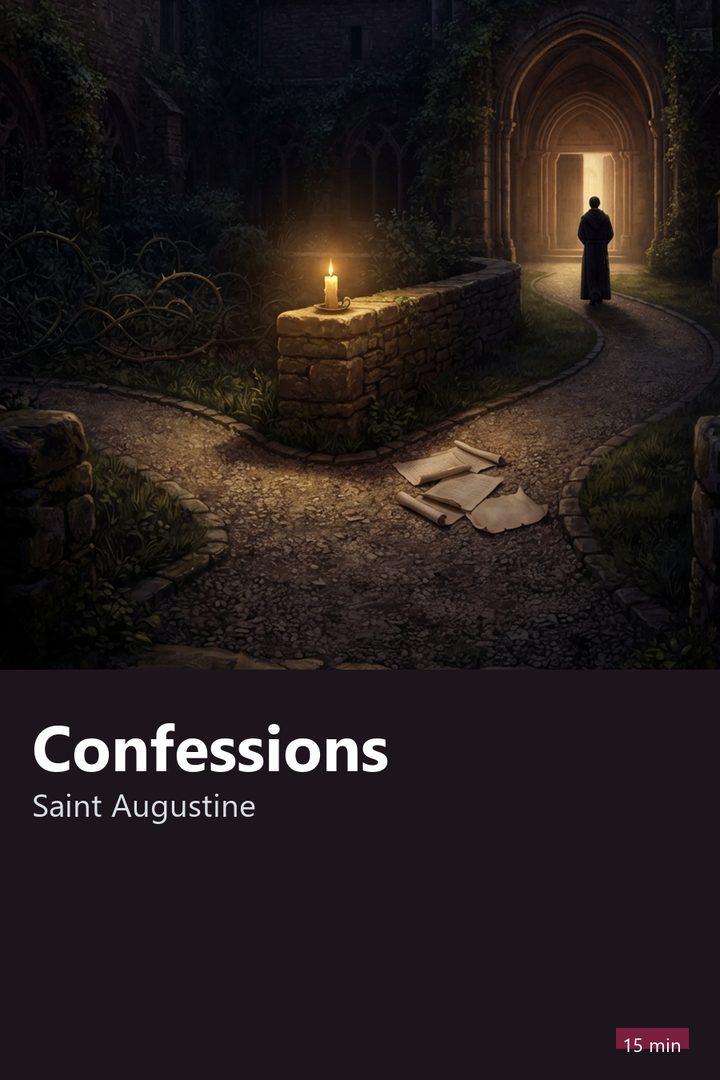
Confessions was written by Augustine when he was already bishop of Hippo, a city in North Africa, around the year 397. It's a strange book to classify: it's not quite an autobiography as we know it today, because the whole text is written as if it were a direct conversation with God, telling the story of a life full of mistakes, ambition, and comebacks. That's why it's often called the first autobiography in the West in the modern sense.
Following the custom of the time, young Augustine became a catechumen as a small child: his mother had already marked him with the sign of someone preparing to enter the faith, but without actually baptizing him. Baptism, back then, could wait: live your life, make whatever mistakes you're going to make, and baptize later. That's exactly what Augustine did, except it took him decades.
The book has thirteen parts. The first nine tell his life up to his conversion and his mother's death. The last four turn into philosophical reflection on memory, time, and the creation of the world. This summary focuses on the story, but it also touches on the most famous ideas from the second half.