15 Minutes
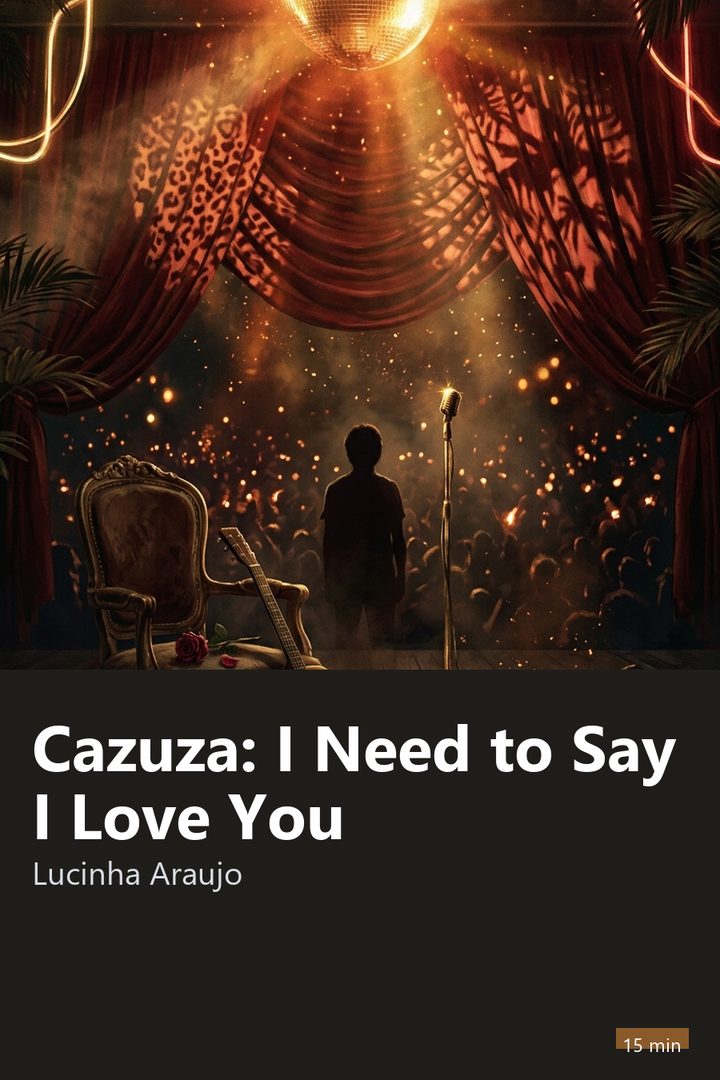
Cover of Cazuza: I Need to Say I Love You

Biographies and Memoirs · 19 min

Cazuza: I Need to Say I Love You

Lucinha Araujo · 2001

Who it's for

Original title (Portuguese): Cazuza: Preciso Dizer Que Te Amo. For anyone who loves Cazuza and wants to explore his work through his songs, behind-the-scenes stories, and family memories. It also appeals to readers interested in Brazilian music who welcome an affectionate portrait without mistaking it for an investigative biography.

Read it in the app

⚡ Free to download • 🎁 One full book free every day

🎧 Audio coming soon in the app

Narration for the English summaries is on its way. Meanwhile you can read the full summary in the app.

3 ideas to take with you

1

Recognizing the opportunities someone received allows us to admire their talent without erasing the inequalities along the way.

2

Expressing affection can open a conversation, but genuine care also depends on actions and respect for the other person's boundaries.

3

Admiration becomes more human when it can embrace someone's contribution without turning their contradictions into virtues.

“
A single voice may hold center stage while many hands sustain the song.
An idea from Cazuza: I Need to Say I Love You, in the words of 15 Minutes

Preview

Start reading now

1. A life heard through songs

This book introduces Cazuza through a path different from that of a conventional biography: his musical output and the stories surrounding his compositions. Compiled by Lucinha Araujo in collaboration with Regina Echeverria, it brings together lyrics, memories, and personal accounts. The result allows readers to follow the artist without reducing his entire existence to the diagnosis that marked his final years.

This approach calls for a close reading that notices the difference between document and interpretation. A song can grow out of a real conversation and then transform people, feelings, and situations. Because of that, the lyrical speaker does not automatically equal the songwriter. Reading every verse as a literal confession would impoverish both the work and the person.

The guiding thread is recognizing how lived experience and invention meet. For someone listening to music on the bus or while making dinner, knowing the backstory changes how you pay attention: a line you once heard in passing suddenly gains depth. The book invites you to listen again, noticing artistic craft where there once seemed to be only an outburst of emotion.

2. The son seen by his mother

Lucinha writes from an undeniable position: she is the mother of the figure whose memory she helps preserve. That closeness offers emotional access, but it also establishes a specific perspective. Family memory sheds light on gestures the public never knew, while grief and longing naturally shape what is chosen. The book is stronger when this condition is acknowledged rather than hidden.

Between the idol and the son lies a distance that no greatest-hits collection can bridge. The public usually wants coherence, bravery, and unforgettable lines. The family lives with mood swings, misunderstandings, and vulnerabilities. That difference makes it possible to see Cazuza as someone who created art without ever ceasing to depend on human bonds.

There is an experience here that is recognizable in many Brazilian homes. A mother can admire her son's path and, at the same time, fear his choices. Affection does not erase generational conflict. Reading the book avoids a simple lesson about obedience or rebellion: loving someone also means dealing with what slips beyond your control.

3. Privilege is also part of the story

Cazuza grew up close to the world of music. His father, João Araujo, was a major figure in the recording industry. That environment offered references, contacts, and possibilities rarely available to most young Brazilians. Acknowledging this cultural capital does not diminish his talent, but it keeps his journey from looking like a triumph achieved without favorable conditions.

His social background helps explain a productive tension: a young man who benefited from certain structures turns those very structures into a target of discontent. That does not erase contradictions. Social criticism coming from someone privileged needs to be weighed for what it reveals as well as for the limits of his experience, without automatic absolution or premature dismissal.

In everyday life, the comparison is clear: two equally dedicated musicians do not start from the same place when only one of them can rehearse without putting the rent money at risk. The richest reading distinguishes opportunity from achievement. Having access makes getting in the door easier, but it does not write a good song or sustain an original voice.

11 more sections and the quiz

Continue in the app

Read the whole summary, finish with the Cazuza: I Need to Say I Love You quiz and follow the guided Journeys. No ads in the app.

About Lucinha Araujo

Lucinha Araujo was born in Rio de Janeiro in 1936 and is the mother of Cazuza. She was married to music producer and executive João Araujo. After her son's death, she founded the Viva Cazuza Society in 1990 to support people living with HIV. Together with Regina Echeverria, she also published the book Cazuza: Only Mothers Are Happy.

Explore

Part of the Journeys:
Lives in Music