15 Minutes
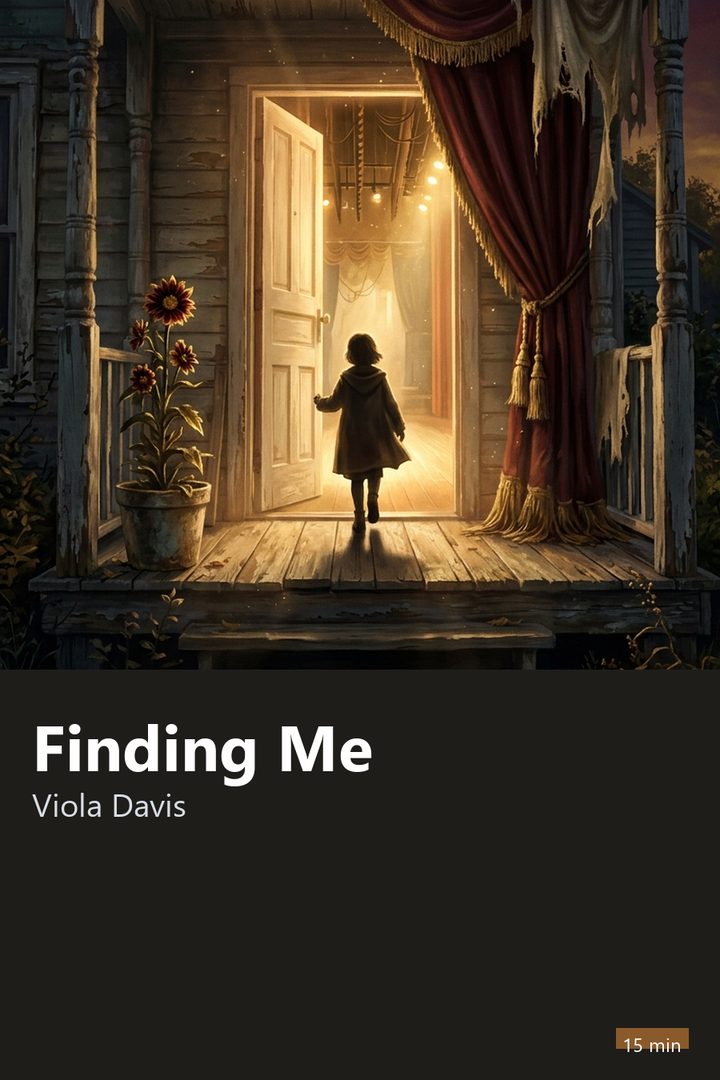
Cover of Finding Me

Biographies and Memoirs · 19 min

Finding Me

Viola Davis · 2022

Who it's for

For readers who appreciate candid memoirs and autobiographies about poverty, racism, family, and shaping one's identity. The account includes domestic violence and childhood suffering, themes that may be difficult for some readers.

Read it in the app

⚡ Free to download • 🎁 One full book free every day

🎧 Audio coming soon in the app

Narration for the English summaries is on its way. Meanwhile you can read the full summary in the app.

3 ideas to take with you

1

Before calling someone's performance a lack of effort, it is worth asking how much energy that person spent just to get there.

2

Learning new tools can amplify our voice; treating our own background as a flaw can diminish what we have to say.

3

An achievement can change our living conditions without changing, at the same pace, the way we see ourselves.

“
Acknowledging someone's change does not obligate you to erase what happened.
An idea from Finding Me, in the words of 15 Minutes

Preview

Start reading now

1. The famous woman meets the hidden girl

Finding Me follows a search that professional recognition alone cannot bring to a close. Viola Davis revisits the poor, Black, frightened little girl she was before becoming an award-winning actress. Her autobiography asks how much of our history we try to hide in order to seem acceptable to others and to ourselves.

The emotional starting point is not an awards ceremony, but a childhood steeped in fear. Even as an adult, Viola realizes that certain experiences continue to shape how she feels. Fame changes her material conditions, yet it does not automatically erase the expectation of humiliation she learned on the streets and inside her home.

The purpose of the book is not to offer a recipe for winning. It is to reclaim an identity that had to protect itself by hiding vital parts of who she was. For many readers, this may recall the effort of disguising where you come from in a job interview, as if an old zip code diminished your current competence.


2. When poverty takes over the whole body

Viola's family settles in Central Falls, a city in Rhode Island, where they face dilapidated housing and persistent hardship. Poverty appears in its concrete dimension: hunger, cold, dirt, inadequate clothing, and the presence of rats. It is not decorative scenery meant to make a winner look good. It is a force that limits everyday choices.

Food insecurity makes a child think about the next meal while other concerns should be occupying her at that age. Viola recounts the embarrassment caused by not having the means to care for her own hygiene. Her body ends up exposing deprivations she would rather hide, and school, instead of offering relief, also becomes a place of shame.

Think of a child who arrives in class after a sleepless night, without breakfast, and wearing damp clothes. Demanding pure focus ignores the conditions needed to learn. The account makes this inequality visible: before comparing performances, we need to ask what resources and what hardships each person carries with them.

3. Loving a family that also hurts you

Viola's father, Dan, assaults her mother, Mae Alice, in episodes linked to alcohol abuse. Domestic violence turns the house into an unpredictable environment. For the children, loving their father and fearing his actions are not mutually exclusive feelings. The book preserves this contradiction without turning the abuser into an emotionally simple figure.

Her mother appears as someone who works, endures hardship, and tries to support her children within narrow possibilities. Recognizing her strength does not require romanticizing the suffering she faced. Viola shows a family capable of producing both affection and wounds, making it clear that our closest bonds can involve deep needs and painful conflicts.

Her father's later change allows for some reconciliation, but it does not retroactively turn her childhood into a safe place. This distinction matters for anyone who hears in a family conversation that they should forget everything because a relative got better. Acknowledging change can have value; setting boundaries and seeking protection do too. No reconciliation needs to happen under outside pressure.

11 more sections and the quiz

Continue in the app

Read the whole summary, finish with the Finding Me quiz and follow the guided Journeys. No ads in the app.

About Viola Davis

Viola Davis was born in 1965 in St. Matthews, South Carolina, and grew up in Central Falls, Rhode Island. She studied at Rhode Island College and the Juilliard School. She won the Academy Award for Best Supporting Actress for Fences and the Emmy Award for Outstanding Lead Actress in a Drama Series for How to Get Away with Murder. With the Grammy for the audiobook of her memoir in 2023, she joined the select group of artists who have won an Emmy, a Grammy, an Oscar, and a Tony.

Explore