15 Minutes
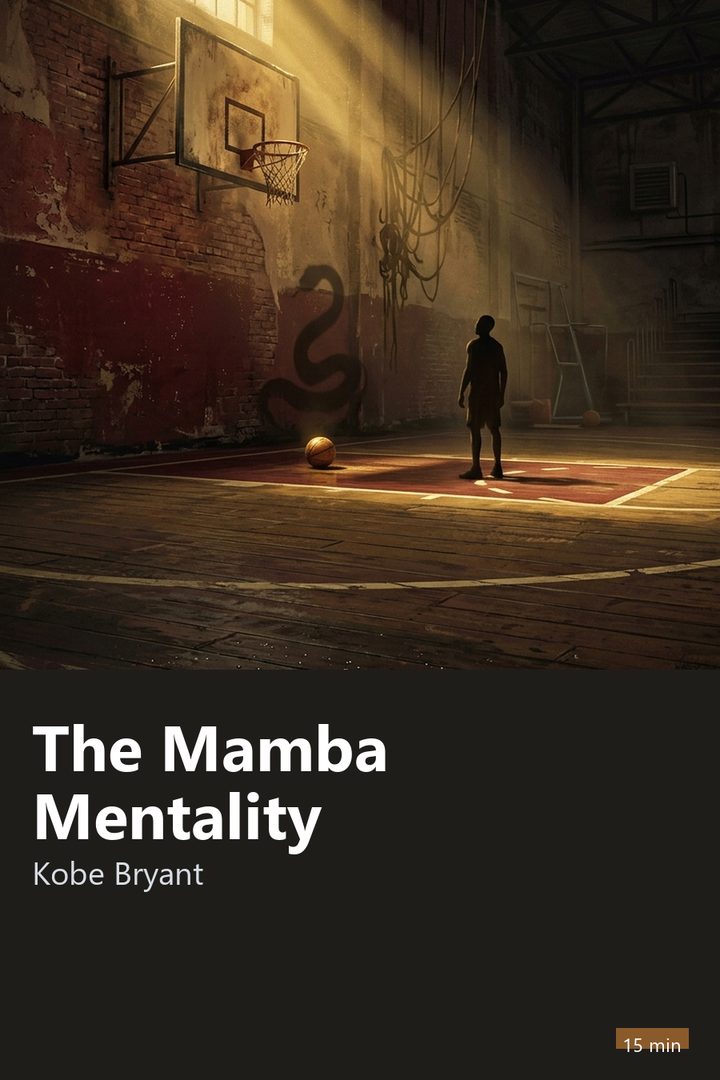
Cover of The Mamba Mentality

Biographies and Memoirs · 19 min

The Mamba Mentality

Kobe Bryant · 2018

Who it's for

For basketball fans who want to explore Kobe Bryant's thinking about preparation, competition, and improvement. It will also interest anyone who wants to develop a skill without treating a professional athlete's routine as a personal obligation.

Read it in the app

⚡ Free to download • 🎁 One full book free every day

🎧 Audio coming soon in the app

Narration for the English summaries is on its way. Meanwhile you can read the full summary in the app.

3 ideas to take with you

1

An idol becomes more useful when their skill stops seeming like a mystery and starts raising questions about how it works.

2

Mistakes lose some of their power to paralyze us when we can turn them into specific information for the next attempt.

3

The achievement captured in a photograph also depends on people and conditions that stayed outside the frame.

“
Repeating attentively is different from simply staying busy.
An idea from The Mamba Mentality, in the words of 15 Minutes

Preview

Start reading now

1. A Look Inside a Champion's Work

The Mamba Mentality presents basketball through the eyes of someone committed to understanding his own work in depth. Published after Kobe Bryant's retirement, the book combines his reflections with photographs by Andrew D. Bernstein. It is not a conventional biography: it works as a guided tour of the player's preparation, matchups, and choices.

The title refers to the competitive identity built around the nickname Black Mamba. This persona helped Kobe focus his drive to compete, study opponents, and face pressure. The point is less about adopting an intimidating personality and more about recognizing how he set concrete standards for his own performance.

For everyday readers, applying these ideas requires acknowledging real differences. An employee commuting on a crowded bus does not have an NBA franchise's resources. Still, you can use one principle: give a particular skill your full attention, identifying what needs improvement rather than expecting enthusiasm to solve the problems.


2. Curiosity Comes Before the Formula

Kobe describes an investigative relationship with the game. He wanted to understand movements, decisions, spacing, and reactions, including when he watched more experienced players. This curiosity turns admiration into study. Rather than treating a great athlete as an unattainable mystery, he tries to break down that player's performance into components that can be understood and practiced.

There is deliberation in this learning: choosing what to observe and why. Watching a game can be entertainment, but it can also become an investigation into positioning or balance. The difference is not the serious expression on the viewer's face, but the specific question guiding their attention throughout the experience.

At work, this happens when someone watches an efficient coworker instead of simply calling her talented. How does she organize orders? When does she confirm information? What does she do before helping a customer? Choosing a question lets you learn something observable. Curiosity becomes useful when it stops collecting vague impressions and starts looking for mechanisms.

3. The Body Is Part of Intelligence

Kobe's attention to physical details shows that performance does not come from willpower alone. Foot position, weight distribution, and alignment influence the outcome of a movement. Biomechanics helps explain these relationships, although the book mainly presents the player's practical experience rather than a scientific treatise.

Proprioception, the awareness of the body's position and movement, helps explain why small adjustments can make a difference. An experienced athlete detects imbalances a beginner might miss. This sensitivity can improve with guided practice, but it does not make it wise to ignore pain, physical limitations, or advice from healthcare professionals.

For someone who spends the day at a computer or moving merchandise, applying this lesson does not mean copying basketball drills. It means recognizing that how you perform a task also matters. If you have persistent pain or difficulty, seek a professional evaluation instead of trying to solve everything by increasing effort, speed, or endurance.

11 more sections and the quiz

Continue in the app

Read the whole summary, finish with the The Mamba Mentality quiz and follow the guided Journeys. No ads in the app.

About Kobe Bryant

Kobe Bryant was born in 1978 in Philadelphia and spent part of his childhood in Italy, where his father played basketball. He entered the NBA in 1996 and played twenty seasons for the Los Angeles Lakers, winning five league championships. He earned two Olympic gold medals with Team USA. He died in 2020 in a helicopter crash that also killed his daughter Gianna and seven other people.

Explore