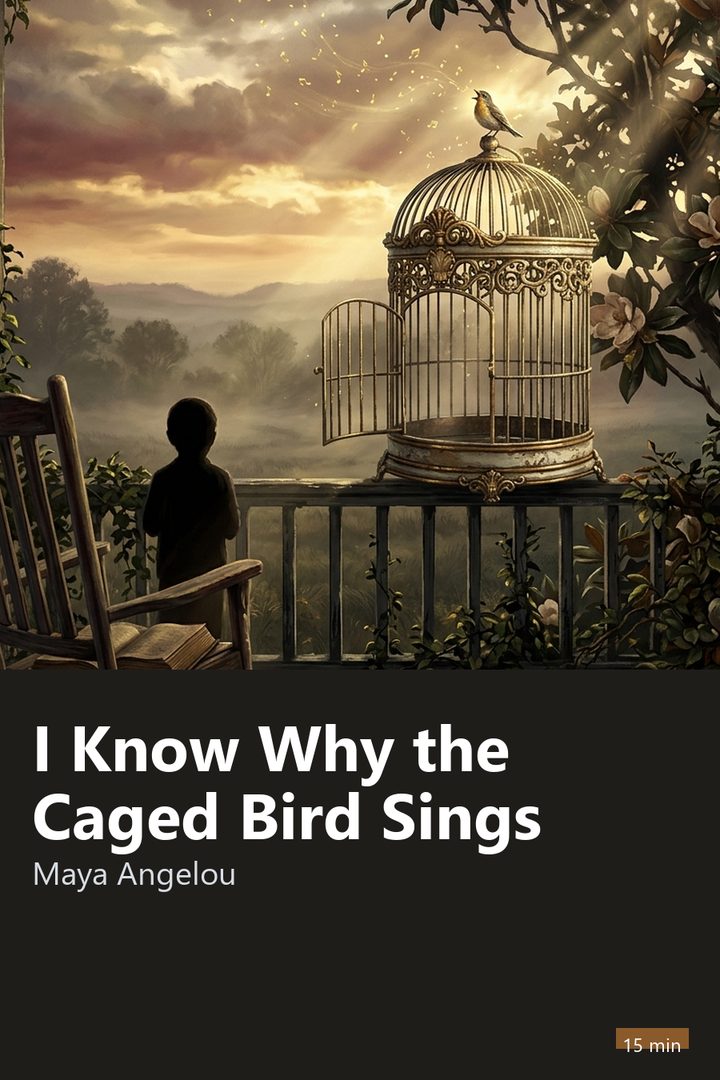
1. A childhood reclaimed through words
Maya Angelou opens her first autobiography by reclaiming the girl she once was: ashamed of her body, insecure, and gifted with a powerful imagination. Published in 1969, the book follows her life into adolescence. The adult narrator does not erase her childhood fears; she turns private memories into wider questions about belonging, violence, and the kind of freedom that is possible.
The girl's name is Marguerite Johnson, though the nickname Maya comes from her brother, Bailey. Her perspective blends sharp observation with the interpretations of a child. Because of that, we read a lived experience and its later reflection at the same time. Memory organizes events, yet it does not work like a neutral recording of everything that happened.
That distinction matters if we want to enter the book without demanding a police report for every scene. Angelou builds a literary narrative with rhythm, humor, and vivid episodes. Like someone telling stories about her childhood around the family table, she chooses moments capable of revealing feelings that a simple timeline of dates would leave hidden.