15 Minutes
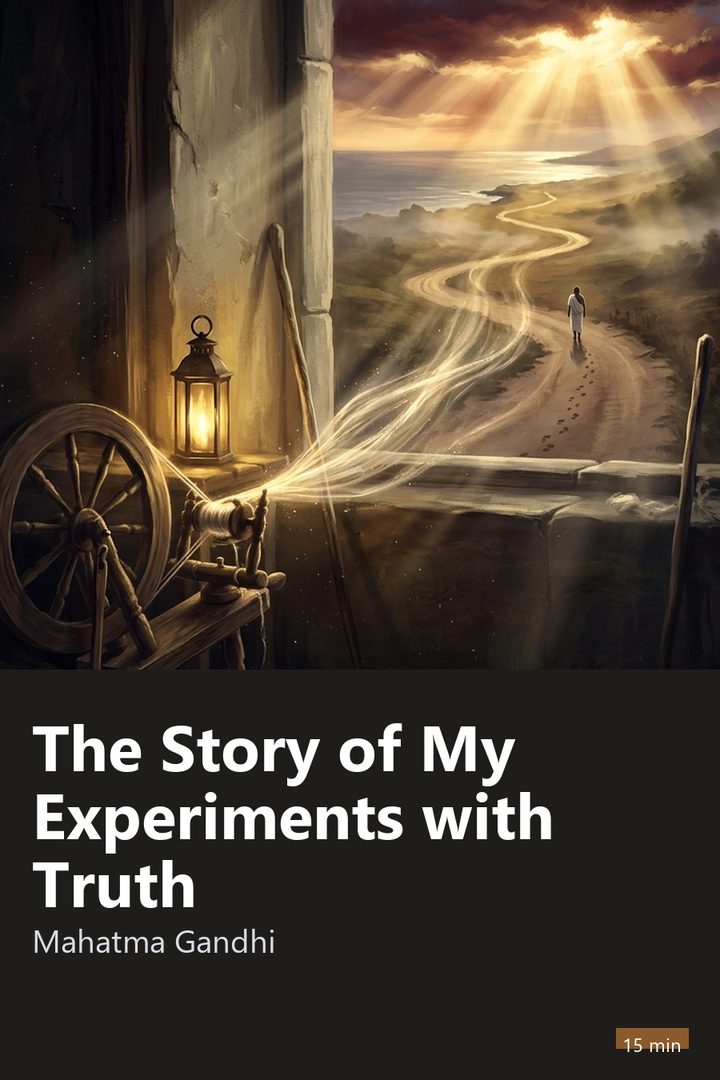
Cover of The Story of My Experiments with Truth

Biographies and Memoirs · 18 min

The Story of My Experiments with Truth

Mahatma Gandhi · 1927

Who it's for

For readers interested in the origins of modern pacifism, moral self-mastery, and civil resistance as a tool for profound political and spiritual transformation.

Read it in the app

⚡ Free to download • 🎁 One full book free every day

🎧 Audio coming soon in the app

Narration for the English summaries is on its way. Meanwhile you can read the full summary in the app.

3 ideas to take with you

1

True civic courage does not mean hurting an arrogant enemy, but enduring suffering without ever wishing that enemy harm.

2

Material independence and moderation in our basic needs are our only real shields against the coercion of tyrants.

3

Complete ethical consistency is a painful, daily achievement, born of continually purging our weaknesses and small, everyday lies.

“
Truth is the highest end, and nonviolence is the only legitimate path to reaching it on earth.
An idea from The Story of My Experiments with Truth, in the words of 15 Minutes

Preview

Start reading now

Childhood in Porbandar and the First Moral Dilemmas

Mohandas Gandhi grew up in Porbandar under the devout guidance of his mother, Putlibai, and the stern discipline of his father, Karamchand. In their modest home, the boy witnessed daily religious observances, vigils, and periodic abstinence that left lasting impressions on his young mind. Extremely shy and withdrawn by temperament, he kept away from the ordinary games in schoolyards, rushing home as soon as the final bell rang to avoid any unwanted conversation with the other students his age.

As a teenager in Rajkot, he experienced his first ethical missteps and serious lapses under the harmful influence of a questionable school friendship. Naively convinced that eating meat would give Indians the sturdy physique of their British colonizers, he secretly ate cooked pieces of it, enduring sleepless nights of terror and remorse. Added to this transgression were the secret habit of smoking cigarette butts discarded by the household servants and the theft of gold shavings from his brother's bracelet to settle youthful debts he was ashamed to admit.

Unable to bear the lie that was destroying his peace of mind, Gandhi decided to write a full confession detailing his wrongdoing, placing the letter directly into the trembling hands of his ailing father, who lay on his deathbed. He expected a furious outburst or a stern admonition, but the patriarch read everything in complete silence and shed compassionate tears over the written lines before tearing up the paper. That extraordinary display of unconditional forgiveness taught the young man that uprightness grows from the purifying truth expressed through sincere love.

The Journey to England and the Vegetarian Vow

His youthful ambition to cross the ocean and study law in London sparked fierce opposition among the conservative leaders of his caste in Bombay. The community council believed that traveling to British soil would inevitably violate Hindu rules of ritual purity, formally decreeing his expulsion from the caste if he insisted on sailing. To reassure his anguished, widowed mother, Gandhi knelt before a Jain monk and solemnly vowed to abstain from meat, alcoholic beverages, and sexual contact with foreign women throughout his studies abroad.

When he arrived in London in the fall of 1888, cultural isolation and bitter cold compounded the painful shortage of food compatible with his ethical commitments. The young man spent entire days eating nothing but dry bread, tasteless porridge, and boiled greens, refusing the abundant meals served at the English boardinghouses where he was temporarily staying. His luck changed decisively when he happened upon a small vegetarian restaurant on Farringdon Street, where he bought Henry Salt's celebrated booklet advocating consistent compassion and inviolable respect for animal sentience.

His passionate reading of that work transformed a vow inherited from his family into an unshakable philosophical and intellectual conviction of his own. The duty to protect animal life became permanently integrated into his systematic pursuit of temperance and spiritual balance in everyday human conduct. He became actively involved in the committee of the British Vegetarian Society, founded discussion clubs, and began developing rational arguments for a natural diet, gradually discovering that calm mastery of the palate was the indispensable cornerstone for harmonious control of all life's biological impulses.

Legal Studies, Worldly Illusions, and the Return to India

Amid the academic rigors of the Inns of Court, Gandhi went through a brief, extravagant period in which he tried to conform to the refined standards of the Victorian aristocracy. Driven by a longing for social acceptance, he spent substantial family resources on gleaming top hats, tailored suits ordered from fashionable Bond Street, and pocket watches adorned with gold chains. He even enrolled in private lessons in French conversation, violin, and ballroom dancing, awkwardly attempting to imitate the frivolous etiquette of London's drawing rooms.

Recognizing the absurdity of this artificial pose awakened an immediate revulsion toward financial waste and empty appearances. He abruptly stopped all his fashionable lessons, shed unnecessary luxuries, and embraced a routine of strict frugality, preparing his own food on portable stoves and walking miles to save on transportation. This austere approach gave him the unwavering focus to immerse himself in treatises on Roman law and the careful study of British legislation, successfully passing his official examinations and gaining formal admission to practice before the royal courts.

His return home in 1891 brought the devastating emotional blow of his mother's death, painful news his relatives had carefully withheld so as not to jeopardize the completion of his studies in England. Practicing law in Bombay, the young professional encountered humiliating failure because of his innate shyness and inability to handle the courtroom's aggressive rhetoric. Called upon to question a witness in his first case, Gandhi became completely unable to speak, shamefully returned his fee to the client, and left the courtroom trembling.

11 more sections and the quiz

Continue in the app

Read the whole summary, finish with the The Story of My Experiments with Truth quiz and follow the guided Journeys. No ads in the app.

About Mahatma Gandhi

Mohandas Karamchand Gandhi (1869–1948) was the architect of India's liberation from the British Empire. A lawyer by training, he turned his life into an open-air ethical laboratory, influencing the twentieth century's greatest civil rights movements through active nonviolence. His journey profoundly shaped the history of his time. His work remains a touchstone and an inspiration for readers around the world.

Explore

Part of the Journeys:
Inspiring Biographies