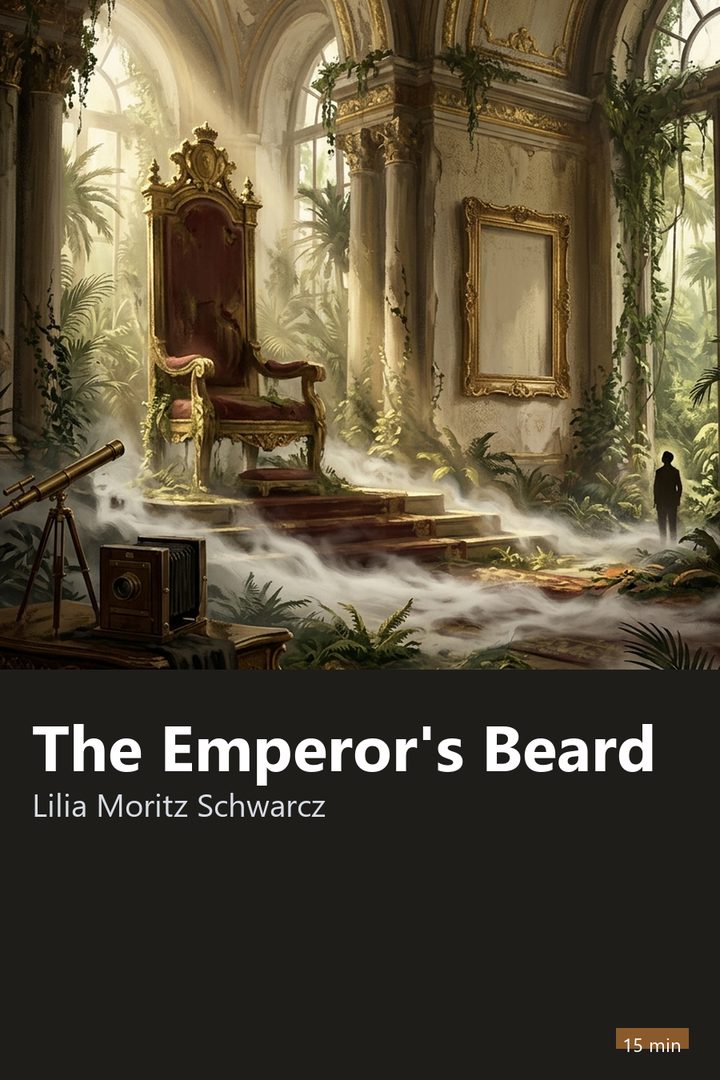
1. An emperor also made of images
A beard looks like a personal detail, yet it takes on a very different weight when it belongs to an emperor. Lilia Moritz Schwarcz traces the public construction of Pedro II to show how appearance, ceremonies, and narratives were part of governing. Her question goes beyond the sovereign's personality: how did the monarchy present its authority as legitimate?
The book combines history and anthropology to examine documents, portraits, festivities, objects, and customs. It does not simply line up the events of imperial life. Instead, it seeks to understand the symbolic dimension of power, that is, the meanings that turn a person, a piece of clothing, or a gesture into socially recognized signs of political authority.
Think about the difference between a boss walking into the office in a T-shirt and walking in flanked by aides, in front of a prepared table. Their competence may be identical, yet the scene communicates a different position. The comparison helps clarify the problem under study, without equating a modern company with the system of the Brazilian Empire.