15 Minutes
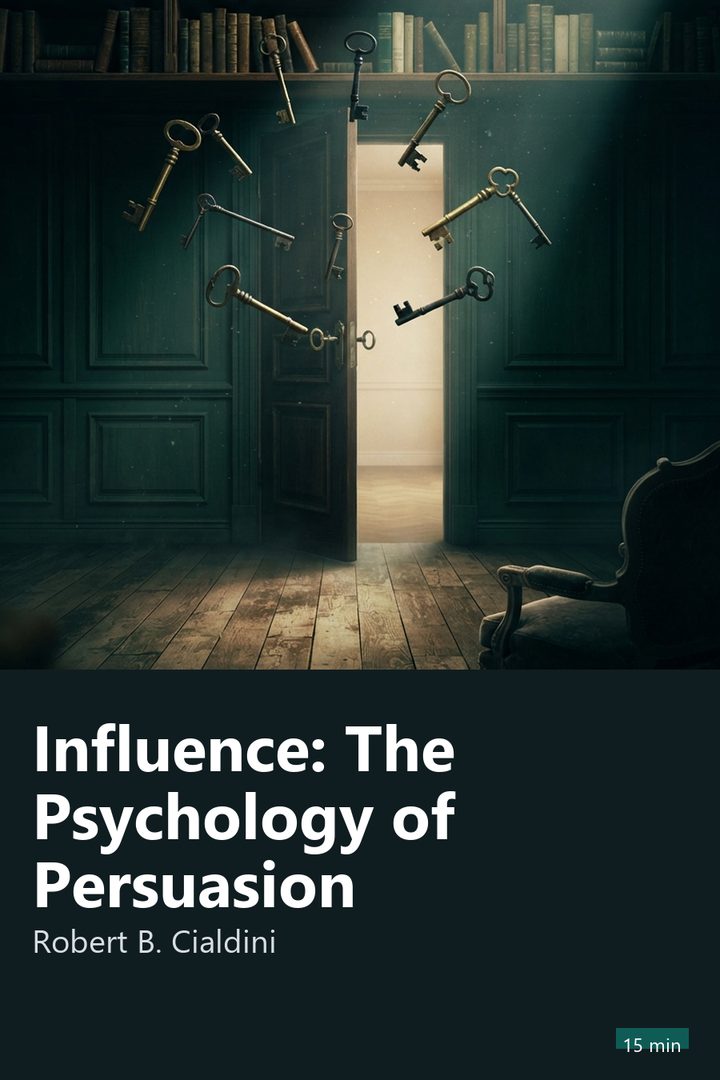
Cover of Influence: The Psychology of Persuasion

Marketing and Sales · 14 min

Influence: The Psychology of Persuasion

Robert B. Cialdini · 1984

Who it's for

For anyone who has walked out of a store with a purchase they never meant to make, or said yes to a favor without quite knowing why. Influence explains the automatic triggers that salespeople, politicians, and scammers use to get you to decide fast, and how to recognize each one before you fall for it.

Read it in the app

⚡ Free to download • 🎁 One full book free every day

🎧 Audio coming soon in the app

Narration for the English summaries is on its way. Meanwhile you can read the full summary in the app.

3 ideas to take with you

1

Most decisions that feel like yours alone were actually pulled by an automatic trigger that someone learned how to set off.

2

Keeping your word weighs so heavily that many people would rather stay in a bad commitment than admit to themselves that they changed their mind.

3

Pressure to decide quickly almost always hides the interest of the person on the other side of the request, not yours.

“
Whoever does you a favor before asking for one has already calculated the change they expect back.
An idea from Influence: The Psychology of Persuasion, in the words of 15 Minutes

Preview

Start reading now

Why your mind goes on autopilot

Have you ever noticed that you sometimes decide too fast, without really knowing why you said yes? That's not a lack of personality, it's energy saving. Your mind processes an enormous number of decisions every day, from what to wear to which bill to pay, and to keep up it uses automatic shortcuts instead of analyzing every situation from scratch.

Cialdini calls these shortcuts heuristics: a quick mental rule that works well most of the time, but that can also be set off on purpose by someone who knows how it operates. He spent years undercover as a salesman and sales-team trainee just to map the persuasion triggers that actually make someone say yes, and the book organizes that map into six weapons: reciprocity, consistency, social proof, liking, authority, and scarcity.
The debt nobody asked you to feel

The rule is simple: when someone gives you something, even something small, a part of you feels you have to give something back. That's why the person at the grocery store offers a little piece of cheese before pushing the whole package: eating for free creates a slight discomfort about walking away with nothing.

This weight of paying back doesn't need logic to work, and it applies even to small, unrequested gifts: the bank sends a year-end planner, the health plan sends a pen, and all of it is reciprocity planted on purpose to produce a good feeling at the moment you decide.

In everyday life it shows up in simple things: the neighbor who helps you unload groceries from the car and, the following week, asks a much bigger favor, or the credit card promoter who offers a month with no annual fee before mentioning the real cost starting in the second month. Noticing the gift before the request helps you tell generosity from tactic.

The big request that prepares the small one

There is a bolder version of reciprocity that swaps the gift for a concession. The person makes an exaggerated request, you refuse on the spot, and right after comes the smaller request, which was the real one all along. Since you already said no once, accepting the second feels fair, almost like a gesture of goodwill.

Cialdini calls this rejection-then-retreat. In business it becomes routine: the furniture salesman first shows you the most expensive set in the store, hears your polite no, and only then walks you over to the midrange model that he wanted to sell from the start. Next to the first price, the second feels like a relief, even if it costs more than you planned to spend.

10 more sections and the quiz

Continue in the app

Read the whole summary, finish with the Influence: The Psychology of Persuasion quiz and follow the guided Journeys. No ads in the app.

About Robert B. Cialdini

Robert Cialdini is an American psychologist and professor emeritus of Psychology and Marketing at Arizona State University. He spent years undercover as a salesman, fundraiser, and sales-team trainee to observe up close the persuasion techniques he describes in the book. Influence was originally published in 1984 and became one of the most cited works on influence and consumer behavior. Cialdini is also the author of Pre-Suasion, released in 2016, and the founder of a training company called Influence at Work.

Explore