The curve that gives the book its name
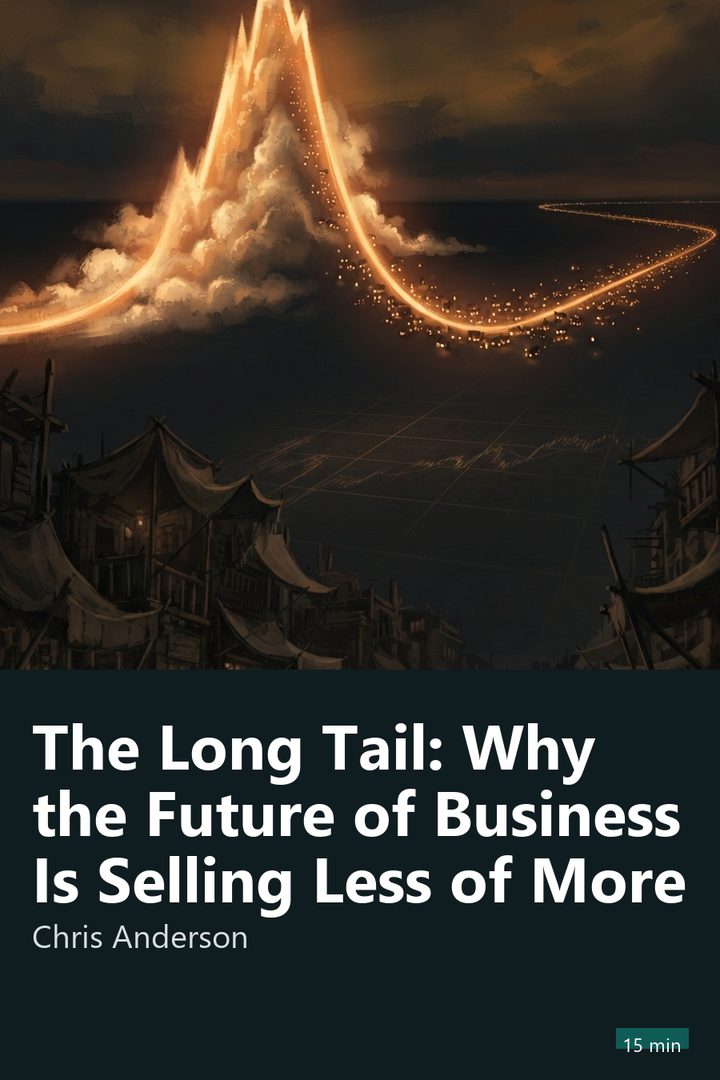
Picture a simple graph: on the left side sit the best-selling products of all, from the most-played album to the most-read book, stacked in descending order of sales. On the right side, stretching the ruler almost to infinity, sit millions of items that hardly anyone bought, one by one. Connecting the two sides is a line that plunges fast at the start and then drags along low for an enormous stretch. That low, long line is the long tail that gives the book its name.
Chris Anderson's central idea is simple to state and powerful in practice: when the cost of keeping a product available drops close to zero, the sum of everything in that long tail can weigh as much as, or more than, the few hits at the start of the curve. It isn't about abandoning the hit, it's about realizing there is a second market hidden underneath it.
That second market has always existed: people with odd tastes have always bought odd things. What changed wasn't people's taste, it was the viability of selling to them. Before the internet, reaching that audience cost too much to be worth it. Afterward, it stopped costing.