15 Minutes
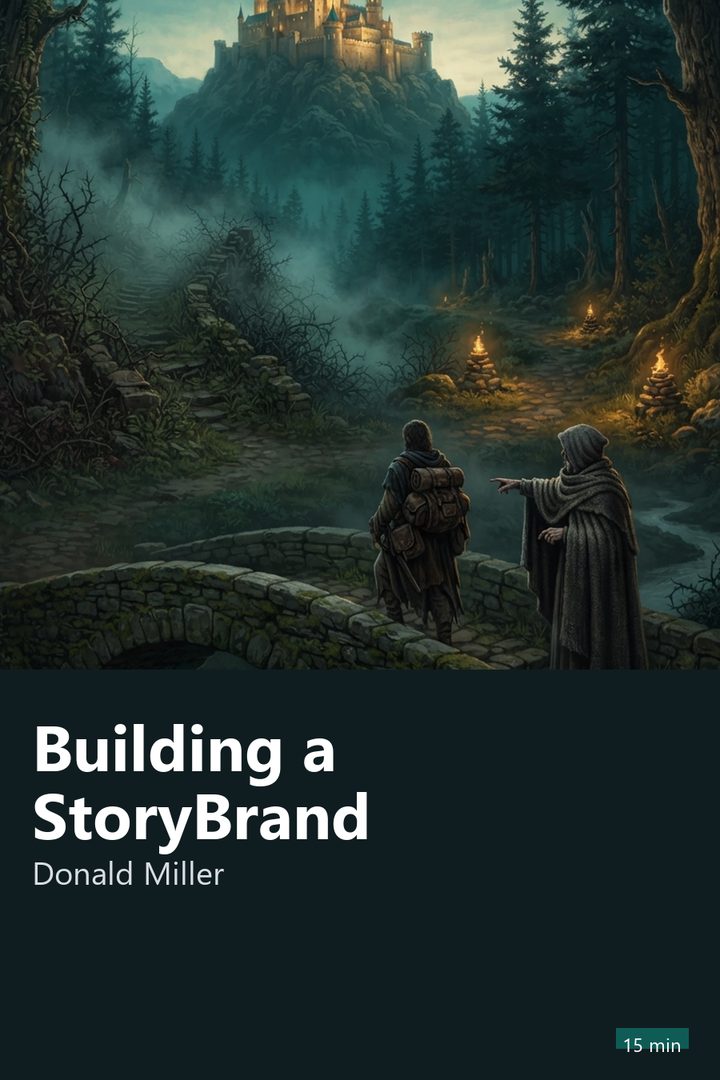
Cover of Building a StoryBrand

Marketing and Sales · 16 min

Building a StoryBrand

Donald Miller · 2017

Who it's for

For you if you run a small business on your own, take customers by text message or from a sign on the corner, and feel like nobody understands what you do just by reading your ad. Building a StoryBrand helps you organize that message before you spend more money on pretty advertising that doesn't sell.

Read it in the app

⚡ Free to download • 🎁 One full book free every day

🎧 Audio coming soon in the app

Narration for the English summaries is on its way. Meanwhile you can read the full summary in the app.

3 ideas to take with you

1

When a company casts itself as the star of its own advertising, it steals the hero's role from the customer, and the message loses its power on the spot.

2

A problem described only on the practical level hides the real emotional reason someone decides to buy now instead of putting it off again.

3

A guide who wins the customer's trust but doesn't hand over a clear plan leaves the person lost right at the moment of decision, even after they believe in the brand.

“
The book's bet is simple: we pay more attention to a story with a hero and an obstacle than to a list of qualities, and that goes for your ad too.
An idea from Building a StoryBrand, in the words of 15 Minutes

Preview

Start reading now

The mistake almost every business makes when introducing itself

Most small businesses make the same mistake when writing their own website, business card, or ad for the neighborhood Facebook group: they talk about themselves. They say when they opened their doors, list the courses the owner has taken, show a photo of the smiling team, and expect the customer to care about all of that before even knowing what is being sold.

Donald Miller reaches this conclusion after years of working with movie scripts and notices something simple: the human brain automatically pays attention to stories with a character facing an obstacle, and ignores almost everything that doesn't follow that format, even without consciously realizing why.

The practical consequence is money down the drain: people pay for pretty advertising, fuss over the banner art, write a text full of information about the company, and still don't sell, because understanding the offer takes too much effort from someone who just wanted to solve a problem quickly.


The customer is the hero of the story, not your brand

Think of any movie that works: the audience roots for the main character, not for the magic sword or the map he carries. Miller applies this logic to business: the customer has to be the hero of the story, with a goal of their own, and the company has to accept a supporting role in that narrative.

The most common mistake is for the company to cast itself as the protagonist of its own story, talking about its own journey, its own values, and its own mission, as if the customer were there just to cheer for the brand to grow. Nobody buys bread at the corner bakery thinking about helping the owner achieve his dream: they buy it because they're hungry and don't have time to make it at home.

Recognizing this changes a business's entire text: instead of opening with fifteen years in the market, it opens with the problem the customer feels right now, at the bar, on the packed bus, in line at the bank, waiting for someone to show up with the solution.

Your brand is the guide, never the star of the movie

If the customer is the hero, someone has to play the guide, the character who shows up to help without taking over the scene. Miller uses movie examples to illustrate: the mentor who trains the hero, the advisor who appears at the right moment with the guidance that was missing.

A real guide doesn't compete with the hero for attention. He exists to make the protagonist win, and disappears from the scene once the mission is accomplished. A brand that understands this stops trying to be admired and starts focusing on making the customer succeed.

In practice this changes the tone of the communication: less showing what the company has built, and more showing that it has seen this problem before and knows exactly the way out. The starring role stays with whoever pays the bill, not with whoever sells.

13 more sections and the quiz

Continue in the app

Read the whole summary, finish with the Building a StoryBrand quiz and follow the guided Journeys. No ads in the app.

About Donald Miller

Donald Miller is an American author and speaker, founder of the consulting company StoryBrand, which trains other companies to apply this communication method. Before becoming a marketing reference, he was already known as a writer, with the memoir Blue Like Jazz, published in the early 2000s. After Building a StoryBrand, Miller created a paid certification program for consultants who apply the seven-element script to other businesses. He also hosts a business podcast, where he discusses leadership and communication with other entrepreneurs.

Explore

Part of the Journeys:
Ideas That Become Income