15 Minutes
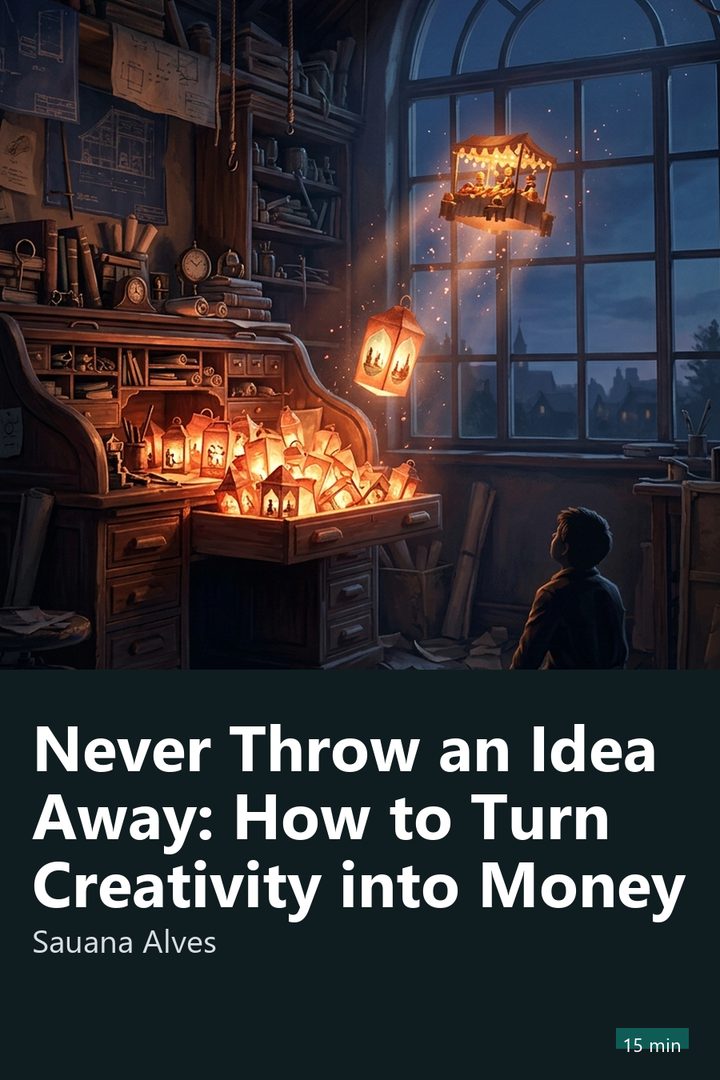
Cover of Never Throw an Idea Away: How to Turn Creativity into Money

Marketing and Sales · 18 min

Never Throw an Idea Away: How to Turn Creativity into Money

Sauana Alves · 2025

Who it's for

Original title (Portuguese): Nunca Jogue uma Ideia Fora: Como Transformar Criatividade em Dinheiro. For freelancers, small-business owners, and professionals who struggle to get projects off the ground or are afraid of making mistakes when launching something new. This is a straightforward guide to turning creative sparks into real sources of income without jeopardizing your business's stability.

Read it in the app

⚡ Free to download • 🎁 One full book free every day

🎧 Audio coming soon in the app

Narration for the English summaries is on its way. Meanwhile you can read the full summary in the app.

3 ideas to take with you

1

Early-stage ideas need a safe place to rest before being judged, because dismissing them too quickly often buries brilliant solutions that are still taking shape.

2

Putting a simple product in the hands of a few real customers teaches you more about commercial viability than spending months drawing up perfect plans on paper.

3

When an obstacle changes your production plans, the forced course correction can reveal market demand that your original planning never even considered.

“
Customers rarely judge a service solely on its technical merits. They immediately notice the scent, the feel, and how welcome they are made to feel during that first interaction.
An idea from Never Throw an Idea Away: How to Turn Creativity into Money, in the words of 15 Minutes

Preview

Start reading now

The Value of Not Throwing Away Rough Drafts Too Quickly

Many people toss out a thought the moment they spot an initial flaw. In the daily rush, it's tempting to embrace only sure things and treat creative sparks as a waste of time. Yet an idea rarely arrives fully formed. It starts as an awkward little spark that needs time to breathe and find the right commercial shape.

Creating a structured idea bank, in a notebook or on your phone, changes the creative process. By writing down observations about your customers, you take away the pressure to act on everything immediately. That seemingly unworkable sketch from Tuesday might connect with a problem months later, creating a valuable opportunity.

The benefit of this collection is avoiding the regret of watching another professional launch something you discarded out of insecurity. Ideas belong to the people who have the patience to record them and test them in practice. Treating every thought as a potential asset is the first step toward innovation.

Test Small Before Committing Your Budget

The biggest danger for entrepreneurs in Brazil is blind enthusiasm that leads to excessive spending before the first sale. Someone falls in love with a new concept and immediately leases a space or hires expensive services, without knowing whether buyers will show up. Sauana Alves advocates the opposite approach: validate interest at the lowest possible cost.

In practice, this means creating a simplified prototype or basic proof of concept to put in the hands of trusted customers. If you want to introduce a dish or a new salon service, prepare a few servings or work with three volunteers. Watch their spontaneous reactions and listen to honest feedback about what needs immediate improvement.

Spending little to fail fast protects the company's cash and preserves the leader's peace of mind. When a test fails, the loss is limited to a few hours and almost no materials, allowing you to change course without bank debt. Real-world validation should always come before large-scale production.

The Power of Sensory Observation in Customer Interactions

When people buy something, technical specifications and ingredient lists aren't the only things guiding their decisions. In almost every market, consumer preferences are influenced by physical and emotional impressions that manuals overlook. A product might have a flawless formula, but if its scent is unpleasant or its texture feels heavy, it will sit unsold.

Recognizing this requires entrepreneurs to conduct a thorough sensory evaluation of every detail in the customer journey. Pay attention to how the packaging feels, the sounds in the store, the clarity of your messages, and how comfortable the service experience is. Customers notice care in these details and connect that quality with the overall value of the service.

Attention to the senses needs to continue through the after-sales stage, when the product reaches the customer's home. Receiving a carefully wrapped package with a pleasant scent and clear instructions turns an ordinary purchase into a memorable experience. That level of consideration turns occasional buyers into loyal customers who recommend your brand.

10 more sections and the quiz

Continue in the app

Read the whole summary, finish with the Never Throw an Idea Away: How to Turn Creativity into Money quiz and follow the guided Journeys. No ads in the app.

About Sauana Alves

Sauana Alves is a Brazilian entrepreneur and cofounder of Grupo Ybera Paris, a hair-care company with a presence in dozens of countries. Alongside her husband, Johnathan Alves, she developed innovative products that established the brand in both the salon market and online retail. In 2024, she published Never Throw an Idea Away through Editora Gente, organizing her experience in product development and business culture into a practical framework. In addition to executive management, she devotes her time to mentoring entrepreneurs and advocating for accessible innovation in the beauty industry.

Explore

Part of the Journeys:
Ideas That Become Income