15 Minutes
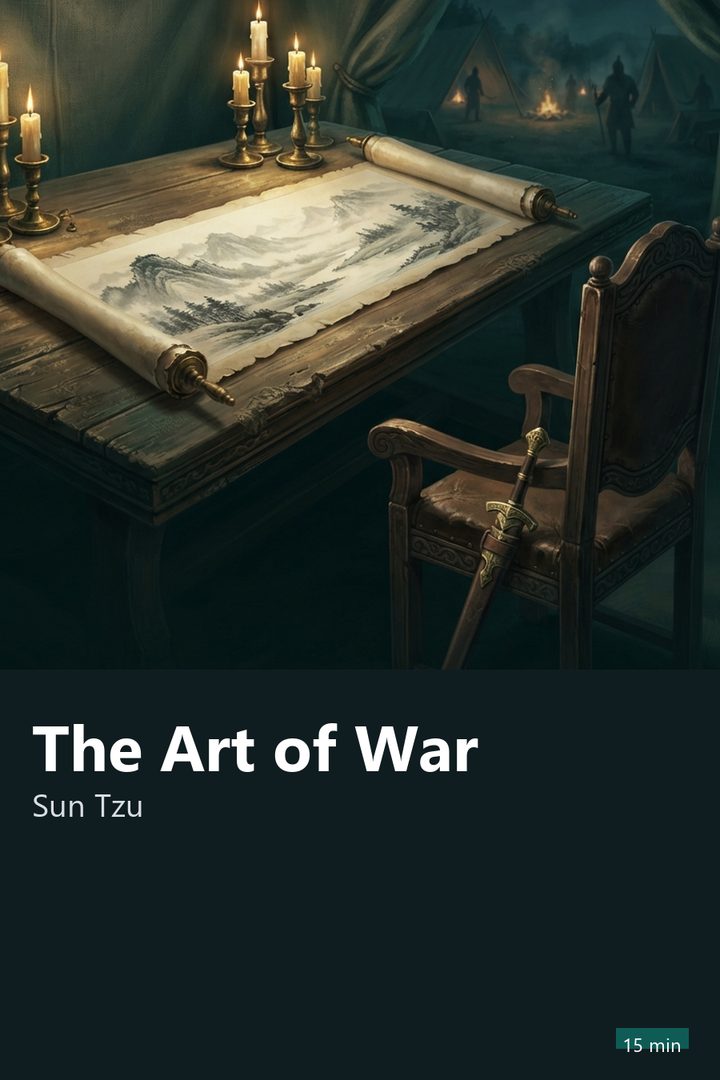
Cover of The Art of War

Business · 16 min

The Art of War

Sun Tzu · -500

Who it's for

For anyone facing a tough negotiation, a dispute at work, or who just wants to learn to pick their battles better. The Art of War teaches you to think strategically before you act, without ever picking up a weapon.

Read it in the app

⚡ Free to download • 🎁 One full book free every day

🎧 Audio coming soon in the app

Narration for the English summaries is on its way. Meanwhile you can read the full summary in the app.

3 ideas to take with you

1

Winning without having to fight is always cheaper than winning after you've destroyed both sides.

2

All you can promise is that you won't be caught off guard. Nobody can promise victory, because it also depends on the other side's mistakes.

3

No decision made at the peak of anger survives the test of the next day very well.

“
Whoever has already won the war in their head before leaving home rarely needs to raise their voice later.
An idea from The Art of War, in the words of 15 Minutes

Preview

Start reading now

Before going to war, run the numbers first

Sun Tzu opens the book by saying that war is far too serious a matter to decide on impulse: it involves the survival of the country, so it deserves to be weighed calmly before any decision. He proposes five factors to assess before any conflict: the sense of purpose that unites the people with their leadership, the right timing, the terrain, the quality of those in command, and the discipline of the organization.

The central idea is simple: whoever compares these five points clearly, before acting, already knows ahead of time whether they have a real chance of winning. This applies to anyone about to open a shop, change jobs, or negotiate a raise: before jumping in, it's worth sitting down and comparing what you have against what the challenge demands.

A common mistake is jumping into a dispute, with your boss, a competitor, a lawsuit, purely on impulse, without doing this math first. Sun Tzu reminds us that those who plan a lot before acting tend to win, and those who plan little tend to lose, even before the first move happens.

A long war wears down even the winner

The second chapter is about the real cost of keeping a conflict going. Sun Tzu insists that no country has ever truly profited from a war that dragged on for years: the drain of resources, people, and time wears down even the side that was winning at the start.

He argues that if war is unavoidable, it has to be quick. An army that sits for months at a siege consumes more than the final victory is worth, and meanwhile other rivals take advantage of the exhaustion to attack from another side.

In everyday life this shows up in fights that drag on: a labor lawsuit that lasts years, a feud between business partners that never gets resolved, a neighborhood group chat argument that turns into months of war. The longer the conflict eats up, the less is left to rebuild afterward, so resolving things quickly, even by giving in a little, usually costs less than winning slowly.

The perfect victory is the one that needs no fight

Here is one of the most quoted ideas in the book: the peak of military skill isn't winning a hundred battles, it's making the opponent give up before the fight even happens. Besieging a fortified city by force is treated as a last resort, because it's expensive and takes far too long.

Sun Tzu also presents the principle that sums up the whole book: whoever knows themselves and knows the opponent is at no risk in any confrontation. Whoever knows only themselves wins half the time. Whoever knows neither themselves nor the other side always loses.

This applies directly to salary negotiations, business disputes, or even family arguments: before forcing a confrontation, it's worth checking whether things can be settled by talking, by agreement, by a middle ground that avoids the wear and tear of a tug-of-war both sides will feel later.

12 more sections and the quiz

Continue in the app

Read the whole summary, finish with the The Art of War quiz and follow the guided Journeys. No ads in the app.

About Sun Tzu

Sun Tzu is the name traditionally associated with the authorship of The Art of War, a Chinese general and strategist from the Spring and Autumn period, around the fifth century BC. Historians still debate whether this figure existed as a single person or whether the text was assembled over generations by different Chinese military strategists. The book became one of the most studied treatises on strategy in the world, used in military academies as well as in business and negotiation courses. There are no reliable biographical records about his birth, his family, or any specific battles attributed to him with historical certainty.

Explore

Category:
Business
Part of the Journeys:
How Power Works