15 Minutes
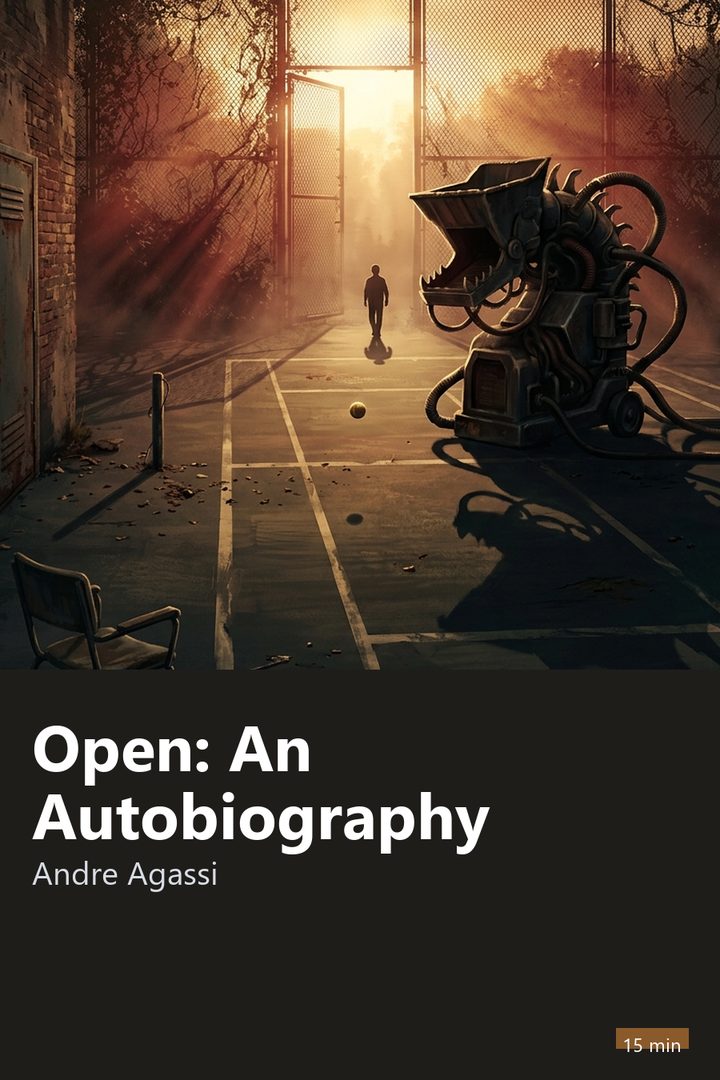
Cover of Open: An Autobiography

Biographies and Memoirs · 16 min

Open: An Autobiography

Andre Agassi · 2009

Who it's for

For anyone who enjoys candid biographies and wants to reflect on family expectations, identity, failure, and fresh starts. Even if you don't follow tennis, you may recognize yourself in the story's human struggles.

Read it in the app

⚡ Free to download • 🎁 One full book free every day

🎧 Audio coming soon in the app

Narration for the English summaries is on its way. Meanwhile you can read the full summary in the app.

3 ideas to take with you

1

Having a natural talent for something doesn't mean you chose the life built around it. It's worth distinguishing ability, desire, and obligation before treating success as fulfillment.

2

The shame of seeming inadequate can take up the attention an important task demands. Questioning standards of appearance can also free up energy to act.

3

A support network doesn't diminish individual achievement. It can turn an unsustainable effort into a commitment that fits within one person's limits.

“
Starting over may mean accepting a smaller role without turning that role into a measure of your worth.
An idea from Open: An Autobiography, in the words of 15 Minutes

Preview

Start reading now

The Champion Who Didn't Want to Play

Andre Agassi begins his story near the end of his career, when playing a match means negotiating with a battered body. His back hurts, movement takes effort, and recovery never seems sufficient. This opening dismantles the reassuring portrait of a champion: behind the applause is someone trying to get through one more day.

The revelation that frames the book is unsettling: he says he hates tennis, even though he has devoted his life to the sport. This ambivalence isn't simply meant to provoke. Agassi describes the conflict between doing something extraordinarily well and feeling that other people chose it for him before he could decide.

The autobiography offers no simple ladder from dreams to effort to victory. Its question is more uncomfortable: what happens when you reach a destination you never chose? It recalls someone who lands the job their family wanted for them, only to discover that outside approval doesn't resolve the dissatisfaction of everyday work.


A Childhood Facing the Dragon

In Las Vegas, Andre's father, Mike Agassi, turns the backyard into a tennis-player factory. A former Olympic boxer for Iran, he treats his son's talent as an urgent project. The ball machine, nicknamed the dragon, symbolizes a childhood organized around repetition, pressure, and the fear of disappointing him.

Training doesn't begin as play that gradually becomes a profession. Coercion comes before choice: thousands of balls, endless corrections, and little room to say no. His father's aggression permeates the house. The boy learns to read moods and recognize danger while trying to survive the enormous expectations placed on him.

Acknowledging his father's influence doesn't require turning suffering into a recommended method. The skills Andre acquired don't prove that violence was necessary. For a family involved in youth sports or pushing for better grades, the distinction matters: encouraging a child is different from making that child carry the adults' dreams of fulfillment.

The Academy and the Urge to Escape

Sent as a teenager to Nick Bollettieri's academy in Florida, Agassi finds distance from his family, constant competition, and a suffocating routine. The place promises to develop champions, but his experience includes loneliness and anger. Tennis continues to take up almost everything, while his schooling falls by the wayside far too early.

Flashy hair, provocative clothing, and defiant behavior become ways of asserting some autonomy. These gestures don't mean he has a plan for his life. They are attempts to say there is someone there beyond the player manufactured by coaches, tournaments, and expectations that seem to dictate his entire future.

The book avoids presenting this rebellion as complete liberation. Andre changes his appearance but remains inside the structure he rejects. It's a distinction familiar to anyone facing a suffocating job: complaining at a bar or changing your look may ease the pressure without changing the conditions that create the daily discomfort.

11 more sections and the quiz

Continue in the app

Read the whole summary, finish with the Open: An Autobiography quiz and follow the guided Journeys. No ads in the app.

About Andre Agassi

Andre Agassi was born in Las Vegas, Nevada, in 1970. He became the world's number one tennis player and won eight Grand Slam titles, along with the singles gold medal at the 1996 Atlanta Olympics. He retired from professional tennis in 2006 and developed educational initiatives in his hometown. He published Open in 2009, in collaboration with writer J. R. Moehringer.

Explore

Part of the Journeys:
Sport and Overcoming