15 Minutes
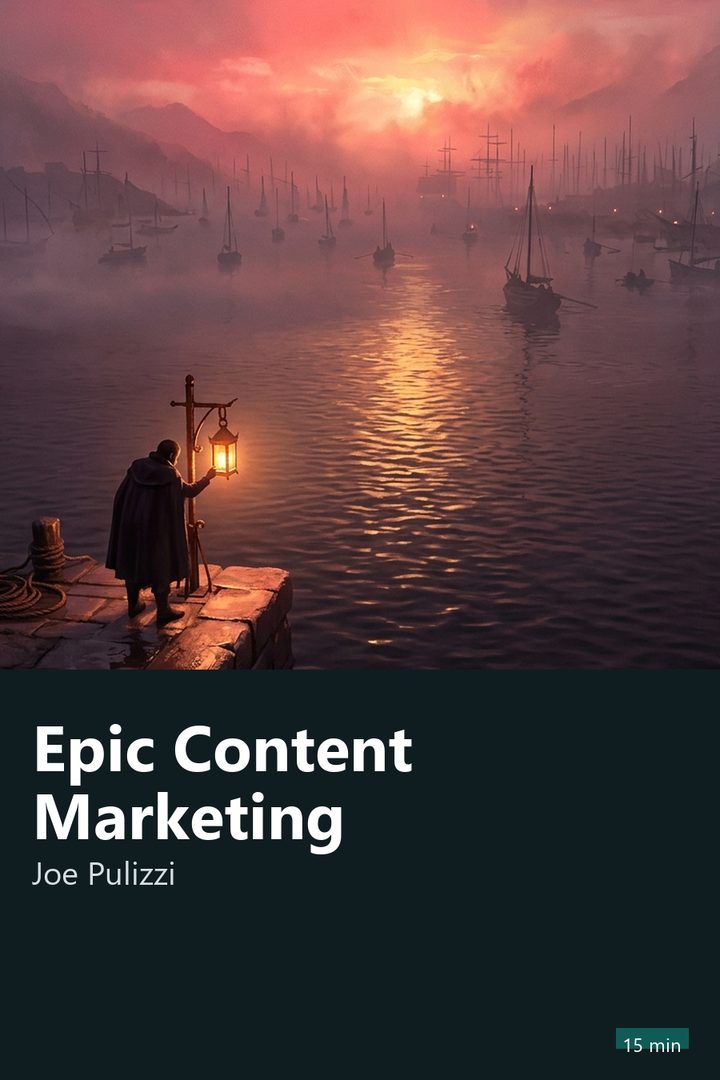
Cover of Epic Content Marketing

Marketing and Sales · 15 min

Epic Content Marketing

Joe Pulizzi · 2013

Who it's for

For you if you run a business, large or small, and want to attract customers without relying entirely on advertising. It's also for communications professionals who need a method for deciding what to publish.

Read it in the app

⚡ Free to download • 🎁 One full book free every day

🎧 Audio coming soon in the app

Narration for the English summaries is on its way. Meanwhile you can read the full summary in the app.

3 ideas to take with you

1

A three-line content mission works as a filter: any idea that doesn't serve the defined audience gets left out.

2

Rented channels, such as social media, can change their rules at any moment, so it pays to move your audience to a space your company controls.

3

In the book's view, trust is built through consistency over months, and anyone who quits early misses the cumulative effect.

“
Those who teach first tend to be remembered when it's time to buy, because they helped before asking for anything.
An idea from Epic Content Marketing, in the words of 15 Minutes

Preview

Start reading now

Stop Shouting and Start Serving

Think about the last time you opened a promotional email and deleted it without a second thought. Now think about the last time you saved a video, article, or guide because it solved a problem you had. Joe Pulizzi starts with exactly that difference: advertising interrupts, while useful content is something people seek out. The book argues that brands should stop talking only about themselves and start publishing information customers actually want to consume.

The premise is easy to state and hard to put into practice. Instead of paying to show up in the middle of a customer's day, a company becomes a trusted source, almost like a publisher specializing in a subject it already knows well. Customers return because they want to, and a sale stops being something pushed on them and becomes a result of the trust the company has built.

Pulizzi calls this content marketing and insists that it isn't some internet gimmick. It's a long-established way of connecting with an audience that technology has simply made affordable and accessible to any bakery, accounting firm, or manufacturer.

An Idea Older Than the Internet

One of the book's most enjoyable points is its reminder that none of this started with social media. The author brings up historical examples, such as The Furrow, a magazine that farm equipment manufacturer John Deere has published since 1895, offering advice to farmers. The magazine barely talked about tractors. It talked about how to make more money farming, and that's why farmers read it.

When a company helps customers succeed at what they do, the brand becomes part of their everyday lives without needing a slogan. Readers of The Furrow didn't feel they were being sold to. They felt well informed, and when it was time to replace equipment, the brand's name was already there, associated with help rather than pressure.

To bring the example closer to home, consider a familiar local business. A building supply store that publishes an illustrated guide to waterproofing a concrete patio is doing the same thing. It teaches first, and people who learn from it are more likely to buy from it.

What Makes Content Epic

The adjective in the title sets a high bar. For Pulizzi, publishing frequently isn't enough. You need to publish something your audience considers better than what's already available. He talks about becoming the leading source of information on a specific subject, rather than just another voice in the noise.

That changes the question a company asks itself. Instead of asking what to say about its product, it asks what customers need to know that nobody is explaining well. Epic content tends to be useful, clear, consistent, and delivered in a format people actually use, whether that's text, video, audio, or a spreadsheet.

There's also a standard of honesty. The book warns that readers quickly reject advertising disguised as content, and these days they can spot the tone of a sales flyer within seconds. When content feels like a sales pitch from the first line, it loses its one real advantage: trust.

11 more sections and the quiz

Continue in the app

Read the whole summary, finish with the Epic Content Marketing quiz and follow the guided Journeys. No ads in the app.

About Joe Pulizzi

Joe Pulizzi is an American entrepreneur and writer who founded the Content Marketing Institute, an organization dedicated to research and education in content marketing. He is the author of Content Inc., published in 2015, and Killing Marketing, published in 2017. He is also known as a speaker and organized the Content Marketing World event.

Explore