15 Minutes
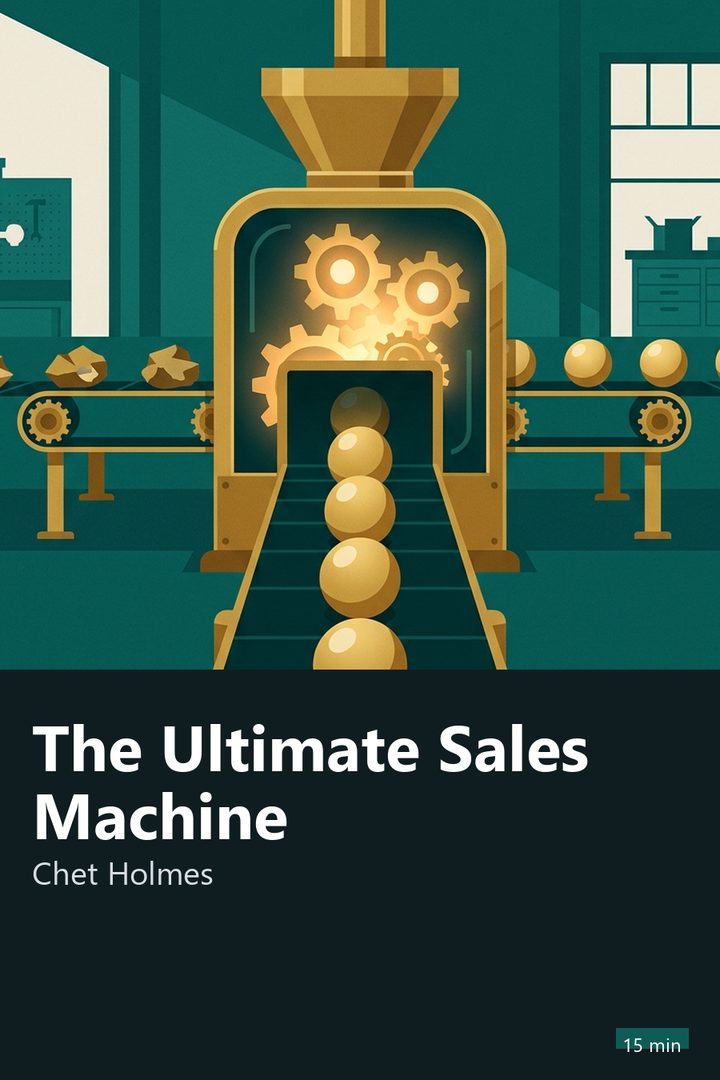
Cover of The Ultimate Sales Machine

Marketing and Sales · 15 min

The Ultimate Sales Machine

Chet Holmes · 2007

Who it's for

For you if you sell on your own, lead a small sales team, or keep testing a new technique every week without sticking with any of them long enough to get real results. The Ultimate Sales Machine is for people who want to trade the tactic of the moment for the kind of discipline that sustains results year after year.

Read it in the app

⚡ Free to download • 🎁 One full book free every day

🎧 Audio coming soon in the app

Narration for the English summaries is on its way. Meanwhile you can read the full summary in the app.

3 ideas to take with you

1

The customer who is ready to buy today is always a minority, so ignoring everyone who hasn't decided yet means giving up the biggest slice of the market.

2

A poorly run team meeting costs as much as no training at all, because it turns into a reminder about quotas instead of real sales practice.

3

Hiring someone who quits at the first obstacle usually costs more in the medium run than taking a bit longer to find someone resilient.

“
Teaching the customer about their problem before talking about your product usually sells more than an aggressive closing script.
An idea from The Ultimate Sales Machine, in the words of 15 Minutes

Preview

Start reading now

Why a 2007 sales book is still recommended at every company

Chet Holmes didn't invent a magic salesperson trick. He gathered simple disciplines applied with almost obsessive repetition, arguing that a big part of the sales problem is not a lack of knowledge, it's a lack of constant practice of the basics.

The comparison he uses helps make the point: a top athlete and an amateur know the same fundamental moves, but the athlete repeats each move thousands of times until it becomes automatic, while the amateur learns it once and goes on thinking they already know it.

That's why the book is still recommended almost twenty years later: the focus is on the discipline of execution, not on hunting for a new tool or the trend of the month.

Almost nobody is ready to buy right now, and that's fine

One of the book's central ideas is that, in any market, only a small slice of people is ready to buy something right now. A much bigger group isn't even thinking about the problem at the moment, another thinks it isn't urgent, and yet another suspects that a good solution doesn't exist.

The most common mistake among salespeople is talking only to those already ready to buy today, with a pitch of discounts and urgency, ignoring the huge slice of people who haven't really entered the sales pipeline yet because they first need to understand the problem.

A very familiar example: someone had never thought about offering health insurance to employees until they saw a simple piece of content showing the real risk of not having it, well before deciding to buy anything.

This changes how you measure short-term results: not every message you send needs to generate an immediate sale, and a good part of the work is simply moving the person a little closer to the moment when they finally consider buying something like what you offer.

Selling by teaching, not pushing

The book advocates educational marketing: instead of just listing product features, you deliver genuinely useful content that helps people better understand their own problem, becoming a trusted reference in their minds for the moment they decide to act.

A dentist who records a simple video explaining the real cause of tooth sensitivity, without charging anything for it, earns the trust of people who weren't even thinking about treatment yet. When one of them finally decides to act, the dentist is already the obvious choice in their mind.

Compared with an aggressive phone sales script, educational marketing is slower at first, but it usually costs less and improves the conversion rate in the long run, because it builds a real relationship instead of one-off pressure.

13 more sections and the quiz

Continue in the app

Read the whole summary, finish with the The Ultimate Sales Machine quiz and follow the guided Journeys. No ads in the app.

About Chet Holmes

Chet Holmes was an American consultant and speaker specializing in sales and marketing, with decades of experience advising companies of very different sizes, from small businesses to some of the largest corporations in the United States. He built the book's method by closely observing what separated average sales teams from high-performing ones, in day-to-day practice, not in classroom theory. He died in 2012, but the material stayed alive in corporate training programs kept going by partners and family members after him. The Ultimate Sales Machine, published in 2007, became recurring reading for B2B sales teams in the United States and, later, abroad.

Explore

Part of the Journeys:
Marketing That Works